Continental Croatia

Plitvička Jezera

Factual guide to Plitvička Jezera (Plitvice Lakes). Plan your route, find parking, understand entrance locations, and decide where to stay near the park.

Best months
May, June, September, October
Sea temperature in August
N/A (Inland national park)
Nearest airport
Zadar (ZAD) 130 km; Zagreb (ZAG) 140 km
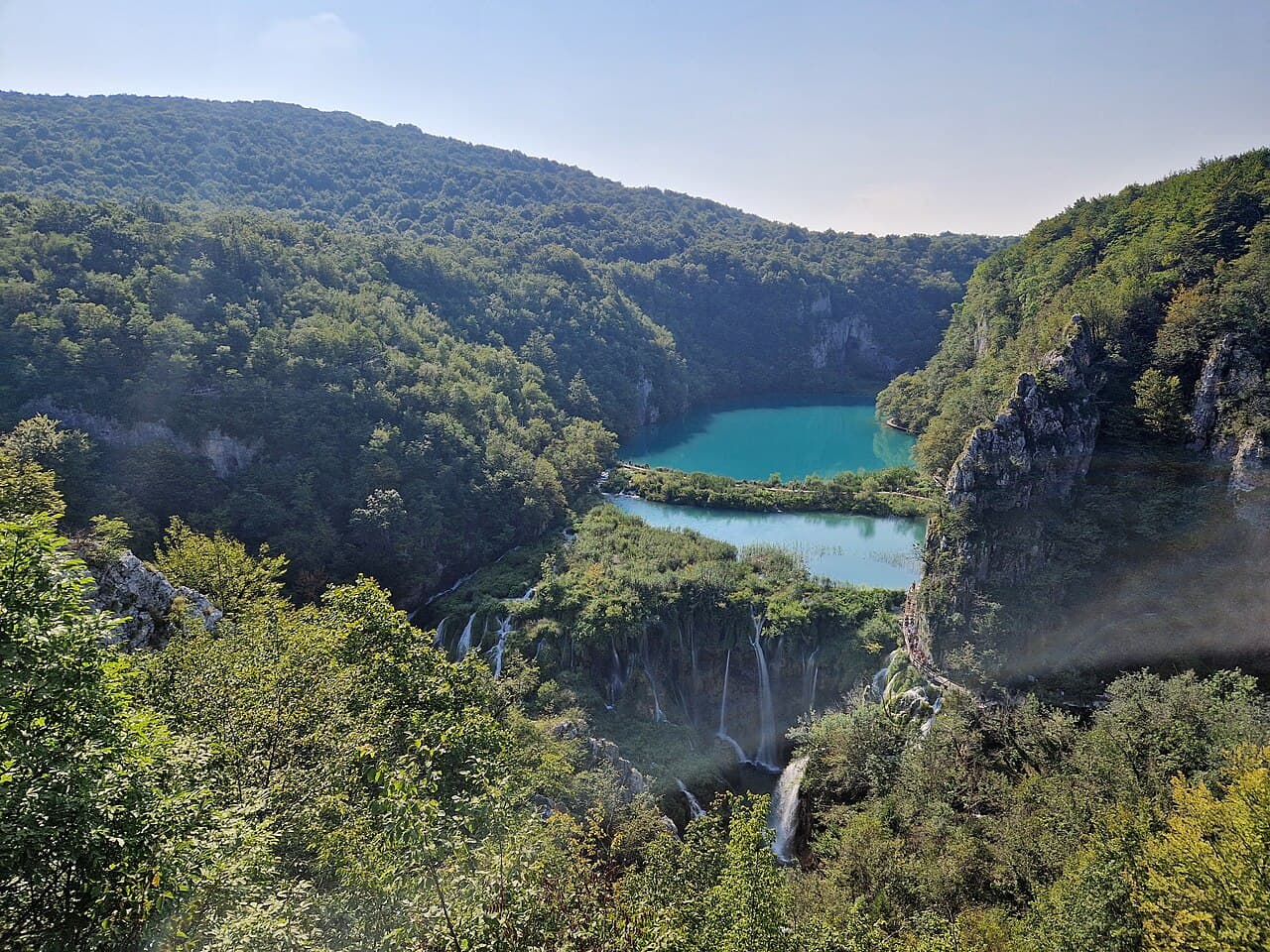
Plitvice Lakes National Park - Scenic view with waterfalls and turquoise lakes

Main beach type

N/A (Swimming in the lakes is strictly forbidden)

Plitvička Jezera (Plitvice Lakes) is Croatia’s largest and most visited national park, known for its 16 terraced lakes connected by numerous waterfalls. It primarily attracts hikers, nature tourists, and road-trippers touring the country.

Visiting requires advance planning, as daily ticket numbers are strictly capped by entrance time. The park trails are highly congested in July and August, making May, June, September, and October the optimal months for comfortable walking temperatures and fewer crowds. A car is recommended for reaching accommodations outside the immediate park boundaries, though direct bus lines connect the park entrances to Zagreb, Zadar, and Split.

At a glance

Best months
May, June, September, October
Sea temperature in August
N/A (Inland national park)
Nearest airport
Zadar (ZAD) 130 km; Zagreb (ZAG) 140 km
Main beach type
N/A (Swimming in the lakes is strictly forbidden)
Price level
High (Peak season park entry and nearby hotels exceed national averages)
Walkability
No traditional town centre; park trails are pedestrian-only

Where to stay in Plitvička Jezera

Rastovača (Near Entrance 1)

A small cluster of guesthouses immediately north of Entrance 1. Staying here allows visitors to leave their vehicle at their accommodation and walk to the park entrance in 10 to 15 minutes.

Best for:
First-time visitors wanting direct walking access to the Lower Lakes and the Big Waterfall.
Parking:
Private parking at guesthouses; paid public lot at Entrance 1.
Beach:
N/A

Mukinje & Jezerce (Near Entrance 2)

Located just south of Entrance 2, this area features several large hotels and private apartments. A paved path connects the village directly to the Entrance 2 ticket office and the main boat dock.

Best for:
Visitors exploring the Upper Lakes or looking for established state-run hotels.
Parking:
Hotel parking available; paid public lot at Entrance 2.
Beach:
N/A

Rakovica & Grabovac

Situated 8 to 15 kilometers north of the park along the D1 highway. This area offers a wider variety of dining options, large holiday resort complexes, and generally lower prices than the immediate park vicinity.

Best for:
Budget-conscious travelers, families, and those touring by car or camper.
Parking:
Ample free parking at holiday parks, campsites, and rural hotels.
Beach:
N/A

Plitvica Selo

A small village situated right beside the Big Waterfall and Kozjak lake. It provides direct pedestrian access to the trails via a secondary entrance (Entrance 3), bypassing the main ticket queues.

Best for:
Quiet, upscale stays located directly within the national park boundaries.
Parking:
On-site private parking; driving requires navigating narrow park roads.
Beach:
N/A

Getting to Plitvička Jezera

Munich

By car: 570 km, ~6.5 hours via A8 (DE), A10 (AT), A2 (SI), and D1 (HR). Requires Austrian and Slovenian vignettes, plus tolls for the Tauerntunnel and Croatian highways.

Other options: Direct FlixBus to Plitvice Lakes (approx. 9 hours) or flight to Zagreb followed by a bus.

Vienna

By car: 420 km, ~5 hours via A2 to Graz, A4 (SI) towards Maribor, A1 (HR) to Karlovac, then D1. Requires Austrian and Slovenian vignettes and Croatian highway tolls.

Other options: Direct FlixBus to Plitvice Lakes (approx. 7 hours) or train/flight to Zagreb followed by a bus.

Budapest

By car: 480 km, ~5.5 hours via M7 into Croatia (A4), past Zagreb to Karlovac (A1), then D1. Requires Hungarian e-vignette and Croatian highway tolls.

Other options: Bus or train to Zagreb, then transfer to a domestic bus line to Plitvice Lakes.

Ljubljana

By car: 210 km, ~3 hours via A2 to Novo Mesto, crossing the border towards Karlovac, then D1 south. Requires Slovenian vignette and minor Croatian tolls.

Other options: Bus or train to Zagreb, followed by a transfer to a Plitvice-bound bus.

Prague

By car: 750 km, ~8.5 hours via Brno, Vienna, Graz, and Zagreb. Requires Czech, Austrian, and Slovenian vignettes, plus Croatian tolls.

Other options: Flight or direct RegioJet bus/train to Zagreb, transferring to a local bus to the park.

Kraków

By car: 870 km, ~10 hours via Slovakia, Hungary (Budapest), and Croatia (Zagreb). Requires Slovak and Hungarian vignettes, plus Croatian highway tolls.

Other options: Flight to Zagreb (usually via Warsaw or Vienna), followed by a 2-hour bus ride to the park.

When to go

May and September offer the best balance of moderate crowds and pleasant hiking temperatures, typically ranging from 15°C to 23°C. July and August are highly congested, with daytime highs around 28°C and peak-season ticket prices. Winter brings snow, freezing temperatures, and drastically reduced ticket prices, though the Upper Lakes and the internal boat and train services usually close from November through March. Swimming is forbidden year-round, so sea temperatures are not applicable. Rainfall is common in spring, making the waterfalls particularly powerful.

Plitvička Jezera guides

Plitvička Jezera FAQ

Is it worth visiting?

Yes, it is Croatia’s most famous natural attraction. The extensive network of wooden boardwalks over clear lakes and waterfalls is unique in Europe.

How many days do I need?

One full day is enough to walk the main trails and see both the Upper and Lower Lakes. Staying one night nearby allows you to enter the park at opening time before the midday bus tours arrive.

Where is the best beach?

Swimming is strictly forbidden anywhere in Plitvice Lakes National Park to protect the ecosystem. The nearest coastal beaches are in Senj or Zadar, both roughly a 1.5 to 2-hour drive away.

Do I need a car?

A car is not required to walk the park if you stay at a hotel directly at Entrance 1 or 2, as buses from Zagreb and Zadar stop there. However, a car is necessary if you book accommodation in surrounding villages like Rakovica or Korenica.

Where is the best place to park?

The national park operates two main official, paid parking lots (Parking 1 and Parking 2) corresponding to the two main entrances. Parking costs roughly €1 to €2 per hour depending on the season, and the lots fill up quickly by mid-morning in summer.

Is it good for families?

Yes, but it is better suited for older children who can walk several kilometers unassisted. The wooden boardwalks are often uneven, lack railings in many sections, and are not suitable for strollers.

Explore Nearby

More destinations in Continental Croatia

Check Availability for Your Chosen Location

If you've already decided which area suits you, check availability below.

Find accommodation

Plitvička Jezera

Powered by Booking.com