01Is Grožnjan Good for Seniors?
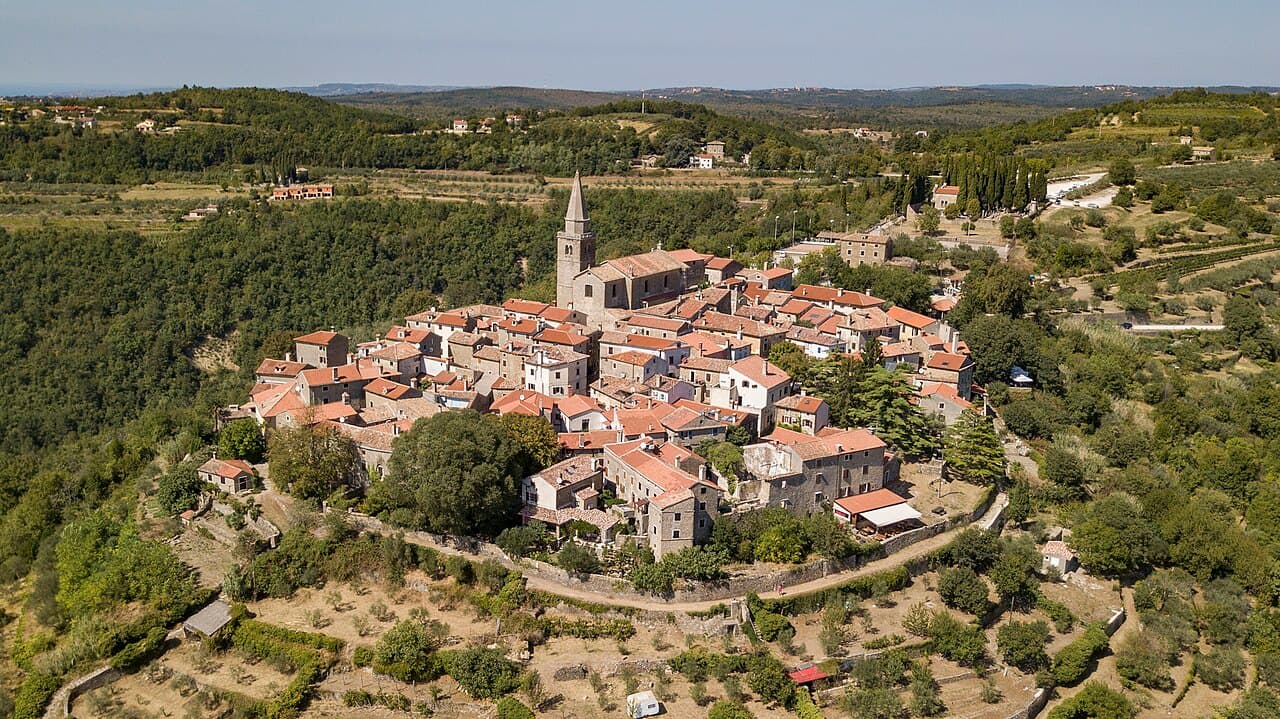
Grožnjan is a small hilltop town with very few permanent residents and a compact historic core. Distances are short. The difficulty is the surface and the gradient, not the length of the walk. Most of the old town is a mix of worn stone paving, uneven steps and gentle-to-steep lanes. Visitors with good balance and a walking stick manage it comfortably. Wheelchair users and people with walkers will find it hard.
A half-day is enough. The town is small enough that getting lost is nearly impossible, which helps visitors who prefer not to rely on maps.
02Getting There Without Stress
Public transport to Grožnjan is limited, so a rental car, taxi or organised day tour is the practical choice. The town sits about 20 minutes by car from Novigrad, about 25 minutes from Umag and Motovun, and about 30 minutes from Poreč.
Vehicles are not allowed in the historic centre. Parking is at the edge of town and at the base of the village, and it is paid in season. Visitors with reduced mobility should aim for the spot nearest the old town entrance, near the church of St Vitus, and arrive before 10:00 in July and August, when spaces fill.
Guided day tours from Pula, Medulin, Poreč and Rovinj often combine Grožnjan with Motovun and Rovinj. For seniors, the tour format removes the parking problem but adds time pressure. A private driver or taxi from a coastal resort gives more control over pace.
03Terrain and Mobility: What to Expect
Cobblestones and steps
The lanes are historic stone, polished smooth in places and uneven in others. Wet stone is slippery. Shoes with rubber soles matter more here than anywhere else on an Istrian coastal itinerary.
Slopes
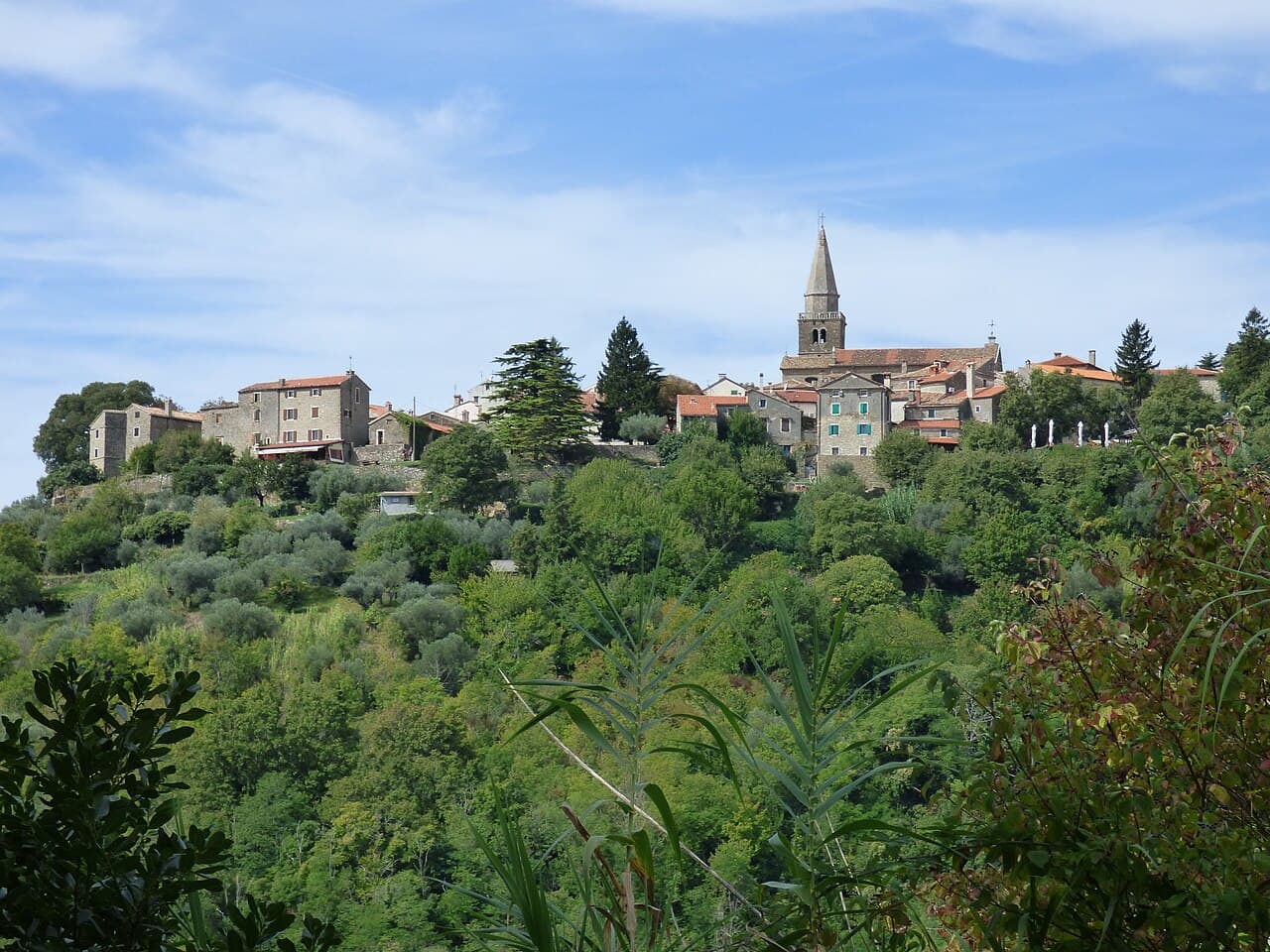
The town is built on a hill above the Mirna valley. The walk from the parking area to the main square and Town Loggia is short but includes an incline. Plan a rest every 10–15 minutes.
Wheelchairs and mobility scooters
There are no step-free routes through all of the old town. Some galleries sit behind doorsteps or narrow doorways. Wheelchair users can reach the edge of the old town and the main square area with assistance but should not expect to see everything. Contact galleries or the local tourist office ahead for specific doorways.
Most people overestimate the hill and underestimate the cobbles. A 300 m walk on this stone is more tiring than 1 km on flat pavement, so a walking stick with a rubber tip is worth packing before anything else.
04Best Time to Visit
May, June and September are the best months. Temperatures are moderate, galleries are open, and crowds stay manageable. Most galleries and studios operate roughly from May through September or October. Outside that period, many studios close, and the town is quiet.
July and August bring heat and the busiest days, but also the music and art events. The jazz festival "Jazz is Back" takes place in July, and the open-air painting event Ex tempore runs in September. Evening concerts can mean late finishes on dark stone lanes. Bring a small torch or phone light.
The town is tiny, but late-afternoon light and cooler air make the hour before sunset the most comfortable time for a slow walk.
05What to See at a Slow Pace
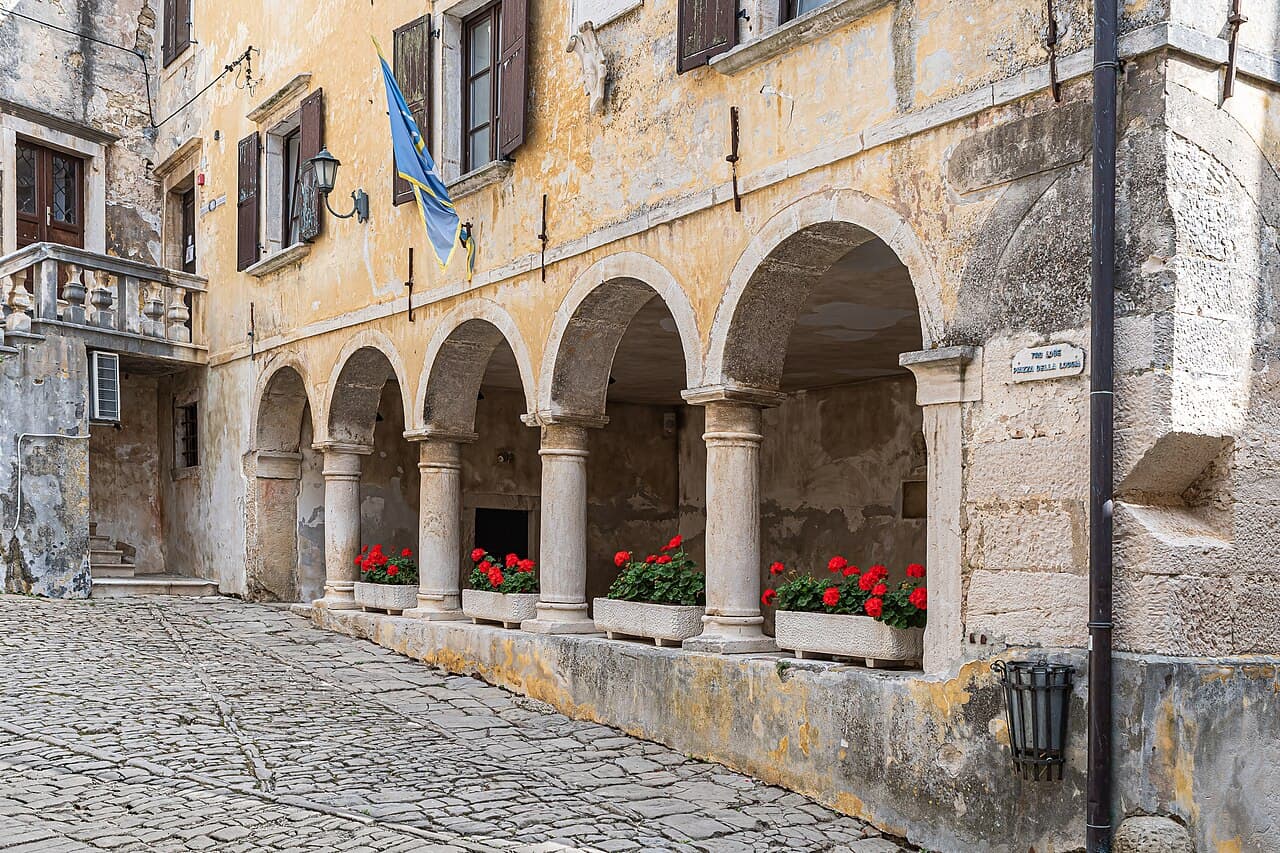
- Town Loggia
- A 16th-century structure in the heart of the old town and the best-known viewpoint. It requires little walking from the main square.
- Church of St Vitus
- Located just off the main square, next to the parking area. A good first stop.
- Fonticus town gallery
- A municipal gallery showing local artists, useful as an indoor, shaded break.
- Private galleries and studios
- Around 20 operate through much of the year, with more open during summer festivals. Many artists work with the door open, and there is no obligation to buy.
- Village walls and viewpoints
- On clear days the view runs across the Mirna valley and towards the sea.
06Eating, Rest Stops and Facilities
The town has a few cafés and small restaurants, mostly with outdoor seating on or near the main square. In winter, opening hours are shortened, so lunch plans should be confirmed. Seniors with dietary needs should eat in Novigrad, Umag or Buje, where options are wider.
Public toilets and benches are limited. Use café facilities and plan the visit around them. Carry water in summer, as shade is patchy.
07Medical Care and Safety
The EU emergency number is 112. Grožnjan has no hospital. The nearest health centres and pharmacies are in Buje, Umag and Novigrad. The larger general hospital is in Pula, around an hour's drive. EU visitors should carry a European Health Insurance Card, and others should hold travel insurance covering medical care. Bring all regular medication in original packaging.
08Where to Stay
Staying inside the old town is not recommended for seniors because of the steps and the lack of vehicle access to the door. Better options are coastal towns such as Novigrad and Umag, which have flatter terrain and more services, or rural apartments and houses around Grožnjan, Buje and Višnjan with free private parking. When booking, confirm ground-floor rooms and the number of steps at the entrance.
09Practical Itinerary for Seniors (3 Hours)
- Park at the edge of town and walk to St Vitus and the main square (15 min).
- Coffee on the square (30 min).
- Town Loggia and the viewpoints (30 min).
- Two or three galleries including Fonticus (60 min).
- Slow return to the car, or a late lunch in the village (45 min).
Pairing Grožnjan with Motovun on the same day is possible (about 25 km), but Motovun's climb is longer, so many seniors choose one town per day.