01Is Grožnjan Dog-Friendly?
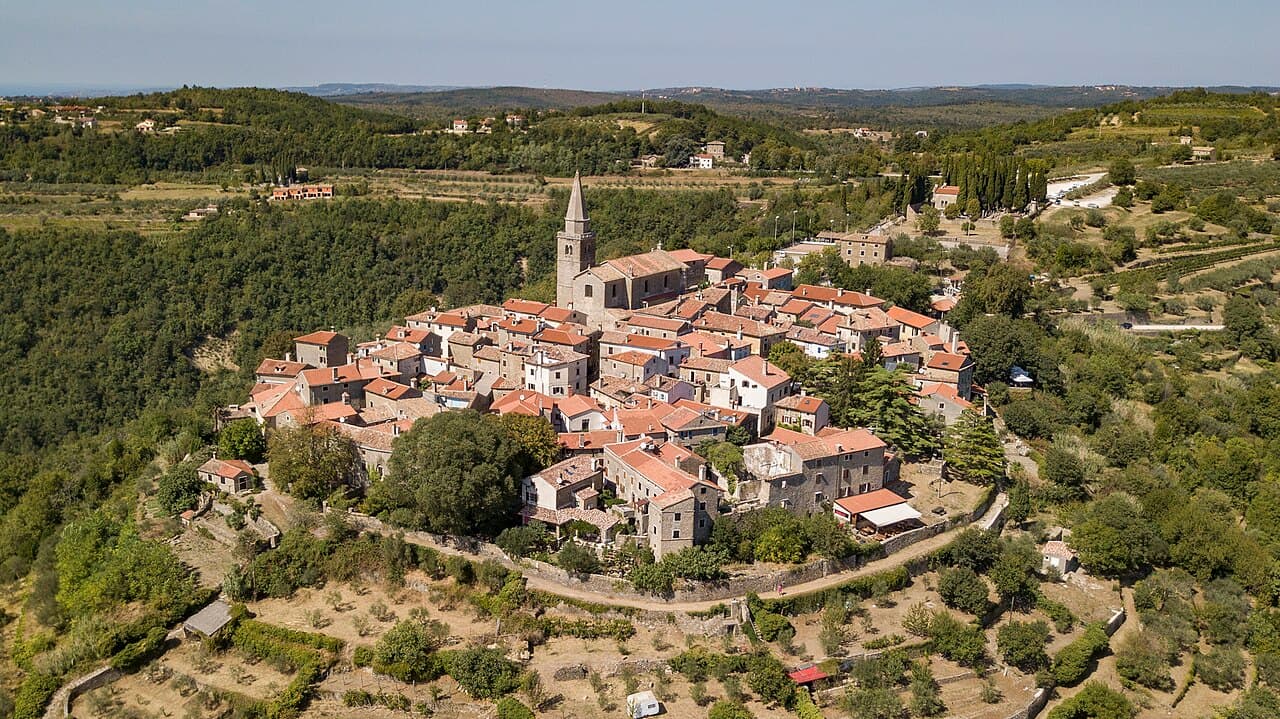
Yes. Grožnjan is a small hill town in northwest Istria with a compact, largely pedestrian old centre, stone lanes, galleries and terrace cafés. Leashed dogs are a normal sight. Istria markets itself as a pet-friendly destination, and the hill towns of Grožnjan, Motovun and Bale are known for welcoming dogs in their lanes and outdoor restaurants.
The weak point is the sea. Grožnjan is inland, so a beach day means a drive of roughly 20–35 km.
02Dog Beaches Near Grožnjan
Croatia has few formal municipal "plaža za pse" signs. Many dog areas are inside camps and resorts, and Istria has the highest concentration of dog beaches in the country. Look for the blue sign with a dog symbol.
Closest options (Umag and Novigrad coast)
- Umag
- dogs are allowed on the beaches inside the camps Park Umag, Finida, Kanegra, Stella Maris and Savudrija.
- Novigrad
- the Aminess Sirena campsite, Aminess Maravea camping resort and Aminess Laguna hotel have marked dog areas. Dog Dreams Beach and Bar in Novigrad is also dog-oriented.
- Savudrija
- Plaža Veli Jože is dog-friendly, with shallow water.
Further away
- Rovinj
- Cuvi, Veštar and Cisterna bays.
- Pula and Premantura
- Hidrobaza, Valovine, Galebove stijene and Saccorgiana, open to dogs all day all year. The whole of Cape Kamenjak also admits dogs.
Are dogs allowed on other beaches?
Generally not. Blue Flag beaches exclude dogs, and in Poreč bathing with dogs is limited to designated parts. Some beaches restrict dogs in July and August, so check the signage on the day. Dogs must be leashed on non-designated shores and owners must clean up.
03Old Town, Restaurants and Cafés
The old town of Grožnjan is small enough to walk in 15–20 minutes, and dogs on a short lead are accepted. Terraces of konobas and cafés usually welcome dogs. Indoor dining rooms often do not, because of food-hygiene rules, so ask before sitting down. Carry water: public fountains are scarce, and the stone surfaces get very hot.
The limit of the town's dog appeal is heat: in July and August the paved lanes hold midday heat, and walking a dog across them between 12:00 and 17:00 is a bad idea, however friendly the terraces are.
04National Parks, Nature Parks, Ferries and Catamarans
- National parks
- Plitvice Lakes and Krka restrict or prohibit dogs, and Brijuni near Fažana also limits them. Check each park's current rules before driving there. Nature parks such as Učka allow leashed dogs on trails.
- Ferries
- Dogs travel on Croatian car ferries, such as the Brestova–Porozina link to Cres, when leashed, and many operators ask for a muzzle on passenger decks. Stay with the dog in the car or on the open deck.
- Catamarans
- Policies differ by operator and by dog size. Confirm in writing before booking, because some lines accept only small dogs in carriers or charge a separate ticket.
From Grožnjan, most day trips are by road, so ferries are only relevant if you extend to the Kvarner islands.
05Accommodation Costs With a Dog
Grožnjan and the surrounding villages have many dog-accepting rentals: around 29 pet-friendly properties are listed on Booking.com for Grožnjan, and several holiday-home sites list 9–12 rentals. Dog fees in Istria typically run from free to about €5–€20 per night, or a flat cleaning fee at the end of the stay. Some houses, such as a two-bedroom cottage in Grožnjan and villas in nearby Svetvinčenat, charge nothing for one dog. Hotels and larger villas more often charge, limit the number or size of dogs, and require you to declare breed and size when booking.
Insider tip: pick a house with a fenced garden or pool area. After a morning drive to the coast, the dog can stay off-lead and in shade while you avoid hot lanes.
06Summer Heat and Best Months
July and August bring the highest heat, and pavement and car interiors become dangerous. Never leave a dog in a parked car. Walk early (before 9:00) and after 19:00.
| Period | Suitability |
|---|---|
| April–June | Best: mild, trails open, beaches quiet |
| July–August | Hot: restricted beach access, midday heat |
| September–October | Best for swimming with a dog; sea still warm |
| November–March | Cool and quiet; sea swimming unlikely |
Ticks and sand flies are active in warm months, so use tick prevention and check the coat after hill walks.
07Vet Basics
Vets operate in Buje and Umag and in the larger towns of Poreč and Pula. Save the contact of a vet near your rental on arrival, as accommodation hosts often provide it. Out-of-hours emergency care in Istria is limited, so Pula and Poreč clinics are the usual fallback. Bring vaccination records and any regular medication.
08EU Pet Passport Rules for Driving In
For travel between EU countries the dog needs:
- A microchip.
- A valid rabies vaccination, given at least 21 days before travel.
- An EU pet passport, issued by an authorised vet.
In Croatia an authorised vet issues the passport and sets the fee. Croatia does not require tapeworm treatment for dogs. New EU pet-travel rules apply from 22 April 2026, but the traveller rules are largely unchanged. Passports held by Great Britain residents are no longer valid for entry; those travellers need an Animal Health Certificate. Slovenia–Croatia crossings have no routine border checks since Schengen, but spot checks occur, so keep the passport in the car. Up to five pets per traveller are allowed under non-commercial rules.
09Verdict: How Dog-Friendly Is Grožnjan?
Grožnjan rates 4 out of 5 for dogs. The old town, the terraces, the many pet-accepting rentals and the nearby trails make it an easy base. It loses a point for having no beach and for hot stone streets with little shade in July and August. Come in May, June or September, stay in a house with a fenced garden, and plan Novigrad or Umag for swimming days.