01Choosing Your Medulin Neighborhood
Medulin is a highly developed tourist town on the southern tip of Croatia's Istrian peninsula. Unlike many coastal Croatian towns that developed organically around a historic center, Medulin’s modern layout is heavily segmented by geography and purpose. The town is split between the elevated historic core inland and the sprawling resort, camping, and beach developments along the bay.
Understanding the topography and neighborhood distinctions is crucial for booking the right accommodation. Staying on the western side of the bay means rocky beaches and longer walks to restaurants, while staying near the sandy center means higher prices and dense crowds. The following sections break down exactly what to expect in each distinct area of Medulin.
02Bijeca Beach and Harbor: Best for Families with Children
Bijeca Beach is the commercial and recreational center of Medulin's coastline. It features a 1-kilometer stretch of sand, which is a rarity in Istria where most beaches are pebble or rock. The water here is incredibly shallow; adults must wade out nearly 100 meters before the water reaches waist height. This geography makes the immediate surrounding area the most popular choice for families traveling with toddlers and young children.
Accommodation in this zone lines the waterfront promenade (Osipovica street) and the immediate streets radiating inland. The inventory consists largely of large resort hotels, such as the Arena Hotel Holiday and the adults-only TUI Blue Medulin, alongside dense rows of private apartment rentals.
Many visitors book apartments directly overlooking the Family Park amusement park near the harbor, thinking the proximity will be convenient for entertaining their children. This sounds ideal, but in practice, the nightly noise from booming ride sirens, loud pop music, and arcade games echoing until midnight makes this a terrible choice if you value uninterrupted sleep.
Prices in the Bijeca area are the highest in Medulin. Expect to pay €120 to €200 per night for a standard hotel room or modern one-bedroom apartment during the July and August peak season.
Pros and Cons of Bijeca Beach Area
- Pros
- Immediate access to sandy beaches and shallow water; high concentration of ice cream parlors, bakeries, and beach bars; completely flat terrain for strollers.
- Cons
- The most crowded area in town; persistent evening noise from bars and the amusement park; premium pricing on both accommodation and local dining; challenging public parking (often €1.50 to €2.00 per hour).
03Pošesi: Best for Couples and Quiet Beach Access
Located on the eastern side of the Medulin bay, Pošesi is a residential and resort neighborhood that offers a completely different atmosphere from the harbor. Connected to the main town via a paved coastal promenade, Pošesi trades the crowded sandy shores for the cleaner, clearer waters of Alba Chiara and Belvedere beaches, both of which feature smooth pebbles and rocky outcrops.
This area is dominated by newer apartment villas built within the last fifteen years, as well as the prominent Park Plaza Belvedere hotel. The architectural style here leans toward modern, flat-roofed buildings with glass balconies designed to maximize sea views.
Pošesi is quieter, making it highly suitable for couples, older travelers, or families who prefer a more relaxed environment and do not require a sandy beach. Walking from Pošesi to the main Medulin harbor takes 15 to 20 minutes along the flat promenade. Accommodation prices here average €90 to €150 per night. Sunbed rentals on the local beaches cost around €15 to €20 per day for a set of two beds and an umbrella.
Pros and Cons of Pošesi
- Pros
- Clearer water for swimming and snorkeling; significantly quieter at night; modern accommodation with dedicated parking spaces; scenic walking paths.
- Cons
- Requires a 15-minute walk to reach the main cluster of restaurants and shops; beaches are pebble/rock which may require water shoes; fewer immediate dining options within the neighborhood itself.
04Medulin Old Town (Stari Grad): Best for Budgets and Local Dining
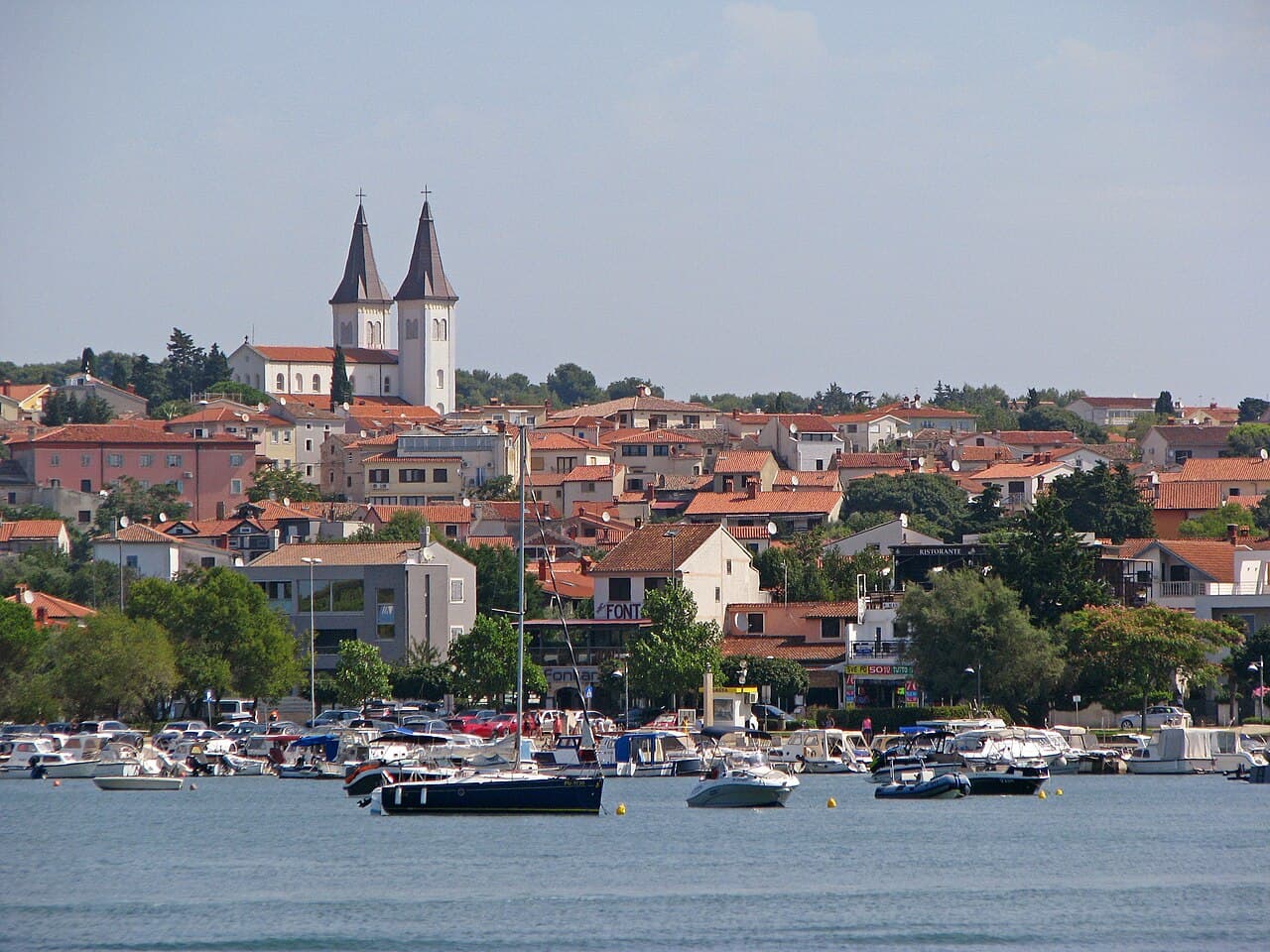
Medulin Old Town sits elevated on a hill about 800 meters to 1 kilometer inland from the harbor. Its defining landmark is the Church of St. Agnes, easily recognizable by its twin white bell towers. This is the historic heart of Medulin, featuring narrow, winding streets, traditional stone houses, and small residential squares.
Staying in the Old Town is the most budget-friendly approach to Medulin. Because it lacks direct beach access, nightly rates for private rooms, guesthouses, and small B&Bs drop significantly, averaging €60 to €100 during the high season.
What the Old Town lacks in waterfront views, it makes up for in culinary quality. The restaurants located along the main road (Centar) and the historic alleys are widely considered superior to the tourist-focused establishments on the promenade. Highly rated local venues like Salt & Pepper and traditional konobas are clustered here. Visitors should note the topography: walking down to Bijeca beach takes 10 to 15 minutes, but the return journey is entirely uphill.
Pros and Cons of Medulin Old Town
- Pros
- Lower accommodation costs; authentic architectural atmosphere; close to the town's best restaurants, banks, and pharmacies; free street parking is generally easier to find.
- Cons
- 1-kilometer uphill walk from the beach; no sea views from most ground-level properties; streets can be very narrow for larger rental vehicles.
05Mukalba: Best for Modern Apartments and Privacy
Mukalba forms the western arm of the Medulin bay. A decade ago, this area was mostly empty scrubland, but it has since seen explosive development. Today, Mukalba is a dense grid of brand-new, multi-story apartment buildings.
This neighborhood is strictly residential and heavily oriented toward self-catering tourists. If you are looking for a newly built, spacious apartment with modern appliances, strong Wi-Fi, and a private pool, Mukalba offers the highest concentration of these properties. Rates generally range from €80 to €130 per night for a two-bedroom apartment.
The coastline immediately adjacent to Mukalba features rough, rocky beaches and concrete sunbathing slabs. While the water is exceptionally clean, it lacks the infrastructure (showers, lifeguards, beach bars) found at Bijeca or Belvedere. Crucially, Mukalba is geographically isolated from Medulin's center. Walking to the main harbor takes 25 to 30 minutes. Most visitors staying here rely on cars or rental bicycles to reach supermarkets and restaurants.
Pros and Cons of Mukalba
- Pros
- High availability of newly built, modern apartments; excellent privacy; very quiet environment free from commercial noise; good value for larger groups.
- Cons
- Long walking distance to the town center and sandy beaches; lacks immediate amenities like bakeries or cafes; ongoing construction in some empty lots can cause daytime noise.
06Vižula Peninsula Vicinity: Best for Nature and Active Travelers
The Vižula Peninsula is a 26-hectare protected area extending into the center of Medulin bay, famous for its expansive Roman villa ruins (Archaeological Park Vižula). While no accommodations exist on the protected peninsula itself, a cluster of private apartments and guesthouses sits directly at its entrance, near the Burle neighborhood.
Staying near Vižula offers immediate access to the park's 2.3-kilometer shaded walking and running trail that loops around the peninsula under a canopy of dense pine trees. This area appeals strongly to active travelers, runners, and visitors traveling with dogs, as the natural shade provides relief from the intense summer sun. The water around the peninsula is mostly used for windsurfing and kite surfing rather than traditional swimming due to the muddy seabed in certain inlets. Accommodation here is predominantly mid-range, with apartments averaging €85 to €115 per night.
Pros and Cons of Vižula Vicinity
- Pros
- Immediate access to extensive shaded walking trails and historic ruins; tranquil environment; excellent for pets; beautiful sunset views facing west over the bay.
- Cons
- Swimming directly off the peninsula is less ideal due to a muddier seabed; requires a 15-minute walk to reach the main Bijeca beach.
07Essential Logistics for Staying in Medulin
When booking accommodation across any of these neighborhoods, several logistical factors remain consistent.
Grocery Shopping: The large supermarkets (Plodine and Lidl) are located on Munida street, the main access road entering Medulin from the north. If you are staying in Pošesi, Mukalba, or the far end of the harbor, getting heavy groceries requires a 2 to 3-kilometer drive. The waterfront and Old Town feature smaller convenience stores (Studenac), but prices there are marked up by 15% to 20% compared to the large supermarkets.
Transportation and Connectivity: Pula Airport (PUY) is located just 13 kilometers north of Medulin. A standard taxi from the airport to any Medulin neighborhood costs between €25 and €30. For public transit, Pulapromet Bus Line 25 connects Medulin to the city of Pula. The bus stops in the Old Town and near the harbor, but schedules are sparse on weekends and public holidays.
Tourist Taxes: All visitors to Medulin are subject to a local tourist tax, which is €1.33 per person, per day. Hotels typically bundle this into the final room rate, but visitors booking private apartments on third-party platforms should check the fine print, as individual hosts sometimes request this tax in cash upon arrival.
By matching your specific needs—whether that is shallow sand for toddlers, modern amenities in quiet residential streets, or budget-friendly historic quarters—you can select the exact Medulin neighborhood that supports your travel itinerary.