01Exploring the Novi Vinodolski Hinterland
The most significant concentration of overlooked locations in the Novi Vinodolski municipality lies away from the Adriatic Sea, situated in the steep, forested mountains directly behind the town. While the coastal strip draws the majority of summer traffic, the inland region—reaching altitudes of up to 800 meters—remains largely empty.
The Ghost Town of Ledenice
Located 8.5 kilometers northeast of Novi Vinodolski via the D93 state road, Ledenice is an abandoned medieval settlement and fortress. Originally a strategic Frankopan stronghold built to monitor routes between the coast and the inland valleys, the town was largely abandoned in the 18th century after the threat of Ottoman invasion subsided.
Today, the site sits on a rocky plateau at 376 meters above sea level. Visitors can walk through the ruined stone walls of residential houses and the remains of the old fortress. At the base of the hill lies a remarkably preserved circular cemetery and the ruins of the 12th-century Church of St. Stephen. There is no admission fee, and the site is unguarded. Parking is informal; most visitors leave their cars on the gravel shoulder near the cemetery before making the 10-minute hike up the dirt trail to the fortress. The uneven terrain requires closed-toe shoes.
The Glass Chapel in Omar (Staklena Kapela)
In the village of Omar, in the Krmpote area about 20 kilometers inland from Novi Vinodolski, stands the Glass Chapel (Staklena kapela), one of the region's more unusual buildings. Built in the early 20th century and, according to local tradition, commissioned by the owner of the estate, it has a metal frame with glass walls and roof, a stark contrast to the stone architecture of the region. It was fully restored in 2010, and a round stone cistern stands beside it. The chapel lies close to the Heavenly Labyrinths, so the two are easily combined in one visit. Mobile reception in the hills is unreliable, so download an offline map first.
The Heavenly Labyrinths of Krmpote (Nebeski Labirinti)
Located near the tiny inland settlement of Krmpote, 14 kilometers from the coast, the Heavenly Labyrinths offer a highly unusual attraction. Situated at an altitude of 800 meters, this site consists of ten large labyrinths constructed from loose mountain stones arranged in a grassy meadow.
The project was built in 2012 by a local association inspired by ancient Celtic and spiritual designs. Each labyrinth has a specific pattern and designated purpose, such as "The Labyrinth of Energy" or "The Labyrinth of Connection." Walking all ten pathways takes approximately 45 minutes to an hour.
The temperature here is typically 5 to 7 degrees Celsius cooler than at the coastline, offering relief during peak summer heat waves. Visitors frequently spot wild horses grazing in the meadows surrounding the site. The access road is fully paved but narrows significantly for the final 3 kilometers, requiring drivers to use pullouts to allow oncoming traffic to pass.
02The Eyes of Vinodol: Finding the Quietest Viewpoints
The "Eyes of Vinodol" (Oči Vinodola) is a network of six scenic viewpoints built along the mountain ridges above the Vinodol Valley. While the project itself is documented in local tourist brochures, the majority of visitors only stop at the Mahavica viewpoint because it is the closest to the main road. To escape the casual crowds, head further along the ridge.
Sviba Viewpoint
Sviba is the most remote of the six viewpoints, located roughly 12 kilometers from Novi Vinodolski at an elevation of 753 meters. It is situated on a grassy plateau surrounded by black pine trees. The architectural design of the viewpoint features smooth stone terraces that blend directly into the mountain rock.
The panoramic view from Sviba faces southwest, offering clear sightlines over the Kvarner Gulf, including the islands of Krk, Cres, Lošinj, and Rab, as well as the Velebit mountain range to the south.
Many tourism websites suggest cycling up the steep mountain roads to reach the hinterland viewpoints, but relying on a standard bicycle here is a quick way to ruin your afternoon. The 12% inclines combined with minimal shade under the summer sun are punishing; rent a car or a high-powered e-bike instead.
03Coastal Escapes Beyond the Main Town
Novi Vinodolski's main public beaches feature heavy infrastructure, loud beach bars, and high crowds in July and August. Travelers looking for quieter waters should drive a few kilometers south along the D8 Adriatic Highway.
Povile and its Hidden Coves
Povile is a small fishing village situated 3 kilometers south of Novi Vinodolski center. Unlike the heavily developed coast to the north, Povile consists largely of private residential houses and a few small campsites.
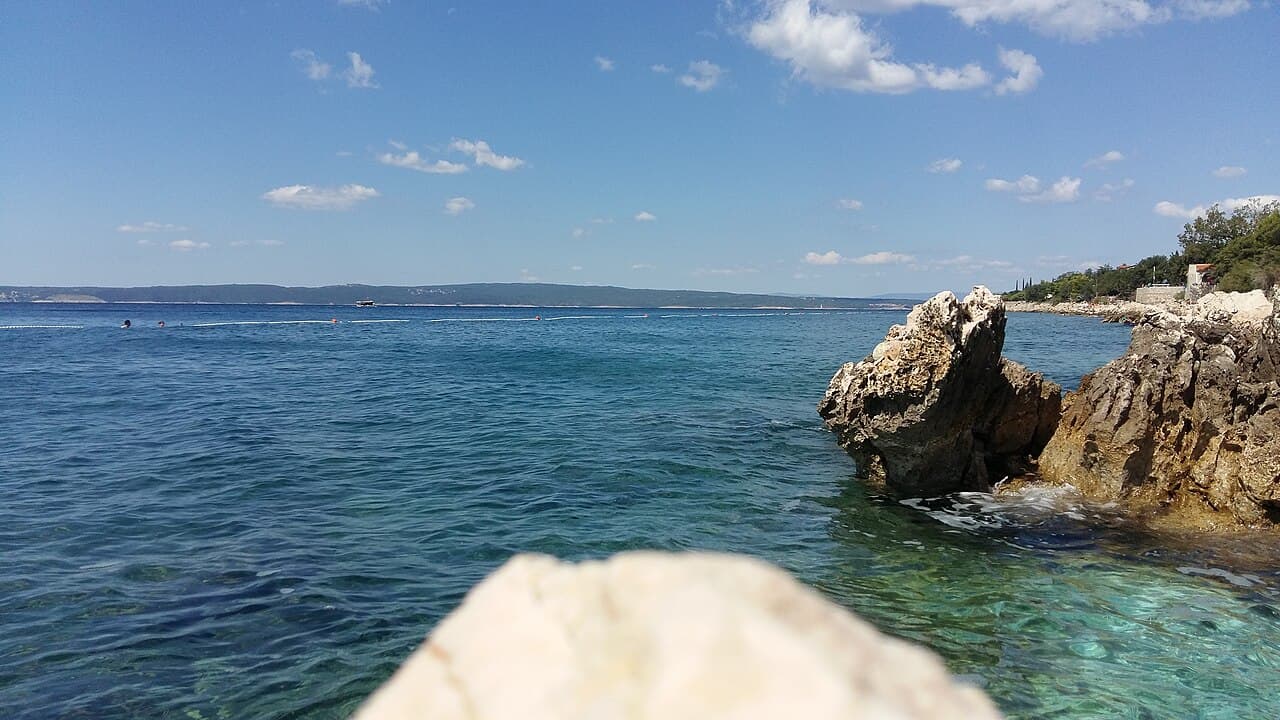
The coastline here is highly indented, creating a series of small, natural pebble coves. The beach near Camp Povile is a reliable spot for quiet swimming. The water in Povile is exceptionally clear due to the lack of large boat traffic and the rocky seabed. Parking in the village is limited and strictly enforced; expect to pay €1.50 per hour at the municipal spots or park further up near the highway and walk down.
The Freshwater Springs of Klenovica
Further south, 8 kilometers from Novi Vinodolski, is the village of Klenovica. While not entirely unknown, Klenovica operates at a fraction of the pace of its larger neighbor.
The defining feature of Klenovica's coastline is the presence of "vrulje"—underwater freshwater springs that flow directly from the mountains into the Adriatic Sea. These springs mix with the saltwater, creating a visible distortion in the water and significantly lowering the sea temperature. Swimming in Klenovica is typically 2 to 3 degrees colder than in Novi Vinodolski, making it a highly refreshing option during 35°C August days. The primary swimming spots are located past the small fishing harbor, where the pebble beaches are backed by thick pine forests.
04Local Dining Away from the Promenade
To find traditional, regional cuisine without the tourist markup, one must leave the coastal promenade of Novi Vinodolski.
Konoba Studec
Located inland near the entrance to the Vinodol Valley, Konoba Studec is a traditional tavern focusing on meat dishes. This is the place to order peka—a traditional Croatian method of slow-roasting meat (usually veal or lamb) and potatoes under a heavy cast-iron bell covered in hot coals. A peka meal typically costs between €25 and €30 per person. Because the preparation takes several hours, diners must call and order the dish at least 24 hours in advance. The tavern's stone interior and shaded outdoor terrace provide a cool environment far from the seaside heat.
Konoba Lucija in Povile
For seafood, Konoba Lucija in the neighboring village of Povile offers a distinct alternative to the commercialized fish restaurants in the center. Operating out of a modest building near the water, the restaurant focuses on daily catches sourced from local fishermen. Standard menu items include black cuttlefish risotto (crni rižot) for approximately €14 and grilled fresh squid for €16 to €18. The wine list heavily features Žlahtina, a dry white wine from the Vinodol area and the island of Krk.
05Practical Logistics for Hinterland Exploration
Navigating the off-the-beaten-path areas of Novi Vinodolski requires preparation.
- Transportation
- A rental car is mandatory. Public buses connect Novi Vinodolski to Povile and Klenovica on the coast, but there is zero public transportation running into the hinterland toward Ledenice, Omar, or Krmpote.
- Road Conditions
- Inland roads are fully paved but narrow. The standard width in the mountains often only allows one vehicle to pass comfortably. Drivers must be prepared to reverse to the nearest pull-off when encountering oncoming traffic.
- Weather Warnings
- The region is notorious for the Bura, a powerful, unpredictable northeast wind that funnels down from the Velebit mountains. During strong Bura events, driving on exposed hinterland ridges (like the route to Sviba) becomes dangerous, and temperatures can plummet rapidly. Always check the Croatian Meteorological and Hydrological Service (DHMZ) alerts before heading up the mountains.