01Logistics: Reaching Cres Island with Young Children
Cres island requires a 25-minute Jadrolinija car ferry crossing from either the mainland or a neighboring island. The two entry points are the Brestova-Porozina route (departing from the Istrian peninsula) and the Valbiska-Merag route (departing from Krk island). For families flying in, Rijeka Airport (RJK) is located on Krk island, making the Valbiska-Merag route the most efficient choice. The drive from the airport to the Valbiska ferry port takes roughly 30 minutes (28 kilometers).
Ferry Costs and the Boarding Process
Ferry fares are charged per vehicle plus per passenger and depend on the season and the length of the car; small children travel free or at a reduced fare, so check the current Jadrolinija tariff before you go. Purchasing tickets online via the Jadrolinija mobile app is necessary for summer travel to bypass ticket booth lines.
The boarding process involves driving the car onto the lower deck. Families must leave their vehicles and head to the passenger decks during the crossing for safety reasons. The passenger lounges are air-conditioned and feature basic toilets, though they lack dedicated baby changing tables. The 25-minute duration is short enough that most toddlers tolerate the trip well by simply standing at the railing to watch the water.
02Best Towns to Base a Family
Parents should skip the famous hilltop villages like Lubenice. The 40-minute drive features narrow, single-lane roads with reversing required, and the steep, unguarded cliff edges make it an exhausting and impractical destination with wandering toddlers. Instead, base the family in towns located at sea level with paved infrastructure.
Cres Town
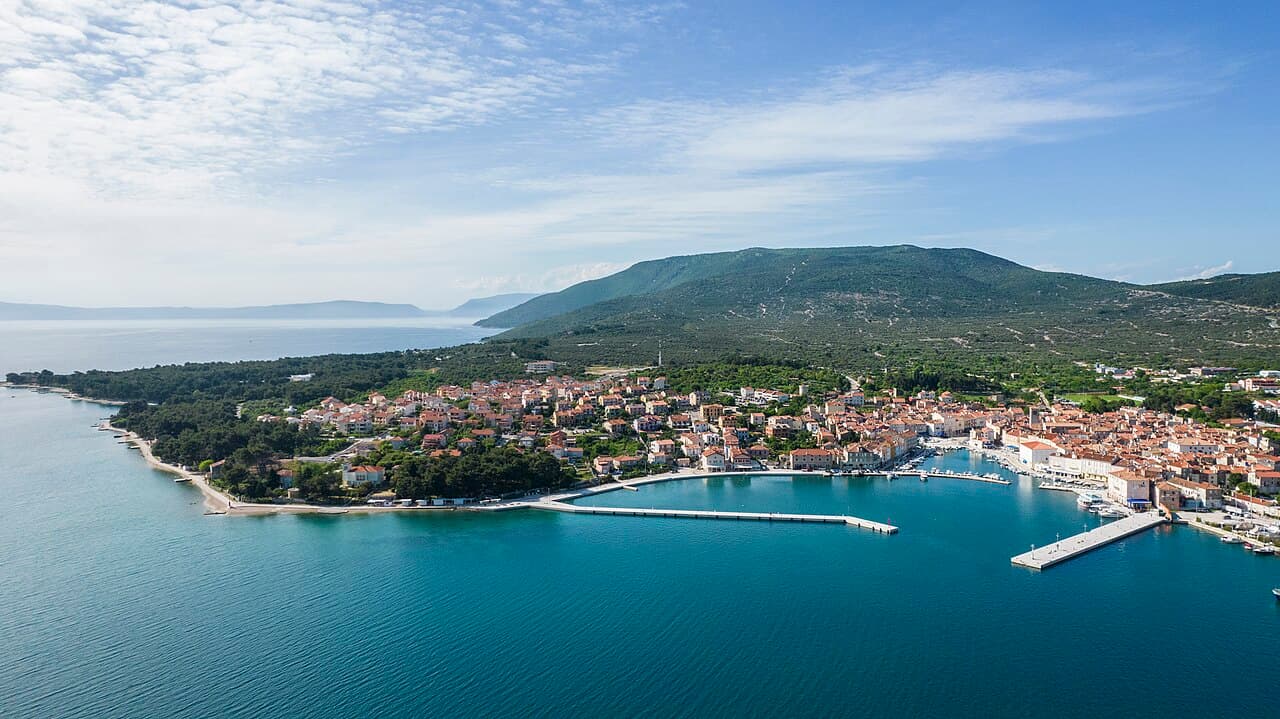
Cres Town is the administrative and commercial hub of the island. It is the top destination for families because it offers a three-kilometer, paved coastal promenade. This path allows parents to push a stroller from the town center to the surrounding beaches without navigating stairs or traffic. Cres Town also hosts the island's main medical clinic, two large supermarkets, and the highest concentration of restaurants operating with consistent hours.
Martinšćica
Located about 27 kilometers by road from Cres Town, Martinšćica is a quieter alternative. The village wraps around a wide bay and features a nearly flat layout. While it has fewer restaurants and only a small local grocery store, the immediate access to Slatina beach makes it highly functional for families who prioritize beach time over dining out.
03Top Toddler-Friendly Beaches
Croatia’s coastline consists mostly of rocks and pebbles. Sandy beaches are extremely rare on Cres. However, specific pebble beaches offer ideal conditions for young children.
Kovačine Beach (Cres Town)
Located a 20-minute walk from the center of Cres Town along the paved promenade, Kovačine Beach holds Blue Flag status. The beach consists of fine, smooth pebbles and a gentle, shallow entry into the sea. Most importantly, a dense pine forest lines the back of the beach, providing thick, natural shade throughout the day. This eliminates the need to carry heavy beach tents or rent umbrellas. Public toilets and outdoor showers are available on-site.
Slatina Beach (Martinšćica)
Slatina operates within the Slatina campsite. The beach features a mix of fine gravel and small pebbles. The water remains at knee-depth for several meters, allowing toddlers to sit and splash safely. Similar to Kovačine, pine trees offer natural shade, though it is less dense, meaning families may still want to bring an umbrella for midday sun protection.
04Essential Gear and Beach Safety
Water shoes are mandatory for all children and adults. The rocky seabed houses sea urchins, and the pebbles absorb significant heat during the peak summer months. Basic neoprene water shoes can be purchased at kiosks in Cres Town for €10 to €15, but parents should bring high-quality, well-fitted water shoes for toddlers from home to prevent blisters.
The UV index in Kvarner Bay routinely hits 9 or 10 between late June and mid-August. Sun protective clothing (UPF 50+ rash guards) is highly recommended. The Adriatic Sea temperatures in Cres range from 23°C in June to 25°C in August. While warm enough for short swims, toddlers lose body heat faster than adults and may need to be wrapped in towels after 15 to 20 minutes in the water.
05Accommodation Strategy for Nap Schedules
Balancing midday naps with family activities dictates where you should stay. Standard hotel rooms often lack the space needed for parents to relax while a toddler sleeps.
Mobile Homes
Renting a mobile home at Camp Kovačine (Cres Town) or Camp Slatina (Martinšćica) is the most functional choice. A standard mobile home costs between €110 and €160 per night in July. These units provide a separate bedroom for the child, a small kitchen for preparing formula or simple meals, and an outdoor wooden terrace where parents can sit while the toddler naps indoors. Both campsites enforce quiet hours between 13:00 and 15:00.
Traditional Hotels
Hotel Kimen in Cres Town (€140-€190/night) is the main family hotel on the island. It sits directly on the coastal promenade. The hotel offers connecting rooms, crib rentals (€5 to €10 per day), and a buffet dinner format that suits impatient young eaters. However, families must request a room facing the park rather than the sea to avoid evening noise from the outdoor restaurant terrace.
06Buying Baby Supplies: Diapers, Formula, and Food
Families do not need to fill their luggage with two weeks' worth of diapers and formula. Cres Town has two large supermarkets located on the D100 main road: Plodine and Konzum.
Plodine is the largest and operates daily from 07:00 to 22:00 during the summer. The store stocks international brands such as Pampers and Hipp, alongside regional brands like Violeta (which produces high-quality diapers and water wipes). Formula brands typically available include Novalac, NAN, and Hipp Combiotic. Pureed baby food in glass jars is widely available, with a heavy emphasis on apple, banana, and carrot blends.
For fresh food, the local market in Cres Town operates every morning in the main square, selling fresh fruit, vegetables, and local baked goods like kiflice (soft bread rolls), which are excellent toddler snacks.
07Dining Out with Toddlers
Dining culture in Croatia is highly accommodating to children. Waitstaff generally tolerate the noise and mess associated with toddlers.
Restaurant Schedules and High Chairs
Unlike Spain or Italy, Croatian restaurants open for dinner early. Most kitchens begin serving dinner at 18:00, aligning perfectly with a toddler's evening routine. High chairs (ask for a hranilica) are standard in almost all restaurants, though an establishment may only own two or three. Families eating at 18:00 will have no issue securing one, but those arriving at 20:00 during peak season might find them all occupied.
Toddler-Friendly Menu Items
Local menus feature several dishes that appeal to young palates.
- Njoki (Gnocchi)
- Often served with a simple tomato sauce (šalša) or plain butter and cheese.
- Maneštra
- A traditional Istrian and Kvarner vegetable and bean soup. It is nutritious and soft.
- Blitva s krumpirom
- Swiss chard mashed with boiled potatoes and olive oil. This is the standard side dish for seafood and is very easy for toddlers to eat.
- Palačinke
- Thin crepes served for dessert, usually filled with chocolate hazelnut spread or apricot jam.
Pizzeria Palada on the Cres Town harbor is a reliable option. It opens early, serves food quickly, and the outdoor seating allows restless children to watch the boats while waiting for their meal.
08Low-Intensity Activities and Excursions
Keeping toddlers entertained on Cres requires a low-intensity approach, focusing on short excursions rather than full-day boat trips.
Beli Visitor Centre and Griffon Vultures
The village of Beli is located 21 kilometers north of Cres Town. The drive takes about 30 minutes on winding roads. Beli hosts the Griffon Vulture Rescue Centre. The facility features an outdoor aviary where injured vultures are rehabilitated. Viewing these massive birds is a short, visual activity that holds a toddler's attention without requiring long walks. There is a small entry fee, so check the centre's current prices before you go. Note that the final descent to Beli beach is extremely steep; families with strollers should stay near the visitor center and avoid the hike down to the water.
The Coastal Promenades
The best daily activity is walking the coastal paths. The path connecting Cres Town to the Marina offers flat terrain, passing by small boat docks and shaded benches. A local tourist train (on rubber wheels) runs along this route during the evenings in July and August. A 15-minute ride costs €3 and is a major highlight for young children.
09Weather Patterns and the Optimal Daily Schedule
Cres experiences a Mediterranean climate. July and August bring daytime highs of 30°C to 34°C. June and September are much milder, with highs around 25°C to 27°C, making them the optimal months for traveling with young children.
During peak summer, families must adopt a split schedule. The safest outdoor hours for toddlers are between 08:00 and 11:30. By noon, the sun is intense, and the stone surfaces become uncomfortably hot. Families should retreat indoors or to dense shade between 12:00 and 16:00. Beach activities can safely resume after 16:30, with the sun setting around 20:30 in July.
10Healthcare, Pharmacies, and Emergencies
Access to healthcare is a primary concern for parents. Cres Town houses the island’s main healthcare center, the Dom Zdravlja, located at Turion 26. This clinic handles minor injuries, ear infections, and basic illnesses. It operates Monday through Friday, with a dedicated tourist clinic open on weekends during the summer season.
The main pharmacy (Ljekarna) is located directly on the Cres Town harbor promenade. It is open Monday to Friday from 08:00 to 20:00, and Saturday mornings from 08:00 to 13:00. The pharmacy dispenses basic pediatric medicines, including ibuprofen (Nurofen for children) and paracetamol (Lupocet), without a prescription.
For major emergencies, the island is not equipped to handle severe trauma or complex pediatric issues. The nearest major hospital is the Clinical Hospital Center (KBC) in Rijeka, located on the mainland. In severe emergencies, medical transfers are conducted via speedboat or helicopter to Rijeka.