01How to Get to Grožnjan
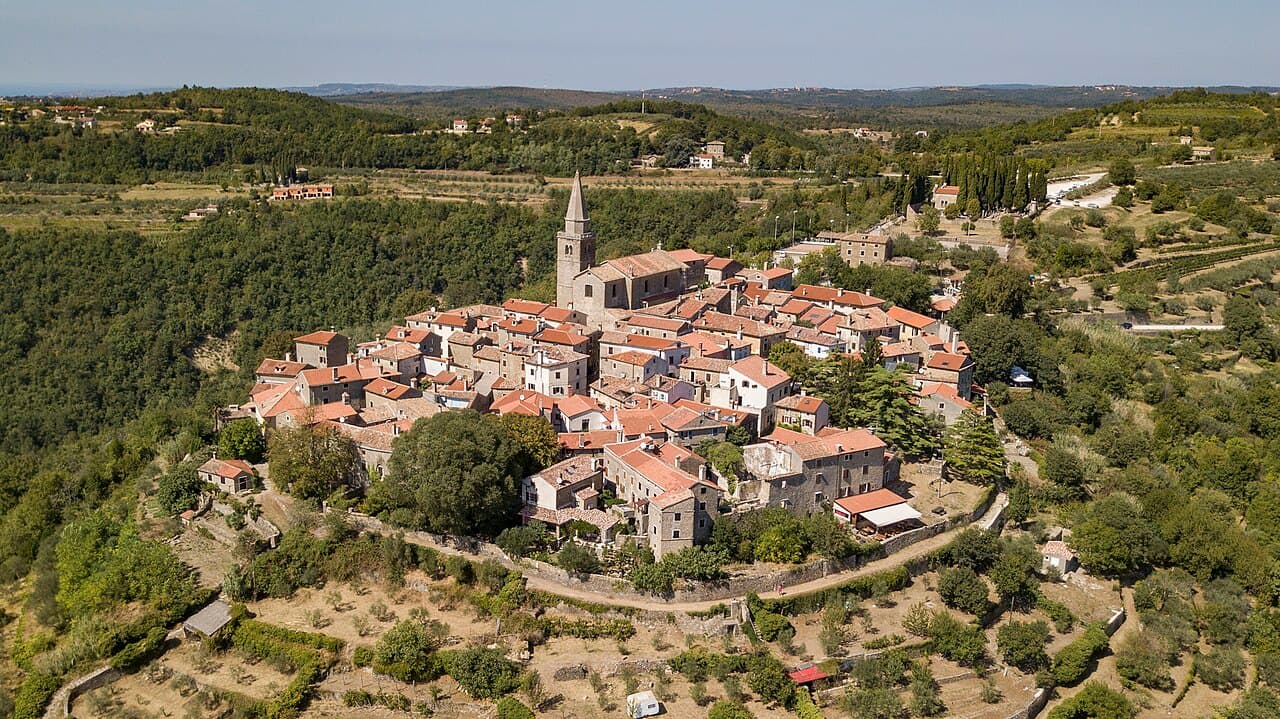
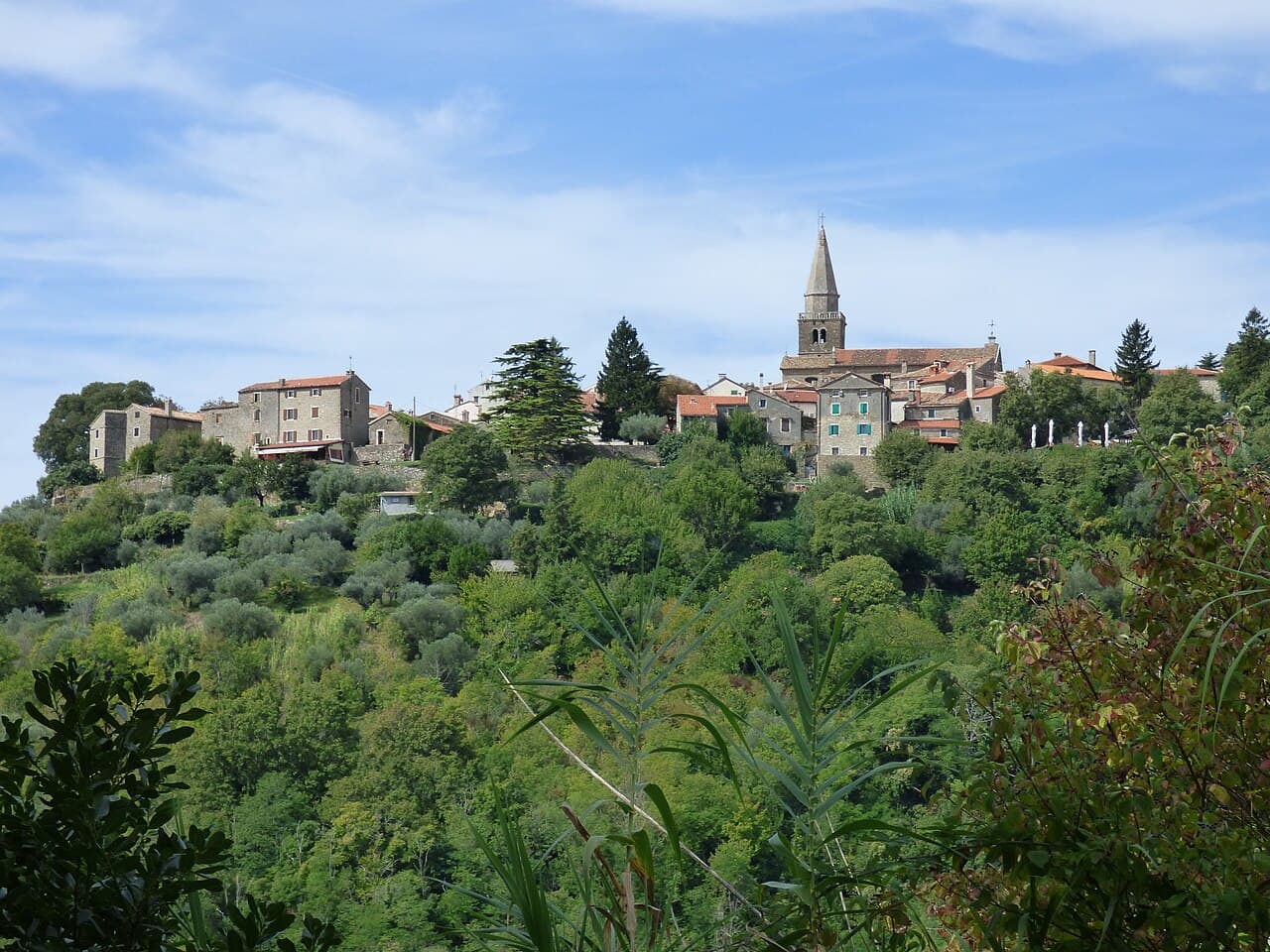
Grožnjan sits on a hill above the Mirna river valley in the northwest of Istria. A car is the practical way to reach it. Public transport is limited and infrequent, and the town has no train station.
- From Novigrad
- about 20 km, roughly 25 minutes.
- From Motovun
- about 17 km.
- From Poreč
- about 35–40 km, under an hour.
- From Pula
- about 80 km, roughly 1 hour 15 minutes.
- From Trieste (Italy)
- about 60 km via the Slovenian border area; carry a passport or ID card.
The old town is largely car-free. Park in the lots at the foot of the hill and walk up. Parking is paid in season, with the cost typically a few euros for a half-day. Bring coins or a card in case the machine is temperamental.
02How Long to Spend in Grožnjan
Two to three hours covers the old town, a gallery or two and a coffee. Add an hour for lunch. A full day only makes sense if a concert is on in the evening. Grožnjan is small, with about 100 permanent residents in the old core, so the streets stay quiet outside festival periods.
The town works best as one stop in a hill-town day. A common combination is Grožnjan, Motovun and a truffle lunch in Livade. Guided day tours from Rovinj, Poreč and Pula follow the same pattern.
03What Makes Grožnjan Different
After World War II, the Italian population left and the town was nearly abandoned. In the 1960s, artists and musicians took over empty stone houses and turned them into studios. Grožnjan was formally designated a town of artists in 1965, and it now has around 20 galleries and studios.
The castle, first mentioned in 1102, houses the International Cultural Centre of Jeunesses Musicales Croatia. From May to October, music students rehearse in the town's halls and classrooms, and practice drifts out of open windows.
04Best Things to Do in Grožnjan
Walk the Old Town
Enter through the 15th-century town gate. Its outer face carries the coats of arms of Venetian administrators. The main lanes can be walked end to end in 15 minutes, so the point is to go slowly and look into doorways. The Belvedere terrace at the edge of town has the best views across the Mirna valley toward the Motovun hill.
Visit the Fonticus Gallery
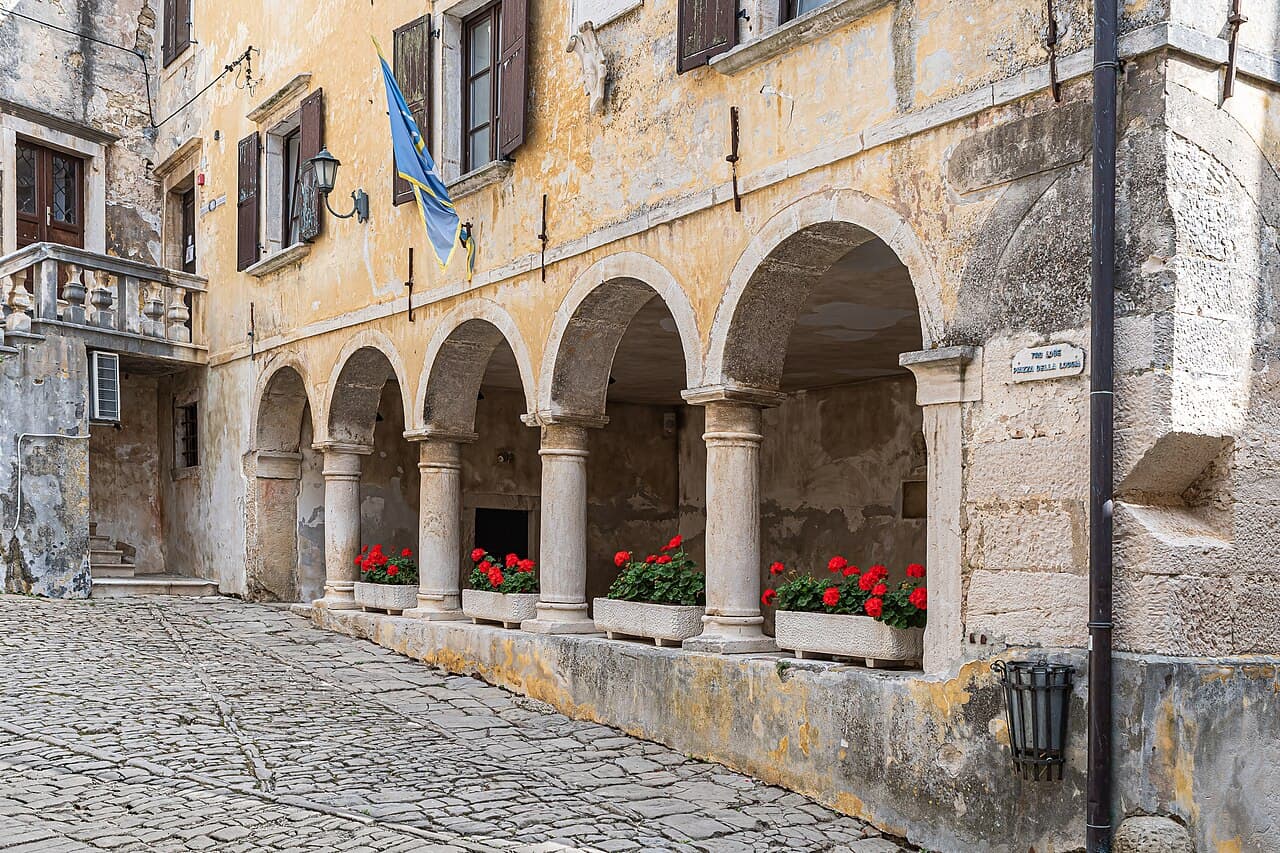
The Fonticus occupies the Venetian loggia built in 1597. It runs solo exhibitions and visual art projects throughout the year and shows work from the town's own art holdings. It is the best first stop if you want to see what the local artists' circle produces.
Browse the Private Galleries and Studios
Studios sell paintings, ceramics, textiles, jewellery and woodwork. Quality varies. Some shops sell mass-produced souvenirs, including imported items, so ask the person behind the counter whether the work is their own. Studios that are staffed by the artist are the ones worth buying from. Many owners open irregularly and close for lunch or on quiet weekdays outside summer.
See the Churches
The parish church of St Vitus, Modestus and Crescentius dates to 1600 and has Baroque choir stalls. Its bell tower is 36 m high. The small chapel of St Cosmas and Damian, from 1554, has a porch of the 'lopica' type. Check Spinotti Palace from outside for its Baroque façade.
05Best Time to Visit Grožnjan
May to October is the practical season, when studios are most often open and music courses run. Opinion: mid-July and late September are the two best windows, because the town then has a programme rather than just scenery.
- Jazz is Back B.P. (mid-July)
- a two-week festival of nightly open-air concerts, jam sessions and a summer jazz school, founded by Boško Petrović in 1999. Concerts have been staged at the Balwan City summer stage and the Belvedere, with Istrian wine and olive oil tastings alongside.
- Ex Tempore (last weekend of September)
- an international painting event held since 1994. The programme opens on Thursday with canvas stamping and ends with an awards ceremony on Sunday. Painters work in lanes and loggias all over town.
- Winter
- most galleries and cafés are closed or on short hours. Go only if you want a silent village.
August midday is hot on exposed stone. Visit before 11:00 or after 17:00.
06Where to Eat and Drink
Grožnjan's food is inland Istrian: fuži or pici pasta, truffles, pršut, local cheese, olive oil and Malvazija white wine or Teran red. Truffle season peaks in autumn for white truffles, while black truffles are available for much of the year.
- Zigante Enoteka (Gorjan 5)
- a small deli in the old town selling truffle products, cheese, olive oils and local wines. You can sit for a glass of wine and a plate of savoury snacks.
- Konoba Tre Volti
- a traditional Istrian restaurant, rated 4.5 on Tripadvisor.
- Amodomio
- a pizza and Italian place, rated 3.7, more casual and with a lower rating than the konobas.
- Konoba Pintur
- a konoba on Ulica Mate Gorjana.
For a bigger truffle meal, drive to Zigante in Livade or Konoba Mondo in Motovun. Budget about €15–25 for a main course in a konoba. Truffle dishes cost significantly more, often €25–40 depending on the truffle weight. Always ask the price of shaved truffle before ordering.
07Insider Tips for First-Time Visitors
- Wear flat shoes. The stone is polished and slippery, especially after rain.
- Arrive early in July. Jazz evenings fill the cafés and parking lots by early evening. Book dinner in advance on concert nights.
- Carry some cash. Small galleries and cafés sometimes prefer cards only above a minimum, or not at all.
- Listen for rehearsals. Daytime student concerts in summer are often free and informal.
- Pair it with the Parenzana. The former narrow-gauge railway line, now a greenway, passes close to the town and works for cycling.
- Fill up the tank first. Rural Istria has few fuel stations outside the bigger towns.
- Combine with wine. Local wineries around Grožnjan and Motovun, including Fakin, offer tastings; call ahead.
08Where to Stay
The old town has only a few rooms and apartments, and many visitors stay in surrounding villages, agritourism farms or coastal bases. Umag, Novigrad and Poreč are the usual coastal bases, each within about 20–40 km. Inland, Motovun is 17 km away. Staying overnight in Grožnjan itself gives you the quiet evening streets once the day-trip groups have left.
09Is Grožnjan Worth Visiting?
Yes, if you value atmosphere, galleries and music over landmarks. It is not a town with a major monument and it is not large enough for a full day without an event. Treat it as a half-day stop and time it with a festival, and it is one of the better hill-town visits in Istria.