01What Is Grožnjan Known For?
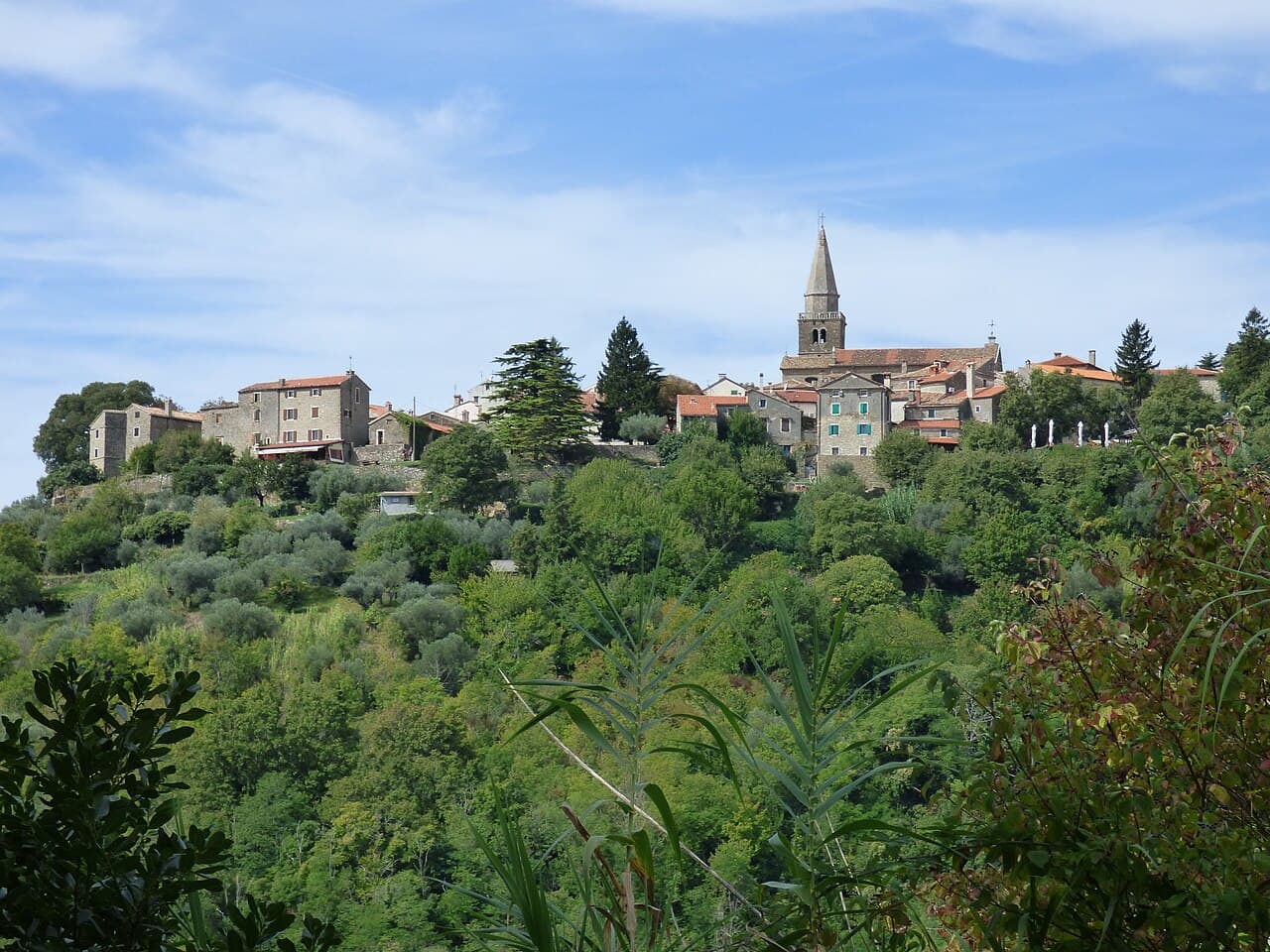
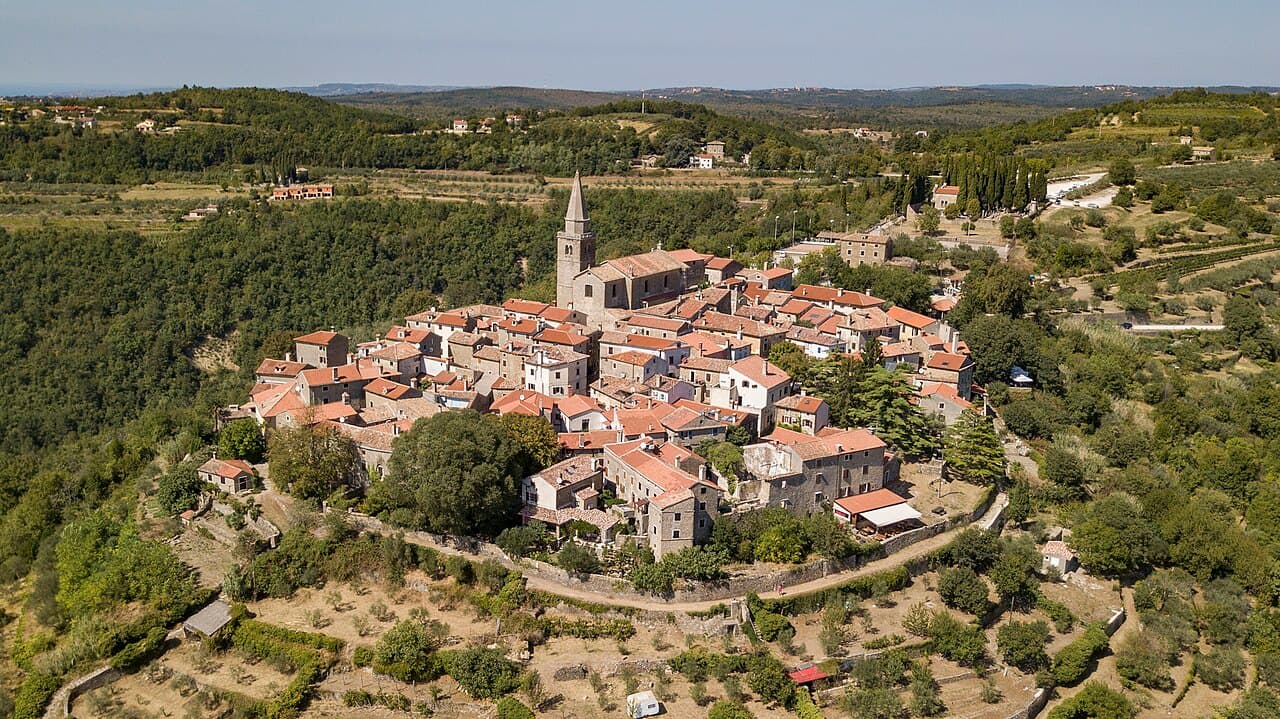
Grožnjan (Italian: Grisignana) is a hilltop town in northwest Istria with a municipal population of 656 at the 2021 census, and only about 142 people living in the town itself. It was first mentioned in 1102 and was declared a town of artists in 1965, when artists and musicians moved into houses left empty after World War II. Roughly 20 galleries and about 40 ateliers in the area now keep it active. The Jeunesses Musicales Croatia international cultural centre has been based here since 1969, which is why music drifts out of open windows in summer.
The town is small. The main sights are all within a few minutes' walk of each other, and the old centre is closed to most traffic.
02Top Attractions in Grožnjan
1. The Medieval Old Town
The town sits on a sandstone hill above terraced olive groves and vineyards. From the walls and lookouts, the view covers about twenty surrounding villages, the Mirna valley and, on clear days, the sea from Novigrad to Umag. Almost every building is stone.
The lanes are narrow and cobbled. Wear shoes with grip, as the stone is polished smooth and slippery after rain. Walking the whole centre without stops takes about 10 minutes. With stops, plan 2 to 4 hours.
The walk costs nothing. There is no ticket office for the town as a whole.
2. Art Galleries and Artist Studios
The galleries are the main reason to come. Studios show paintings, ceramics, textiles, jewellery, woodwork and sculpture, and many are run by the artists, so the person behind the counter is often the person who made the work. Entry is free almost everywhere, and prices are set per piece, so a small print or ceramic piece is a realistic souvenir while larger canvases cost considerably more.
Opening hours are informal. Many galleries open late morning and stay open into the evening in summer, and some close or shorten hours outside the season. Spring and autumn weekdays are the least predictable. Walking the lanes after 11:00 on a Saturday or Sunday, from May to September, gives the best chance of finding most doors open.
3. Fonticus Town Gallery
Fonticus is the municipal gallery and the best single place to see work by artists from the Grožnjan art circle, the group of artists who live in the town and surrounding villages. Visit it first for an overview, then use what you see to decide which private studios to enter. Check the posted hours at the door, since the programme changes with exhibitions.
4. Town Loggia and the Main Square
The Town Loggia is a free stop on the main square and is a useful orientation point. It is a short walk to the parish church and to the Kaštel (castle), where music rehearsals often leave sound in the lanes during the summer academy. The Kaštel is used for musical education, so expect sound rather than open doors.
5. Terasa Belvedere and the Town Walls
The Belvedere terrace at the edge of the old town is the main viewpoint and the festival's concert location. The walls around it are where many people sit with a drink in the evening. Late afternoon is the best time for the view, when the light is lower and the heat has dropped.
03Jazz is Back BP: The Main Event
The Jazz is Back BP festival is the headline event and the reason to plan the year around Grožnjan. Croatian jazz vibraphonist Boško Petrović founded it in 1999, and his initials were added to the name after his death. In 2008 it was named the best small jazz festival in Europe by the European Jazz Federation. The 2026 edition ran from 13 to 26 July, with 14 concert evenings. Expect the 2027 edition in a similar mid-to-late July window and confirm the dates with the tourist board before booking.
Key facts:
- Entry is free. There are no tickets and no reservations.
- Concerts usually start around 21:30 and run past 23:00.
- The Jazz Summer School of Jeunesses Musicales Croatia brings students from over 20 countries, and student performances add to the background music.
- The 2026 lineup mixed international names, including several Grammy winners, with Croatian and regional acts, and included a folk and world music night.
The quality varies by night. Headline nights with international quartets are the ones to prioritise, and a Friday or Saturday is not automatically better than a weeknight. Check the programme and pick two or three evenings rather than attending every night.
Seating is limited, so arrive by 20:30 to get a place. Many visitors sit on the town walls with food and drink from the village and listen from there.
04Other Events Worth Timing a Visit Around
Ex Tempore (September): An international painting event in which artists work outdoors in the old town. Canvases are displayed along lanes and arcades, and visitors can watch pieces develop and speak to the painters. It is free and suits people who care more about art than concerts.
Early May: The town fills with actors, musicians and painters at the start of the season, and it is one of the liveliest non-summer periods.
Summer music academy: July and August bring jazz, classical, guitar, piano and strings to the town as students rehearse. It costs nothing to listen from the street.
05What to Eat and Drink in Grožnjan
The village has a handful of small konobas and cafés, mostly serving Istrian staples: fuži or pljukanci pasta, local olive oil, Malvasia and Teran wines, and truffle dishes. A main course typically costs €12 to €25, and truffle dishes sit at the upper end. On festival evenings, book ahead, as seating is limited and the village fills quickly.
Buying olive oil or a bottle of wine directly from small producers in the shops is generally better value than the restaurant mark-up.
06Best Time to Visit Grožnjan
- July
- Jazz is Back. Busiest and most atmospheric, with the highest accommodation demand.
- September
- Ex Tempore, mild weather and the start of truffle season.
- Late May to June
- Galleries open, fewer visitors, good light.
- April and early May
- Quietest period. Some venues are still opening for the season.
- August
- Hot, but the elevation keeps the town cooler than the coast.
07How to Get to Grožnjan
Grožnjan is about 30 minutes by car from the beaches of Umag and Novigrad. It is in Istria County, near Buje. There is no train service, and public buses are infrequent, so a car is the practical way to arrive. Park in the lots outside the old centre and walk in. Allow extra time on July festival evenings, as parking fills up and the return drive is in the dark on narrow rural roads.
08Practical Tips
- Go in the afternoon and stay for evening. Galleries are open and the light improves toward sunset. In summer, this also means cooler temperatures on the lanes.
- Carry cash. Small studios and some cafés may prefer cash, and card machines are not guaranteed.
- Do not expect set opening hours. Most galleries work on seasonal schedules, so a closed door often means a short wait or a better time later.
- Bring a light layer for jazz nights. The terrace is exposed, and it cools after dark even in July.
- Ask artists directly. Many will explain their technique or show a studio space if you ask politely.
Most visitors overestimate how much there is to do here in terms of monuments, since Grožnjan has no major museum or fortress to tick off. The galleries and the evening atmosphere are the point, and treating the town as a one-hour photo stop misses most of its value.
09How Long Do You Need?
Two to four hours covers the main sights: the old town walk, Fonticus, several galleries and a coffee on the walls. Add an evening if a concert is on. A full day only makes sense if you combine the visit with a long lunch and a Jazz is Back concert.