01What Are the Best Things to Do in Osijek?
Osijek is the largest city in Slavonia and the fourth-largest in Croatia, with 96,313 residents in the 2021 census. It sits on the Drava River, and its main sights are close together. Most can be covered on foot in one full day. Daily costs are well below Adriatic levels, roughly €40–€80 per person including food and a bed.
The headline attractions are Tvrđa, the Co-Cathedral, the Drava riverfront with its pedestrian bridge, the zoo, and the Museum of Slavonia.
02Tvrđa: Osijek's Baroque Fortress
Tvrđa is the first stop for any visit. It is a Baroque star fort and military town, one of the best-preserved in Central Europe and often described as the largest of its type in the country. Walking it costs nothing and has no set opening hours.
What to see in Tvrđa
- Holy Trinity Square
- The main square, with a Baroque plague column at its centre and the Palace of the Slavonian General Command alongside.
- Church of St Michael
- A Baroque church on the square, worth a few minutes inside.
- Water Gate
- One of the few surviving original entrances, facing the Drava.
- Ramparts and bastions
- Sections of the original defensive walls are still standing and can be walked along.
The fortress is also a student district, so cafés, bars and galleries fill the old military buildings. Plan 2–3 hours, including a coffee stop.
Local tip: Before 9 AM the squares are almost empty, and only locals with dogs and cyclists pass through. Evenings are busier, especially in summer.
Museum of Slavonia
The Museum of Slavonia is the best indoor stop in Tvrđa. It covers the region from prehistory through Ottoman rule and the Habsburg era. Entry is about €3–5, and 1–1.5 hours is enough for most visitors. An archaeological museum also operates within the fortress, and it is a better fit for anyone who prefers the earlier periods.
03Co-Cathedral of St Peter and St Paul
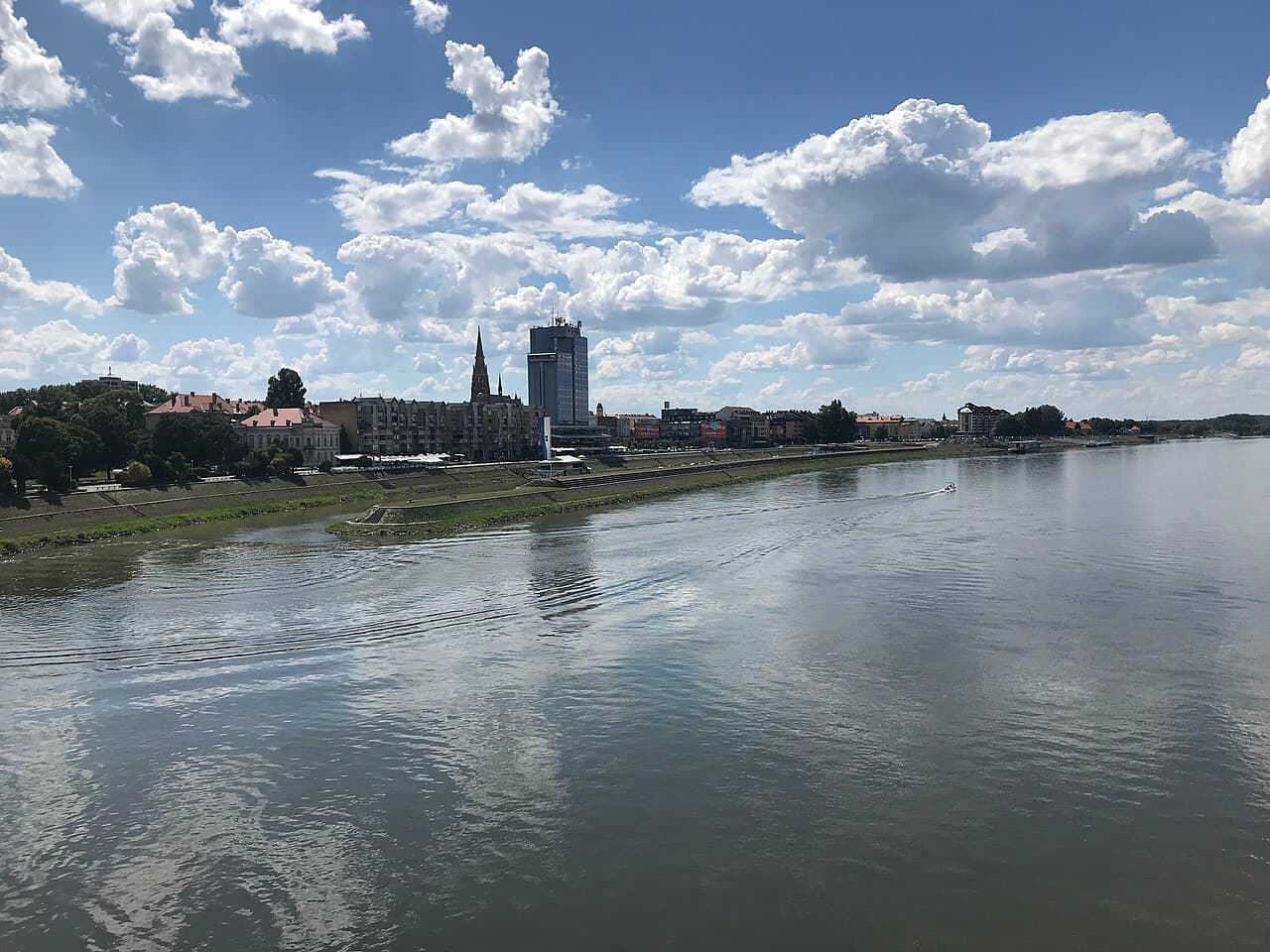
The red-brick Co-Cathedral dominates the skyline of the lower town. Its bell tower is 90 m tall, which makes it the second-tallest church tower in Croatia after Zagreb Cathedral. It was completed in 1898 after about four years of construction. The "co-cathedral" title reflects its role in the Đakovo-Osijek Archdiocese.
The church is free to enter and is generally open from morning until early evening, around 08:00–19:00. A tower climb carries a small fee of around €2. Pick a clear morning, since the view across the Drava plain depends on visibility. It sits on Ante Starčević Square, about 1.5 km from Tvrđa, which is an easy 20-minute walk.
04Drava Riverfront and the Pedestrian Bridge
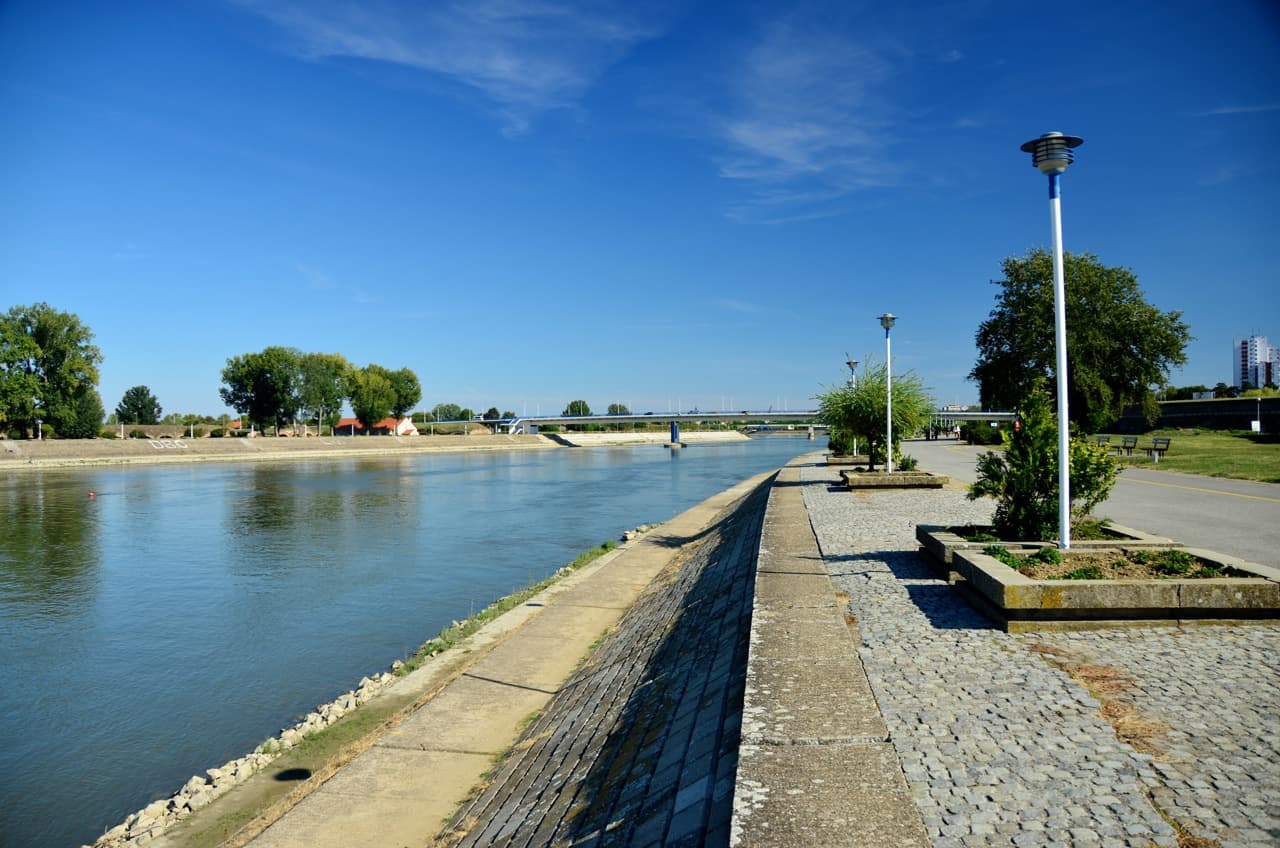
The Drava promenade is the city's main outdoor space. The pedestrian bridge crosses the river, is open 24 hours a day, is lit at night, and is free. It links the Tvrđa side of town to the opposite bank and gives a clear view of the fortress and the Co-Cathedral skyline.
Kompa Ferry
The Kompa ferry is a short, free river crossing that departs from outside the Kompa restaurant. It runs between the centre and the zoo side (Tvrđavica) every 30 minutes, from April to October. It is the most pleasant way to reach the zoo and takes only a few minutes.
Cycling and walking
Paths run along both banks, and the cycle route is flat. City bike rental costs roughly €5–€10 per day. Riverfront cafés and the beach-style areas on the Drava are busiest from June to August.
05Osijek Zoo
Osijek Zoo is on the left bank of the Drava and is the main family attraction. Ticket prices from the zoo's own price list:
- Adults: €6
- Children (3–14): €4
- Students: €5
- Ticket with education programme: €7
- Annual ticket: €70
Visitors rate it about 4.4★ on major review platforms, with giraffes and monkeys among the most-mentioned animals. Free parking is available nearby. Allow 2–3 hours. The zoo also runs a "Night of the Bats" programme at €7. Combine it with the Kompa ferry for the best route.
06Europska Avenija and Kapucinska Street
Europska avenija is the city's grand boulevard. Its tree-lined streets and Secession and eclectic buildings link the centre to Tvrđa. Kapucinska street is the evening promenade, where locals take the traditional "Korzo" stroll between 18:00 and 21:00. Most visitors enjoy it best at dusk, ending with a drink in Tvrđa. Tram or bus tickets cost about €0.70–€1, and a tram runs along this axis if the walk feels long.
07Food and Drink Worth Planning Around
Slavonian cooking is meat-heavy and spiced. The main dishes to try are čobanac (a spicy stew), kulen (paprika sausage) and mixed grills. Expect to spend about €12–€15 for a main course in a traditional restaurant. Craft beer is a local interest: the Gajba beerhouse in Tvrđa is a central spot, with beers at around €3.50. The main market (Glavna tržnica) is best visited before 9 AM for kulen, cheese and fresh produce.
08Events Worth Timing a Visit Around
Osječko Ljeto Kulture (Osijek Summer of Culture) runs from late June to the end of August. It includes more than 50 free open-air theatre, music and film events across Tvrđa's squares and other venues. Book a room early for the opening weeks.
09Is Osijek Worth Visiting? A Direct Verdict
The Co-Cathedral tower climb is not essential, and the interior takes ten minutes. Skip the queue and spend that time on Tvrđa at dawn and the riverfront at sunset. Those two give far more of the city's character than any single ticketed sight. Osijek rewards a slow day, not a checklist. It is also not a good add-on for a short, coast-focused trip, since it is 3–4 hours from Zagreb.
10Sample One-Day Route
- 08:00: Market and Co-Cathedral (tower if clear).
- 09:30: Walk along Europska avenija to Tvrđa.
- 10:00–12:30: Tvrđa squares, ramparts and the Museum of Slavonia.
- 13:00: Slavonian lunch (€12–€15).
- 15:00: Pedestrian bridge and Kompa ferry to the zoo.
- 18:00: Kapucinska street and craft beer in Tvrđa.
11Best Time to Visit
Late May to late September has the warmest weather and the most outdoor activity. April–June and September–October are the best months for walking, with fewer crowds. The Kompa ferry operates April through October only, so winter visitors lose that route.