01Dog beaches in Rabac
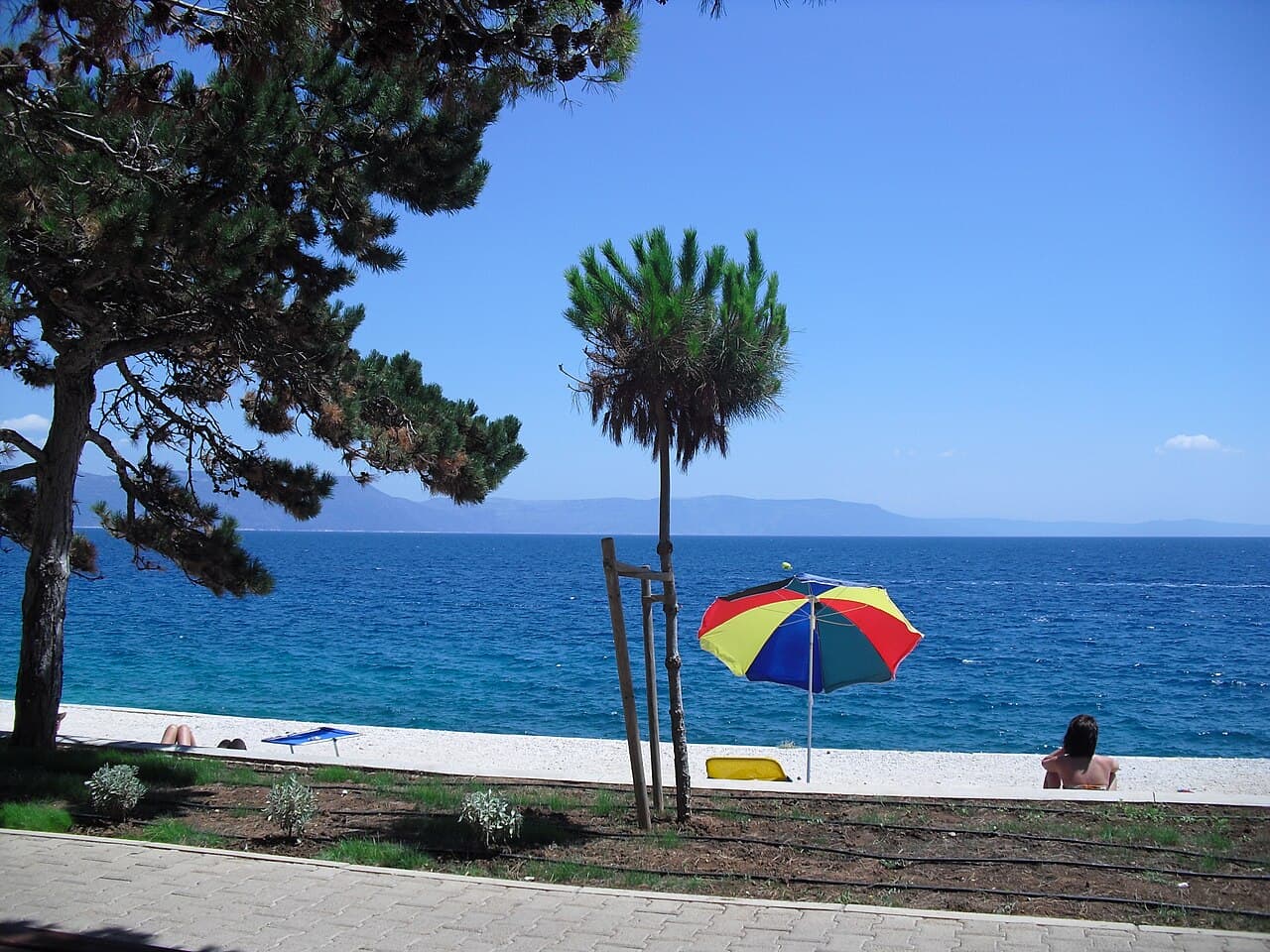
Rabac has one named dog beach: Girandella, a pebble and gravel beach where part of the shoreline is set aside for dogs. It lies just beyond the hotel beaches, away from the central promenade. Tourist-board listings for Istria name Girandella as the Rabac pet beach. The dog section has a waste bin with bags and some bushes for shade, but no shower. Rinse your dog at the nearby beach shower or carry fresh water.
Girandella is also known for a naturist (FKK) section next to it, so check which part you are on before settling in.
Are dogs allowed on other beaches in Rabac?
Local guides state that in Labin and Rabac dogs are allowed on all beaches that do not hold a Blue Flag. In practice, that rules out the main hotel and town beaches in peak season. Where there is no sign banning dogs, a swim is usually tolerated, but other bathers may complain, and pebble beaches with no shade are hard on dogs in summer. Keep your dog on a lead and pick up after it. Croatia has no universal beach-dog law, so each municipality and beach concession sets its own rules. Look for the sign at the entrance.
02Dogs in the old town, restaurants and shops
Rabac is a small resort with a harbour promenade, so there is no walled old town to navigate. The old town is Labin, on the hilltop about 4–5 km above Rabac. Its steep cobbled lanes are walkable with a leashed dog, though stone paving gets hot in July and August. Walk it early or after 18:00.
In restaurants, terraces are the norm for dogs. Many konobas and cafés in Istria accept well-behaved dogs outdoors, and indoor dining is usually refused. Dogs are not allowed in food shops or markets. Ask before sitting down, and ask for a water bowl. Most staff will provide one.
03National parks, nature parks and ferries
The nearest protected area is Učka Nature Park, which has leashed-dog hiking on marked trails. Rules differ across Croatia's national parks. Several, such as Plitvice, Krka and Paklenica, limit or regulate dogs, so check the park's rules before driving there with a pet.
For island trips, the car ferry from Brestova to Porozina on Cres takes dogs on the vehicle deck or passenger areas on a lead. Jadrolinija ferries and catamarans generally accept dogs on a lead, sometimes with a muzzle requirement and sometimes with a small ticket for the dog. Confirm the rules when you buy tickets, as they vary by line and operator.
04What accommodation charges for a dog
In Croatia, a pet fee of about €10–20 per night is typical for hotels and apartments. Some private rentals charge a flat cleaning fee instead, and a few waive the fee for small dogs. Campsites often charge a lower daily dog rate. Hotels such as Miramar and Allegro Sunny Hotel by Valamar and Camp Oliva have been listed as accepting pets in Rabac. Policies change, so confirm in writing, including breed or size limits and whether dogs can stay in the room alone.
Practical tip: choose ground-floor or terrace-level rooms with a stone or tile floor. They stay cooler and make muddy paws easier to deal with.
05Summer heat and the best months
July and August bring hot days that make pavements and pebbles uncomfortable and can cause heatstroke in dogs. Walk and swim before 10:00 and after 18:00, and never leave a dog in a parked car. The sea is warm and calm from June to September.
The best months for dogs are May, June and late September to October. Temperatures are mild, beaches are quieter and fewer rules are enforced against dogs. Many Rabac hotels and restaurants open from April or May, so check seasons before booking an off-peak stay.
06Vet basics
Labin, about 5 km away, is the nearest town for a vet clinic, and larger clinics operate in Rijeka and Pula. Save a clinic's number before you travel and ask your accommodation for the closest emergency option. Ask your home vet about tick and flea prevention, as ticks are common in Istrian scrub and woodland. Heartworm and leishmaniasis risk is higher in southern Europe, so ask about preventive treatment. Pack your dog's regular medication and food, as brands can be hard to find.
07EU pet passport rules for driving to Croatia
Croatia follows EU pet travel rules. For a dog entering from another EU country you need:
- An ISO 11784/11785 microchip, implanted before or on the same day as the rabies vaccination.
- A valid rabies vaccination, with 21 days elapsed after the first vaccination before travel.
- An EU pet passport issued by an authorised vet. The dog must be at least 12 weeks old for rabies vaccination. Croatia does not require tapeworm treatment for dogs.
From 22 April 2026, new EU rules apply. EU pet passports are issued only to owners whose main home is in the EU, and passports held by Great Britain residents are no longer accepted for entry. Travellers from the UK, Switzerland or other non-EU countries need an Animal Health Certificate instead, which has a short validity window of about 10 days for entry. Maximum five pets per traveller. Check that the microchip date comes before the rabies date, as a reversed order invalidates the vaccination and is a common reason for refusal at the border.
08Verdict: how dog-friendly is Rabac?
Rabac is dog-friendly, 4 out of 5. It has a designated dog beach at Girandella, permission on non-Blue Flag beaches, accommodation that accepts dogs and easy access to Učka's trails. The limits are the lack of a shower at the dog beach, the pebbles and little shade in summer, and restrictions on the main beaches. It is a better choice for a May–June or September trip than for a July–August beach holiday with a heat-sensitive dog.