01Exploring Slano Beyond the Main Marina
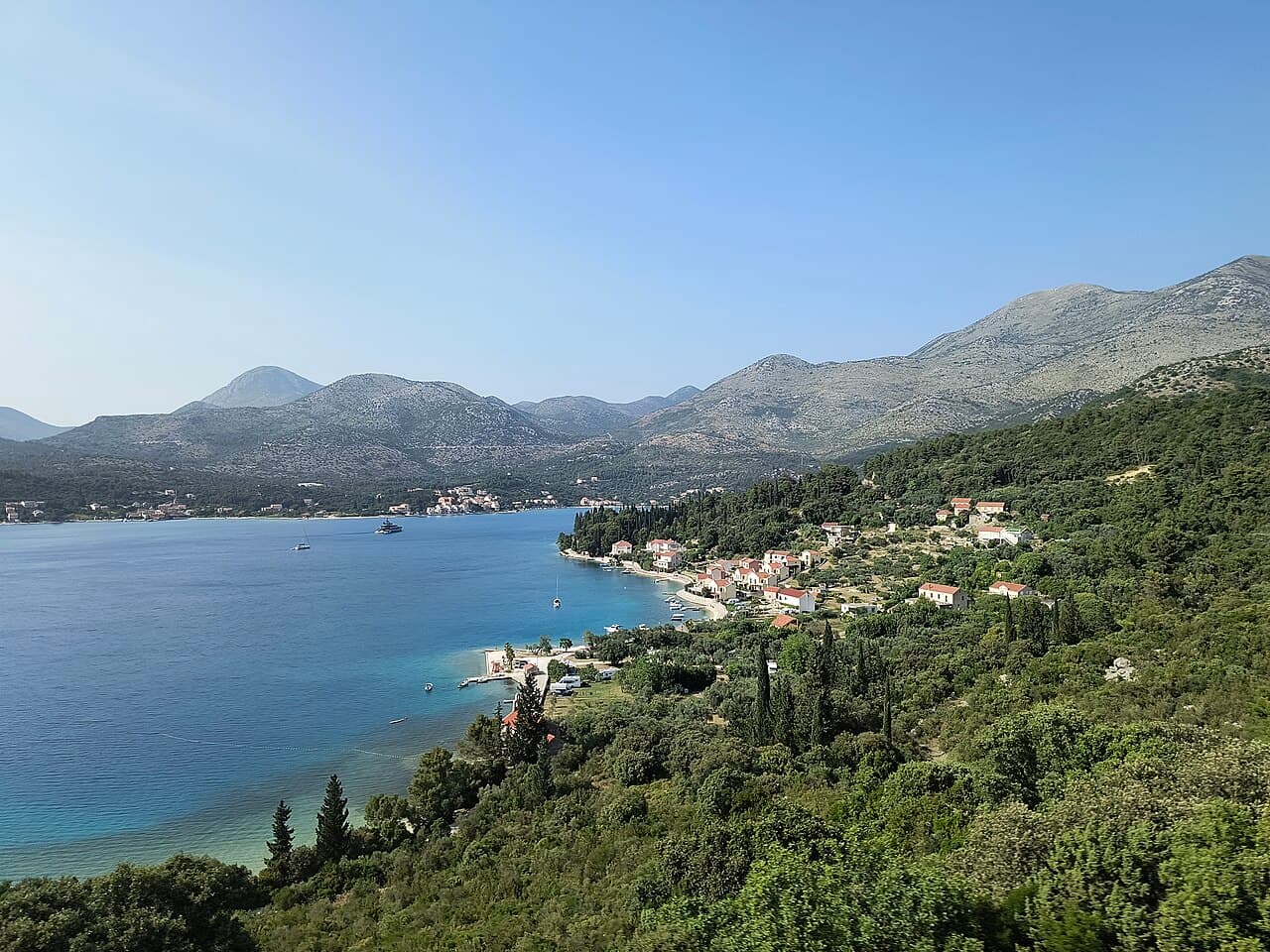
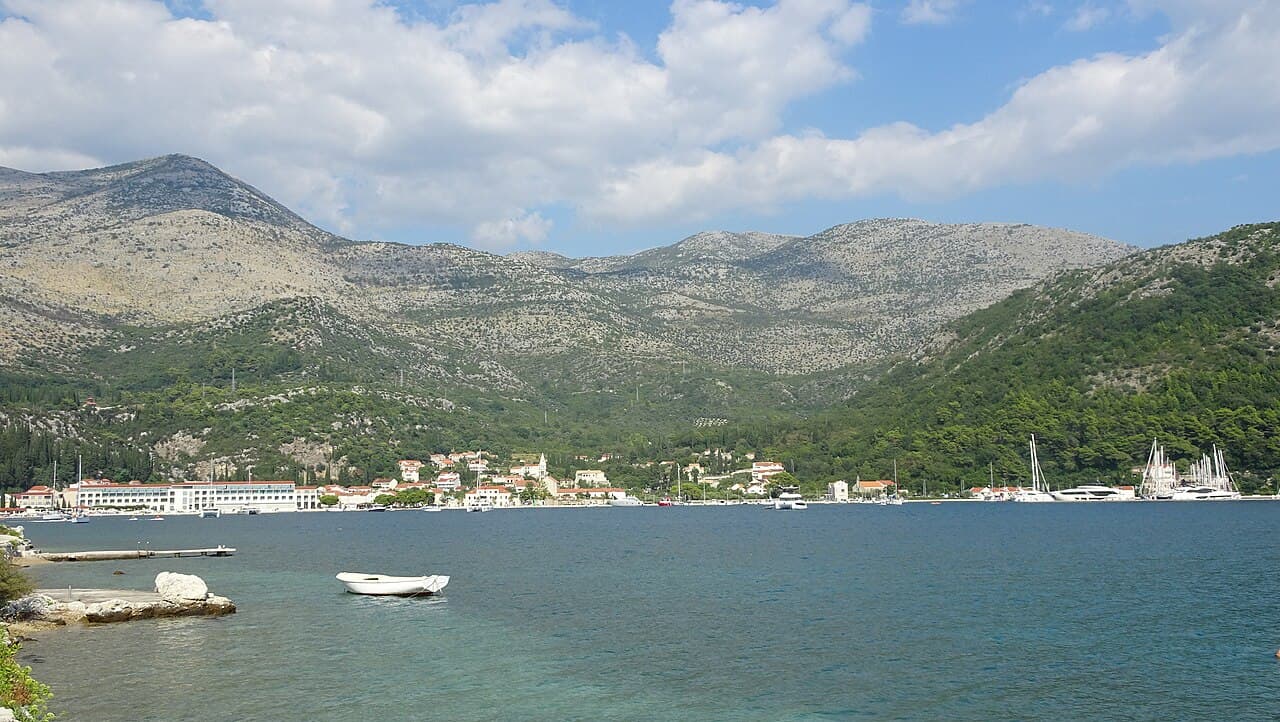
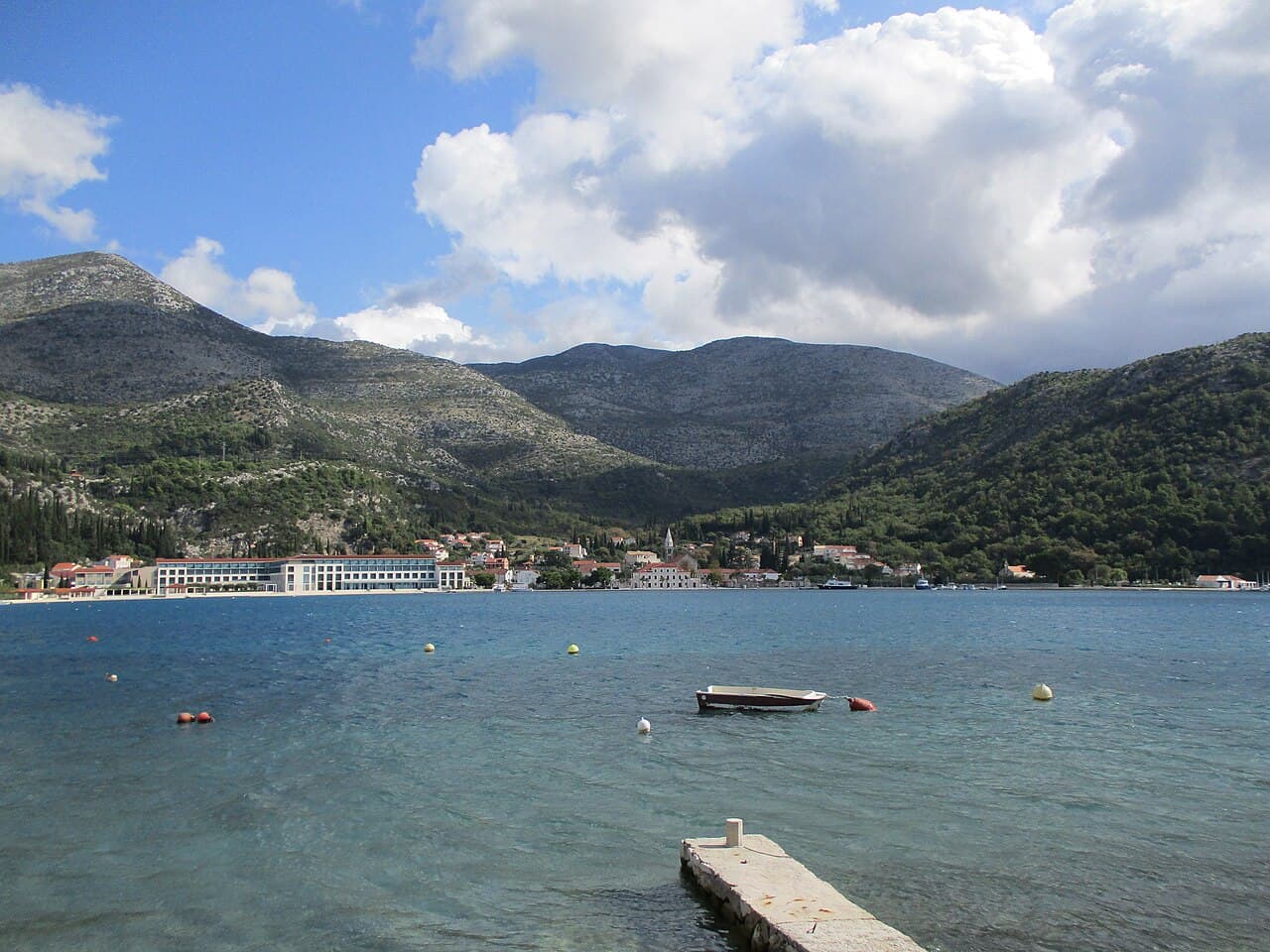
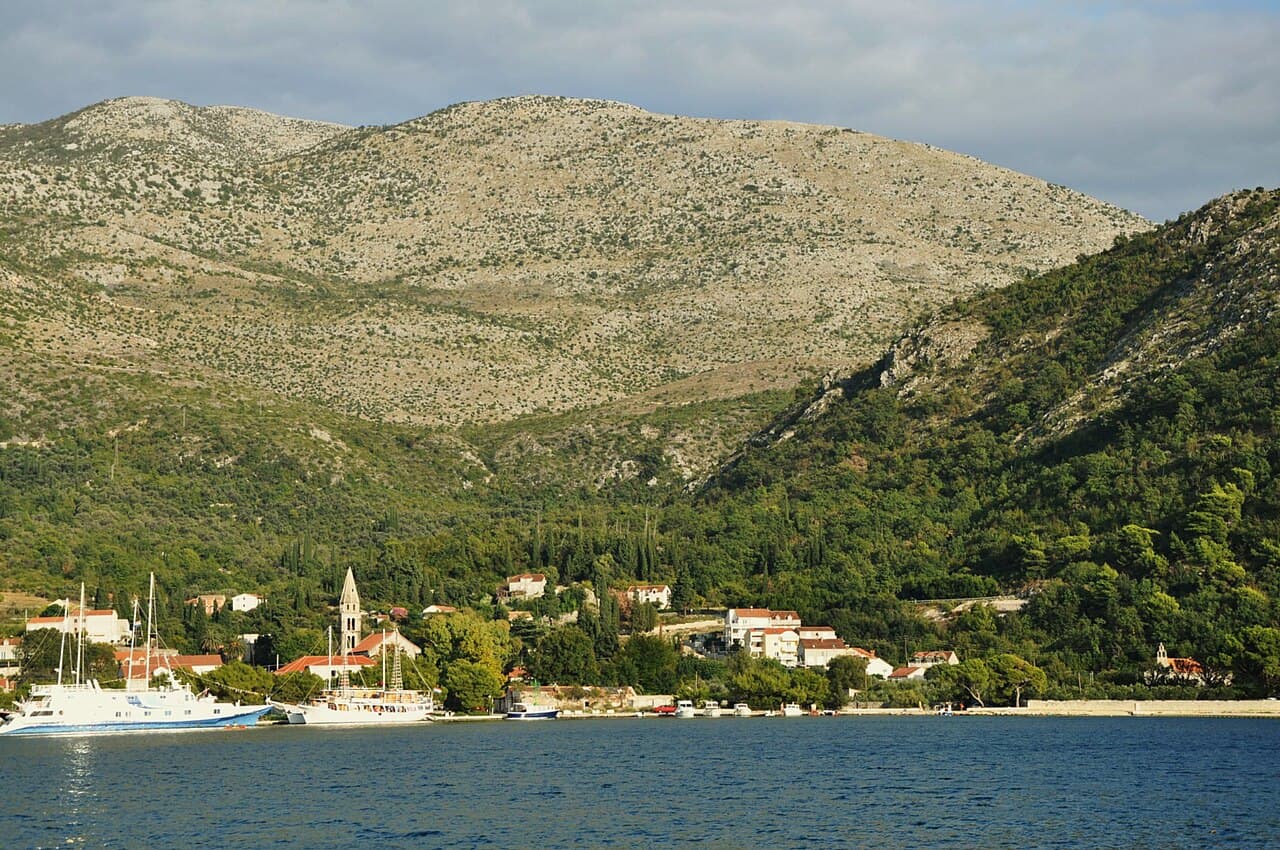
Slano is a deeply indented bay town located 37 kilometers northwest of Dubrovnik. While the heavily trafficked ACI Marina and the central concrete promenade attract the majority of seasonal visitors, the surrounding region—known as the Dubrovačko Primorje (Dubrovnik Littoral)—contains dozens of secluded locations. These range from isolated pebble coves on the Adriatic to rural agricultural villages in the Dinaric Alps.
Navigating to these spots requires physical effort, appropriate footwear, and a willingness to leave the paved center. The locations detailed below offer a quieter, historically dense, and ecologically intact environment away from standard tourism circuits.
02Secluded Coastal Inlets
While the main beaches in Slano offer sunbeds and beach bars, the true coastal highlights are found slightly to the northwest, hidden behind thick pine forests and steep limestone drops.
Kručica Bay (Uvala Kručica)
Kručica Bay is an isolated pebble beach surrounded by dense Aleppo pine forests. Because no paved road leads directly to the water, it remains largely empty even during the peak months of July and August.
To reach Kručica, visitors must walk or cycle along the D8 Adriatic Highway for approximately 2 kilometers northwest of Slano, then descend a steep, unmarked, 1.5-kilometer dirt and gravel trail. The hike down takes roughly 30 minutes, and the ascent back up can take 45 minutes due to the gradient.
The water here is exceptionally clear, characterized by a rocky seabed covered in Posidonia oceanica seagrass meadows. This grass is a vital nursery for local marine life, making the bay an excellent spot for snorkeling. Visitors will often see saddled seabream, sea cucumbers, and octopuses. There are zero facilities at Kručica Bay—no cafes, no restrooms, and no trash cans. Everything brought in must be carried out. Visitors should pack at least 2 liters of water per person and wear hard-soled water shoes, as sea urchins are common in the shallow rocky areas.
Janska Bay
Further along the coast sits Janska Bay, another narrow inlet characterized by old stone fishermen's huts and a rugged shoreline. Historically, this was a safe harbor for small local fishing skiffs during intense Bura (north) winds.
Accessing Janska Bay requires a detour off the main coastal road onto a rough macadam (crushed stone) track. Tourists often try to drive low-clearance rental cars down the dirt track to Janska Bay to save a 20-minute walk, and they almost always regret it when the undercarriage scrapes. It is highly recommended to park near the top of the turnoff and walk the remaining 1.5 kilometers.
Janska features small concrete boat ramps where locals still launch their vessels. The shoreline is uneven and jagged, meaning there are no soft spots for sunbathing. Instead, it serves as a quiet location for deep-water swimming and spearfishing. The water depth drops off rapidly just a few meters from the shore, maintaining a cooler temperature than the main bay of Slano.
03The Inland Villages and Agricultural Traditions
The hinterland above Slano is defined by karst geology—a landscape of soluble limestone characterized by sinkholes, caves, and underground drainage systems. The villages here operate at a different pace, focusing on olive cultivation, viticulture, and apiculture (beekeeping).
Majkovi: The Center of Local Apiculture
Located 6.5 kilometers inland from Slano via a winding, steep road, the village of Majkovi is an excellent example of traditional Dalmatian rural life. The village is split into Gornji (Upper) and Donji (Lower) Majkovi.
Majkovi is locally famous for its honey production. The arid, rocky hillsides are covered in wild sage, heather, and rosemary, which local bees use to produce highly distinct, herbaceous honey. Visitors walking or cycling through the village will frequently see small, handwritten signs outside stone houses reading "Med" (Honey) or "Maslinovo ulje" (Olive oil).
Purchasing directly from these homes is straightforward. A standard 1-kilogram jar of sage honey generally costs between €8 and €12, while a liter of cold-pressed, unfiltered local olive oil costs between €15 and €20. Transactions are strictly cash in euros.
For a full culinary experience, Majkovi hosts a few family-run agrotourism taverns (konobas). These establishments require reservations at least 24 hours in advance, as the owners only prepare food based on the exact number of expected guests. Meals typically feature "peka"—meat (usually veal or lamb) and potatoes slow-cooked under a cast-iron bell covered in embers. A full meal with local house wine averages €25 to €40 per person.
Dry-Stone Walls (Suhozid) and Foraging
The landscape surrounding Majkovi is heavily terraced. These terraces are built using "suhozid"—traditional dry-stone walls constructed without mortar. Recognized as UNESCO Intangible Cultural Heritage, these structures prevent soil erosion during heavy winter rains and absorb heat during the day, radiating it at night to protect olive trees from frost.
During the shoulder seasons, these terraced hills are prime foraging grounds. In April and May, locals hike the slopes to pick wild asparagus (divlja šparoga), which is notoriously bitter and typically cooked with eggs. In October, following the autumn rains, various wild mushrooms are harvested from the damp pine and oak scrub.
04Unmarked Historical Footprints
The Slano area has been inhabited since prehistoric times, yet much of its history remains unsigned and hidden in the underbrush, requiring visitors to actively seek it out.
The Ruins of Smrden-grad
Looming on a hill directly above Slano are the ruins of Smrden-grad. This 17th-century fortification was built by the Republic of Ragusa (Dubrovnik) to monitor and defend against Ottoman incursions from the hinterland.
The hike to the ruins starts near the Franciscan Monastery of St. Jerome in Slano. The trail is approximately 2 kilometers long and ascends steeply over loose rocks. It takes a moderately fit person about 45 minutes to reach the summit.
The site contains the remains of defensive walls and a small, preserved church. Because it is rarely maintained and entirely unstaffed, visitors have uninterrupted access to the site. The elevation provides a wide vantage point over the Slano bay, the Pelješac peninsula, and the Elaphiti Islands. Hikers should start this trek before 8:00 AM during the summer to avoid the midday heat, as there is zero shade on the trail.
The Stećci of Novakovo Groblje
Further inland, near the villages of Doli and Topolo (about 8 kilometers from Slano), visitors can find clusters of stećci. These are monumental medieval tombstones scattered across Bosnia and Herzegovina, and parts of Croatia, dating from the 12th to the 16th century.
The site at Novakovo Groblje is located off a dirt path and features several dozen of these limestone monoliths. Many are heavily weathered, but upon close inspection, intricate carvings are still visible. Common motifs include hunting scenes, rosettes, crescent moons, and geometric spirals. There are no ticket booths or guided tours here; the stones simply rest in a quiet, overgrown meadow. It is a striking contrast to the highly curated historical exhibits in nearby Dubrovnik.
05Navigating the Hinterland Trails
For those who prefer active exploration, the hills around Slano offer a network of macadam fire roads and old shepherd trails that connect the coastal highway to the inland villages.
Cycling the Macadam Routes
The most efficient way to explore these off-the-beaten-path spots is by e-bike. Standard mountain bikes are an option, but the steep elevation gains (often 300 to 500 meters over short distances) make e-bikes highly practical in the summer heat. Rentals are available in Slano center, typically costing €30 to €40 per day.
A popular hidden route involves riding up the paved road toward Majkovi, taking a detour onto the fire roads that run parallel to the coastal ridge, and descending near the village of Doli. This 25-kilometer loop offers continuous, elevated views of the Adriatic without the heavy vehicular traffic of the D8 highway.
Trail Safety and Ecology
Hiking or cycling in the Dubrovačko Primorje requires specific safety considerations. The limestone karst is uneven and can be razor-sharp, making thick-soled hiking boots mandatory.
Wildlife is present and should be respected. The area is home to the nose-horned viper (poskok), Europe's most venomous snake. They are generally shy and avoid humans, but hikers should stay on visible trails, avoid stepping blindly into tall grass, and never place their hands into rock crevices. Additionally, wild boars roam the deeper hinterland, though they are primarily active at night and rarely encounter daytime hikers.
06Old Pier Fish Markets
While not a location in the traditional sense, a deeply ingrained local activity happens at the old piers on the eastern side of Slano bay, away from the modern yacht berths.
Between 6:00 AM and 7:00 AM, local fishermen return in their small wooden boats to offload their morning catch. Visitors who arrive early can purchase fresh fish—typically sea bass, gilt-head bream, or red mullet—directly from the boats. Prices vary depending on the catch but usually range from €15 to €25 per kilogram. The fishermen will often clean and scale the fish on the spot if asked. By 7:30 AM, the boats are scrubbed clean and the fishermen have moved to the local cafes, leaving no trace of the market.
07Practical Logistics for Visiting Hidden Slano
Reaching these locations requires abandoning the convenience of standard tour operators.
- Local Transportation
- The Libertas Dubrovnik public bus (Line 12) runs between Dubrovnik and Slano several times a day. A one-way ticket costs €3.00. However, this bus only services the main highway and the center of Slano. To reach places like Majkovi, Kručica, or the stećci, visitors must rely on walking, biking, or a rental car.
- Connectivity
- Mobile phone reception (4G/5G) is generally strong along the coast but can drop out entirely in the deeper valleys of the hinterland or inside steep inlets like Kručica Bay. Visitors should download offline maps before leaving Slano.
- Supplies
- There is only one main grocery store (Studenac) and a small bakery in Slano. Visitors heading into the hills or out to the isolated bays must purchase all food, water, and first-aid supplies here, as the rural villages do not have commercial stores.