01Is Stari Grad Worth Visiting?
Stari Grad is worth a visit for history, calm streets and easy access to the rest of Hvar. It is one of the oldest continuously inhabited towns in Europe. Greek colonists from Paros founded it as Pharos in 384 BC. It does not suit travelers who want nightlife, designer shops or a long list of beach clubs. For those, Hvar Town, about 18 km away by road, is the better fit.
02What Is Great About Stari Grad
Real history without a ticket queue
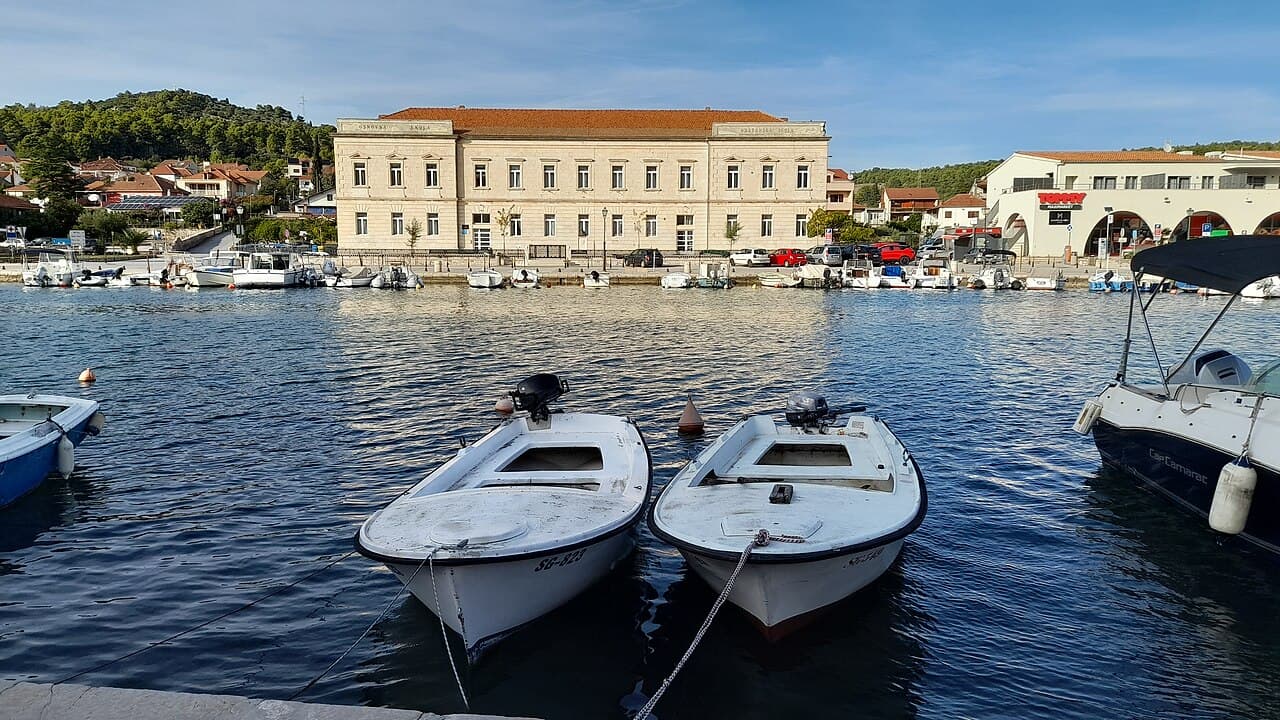
The old town sits around a long, narrow bay. Its stone lanes are mostly pedestrian and easy to cover in a few hours. The main sight is Tvrdalj, the fortified 16th-century home of the poet Petar Hektorović. It has a fishpond, a dovecote and a garden. Opening hours and ticket prices change by season, so check locally before going.
The Stari Grad Plain
Just outside town, the Stari Grad Plain is a UNESCO-listed farmland. The ancient Greek field divisions are still visible, and the plain is still farmed, mostly with olives and vines. It is flat and well suited to cycling. A bike ride across it takes about 1–2 hours at an easy pace. This is the strongest reason to choose Stari Grad over other Adriatic harbor towns.
A practical base
The ferry port is in Stari Grad, so arrivals with a car or luggage avoid transfers. Hvar Town, Jelsa and Vrboska are all short drives away. Accommodation and restaurant prices are generally lower than in Hvar Town, and the evenings are quiet.
03The Downsides
- Beaches are modest.
- The pebble and rock spots near town are fine for a swim, but they are not the reason to come. Better beaches need a car, bike or boat.
- Little nightlife.
- Evenings are mostly dinner and a walk along the waterfront.
- Ferry-day bustle.
- The port area is busy when a ferry arrives, then quiet again. Summer traffic around the port can be heavy.
- Limited public transport.
- Without a car, reaching other parts of the island takes planning around bus timetables.
- Summer heat.
- July and August afternoons are hot, with little shade on the plain.
04Crowds: How Busy Is It?
Stari Grad is much calmer than Hvar Town. Day-trip crowds are thinner because most fast catamarans from Split go to Hvar Town, not here. The busiest period is July and August. May, June and September give the best balance of open restaurants, warm sea and fewer people.
05What Does It Cost?
The main cost is getting there. Jadrolinija's car ferry (line 635) from Split takes about 1 hour 50 minutes. An adult ticket is €5.90 off-season and €8.40 in high season, which in 2026 ran from 29 May to 27 September. A standard car costs €35.60 off-season and €47.60 in high season. A catamaran (line 9603) takes about an hour and costs about €9.70 in high season. The Split–Hvar Town catamaran costs €25, which makes Stari Grad the cheaper way onto the island.
A car plus driver on the ferry costs €56 one way in high season. That is worth paying only if the plan covers several parts of the island. For a stay focused on the town and the plain, rent a bicycle locally instead.
Opinion
Paying €25 for the Hvar Town catamaran and then a taxi back to Stari Grad is usually not worth it. The €8.40 car ferry lands directly in town.
06Local Tips
- Take the car ferry rather than the catamaran if arriving late in the day. It has more departures, including evening and night sailings.
- Book the car ticket ahead in July and August. Vehicle space fills on peak days.
- Cycle the plain in the morning and keep afternoons for the old town and a swim.
- Stay at least two nights. A single day trip skips the quiet evenings, which are the main advantage.
07Who Should Go
Go if you like history, cycling, wine and slow evenings, or want a cheaper base on Hvar. Skip if you want beach clubs, nightlife or a famous-name scene.