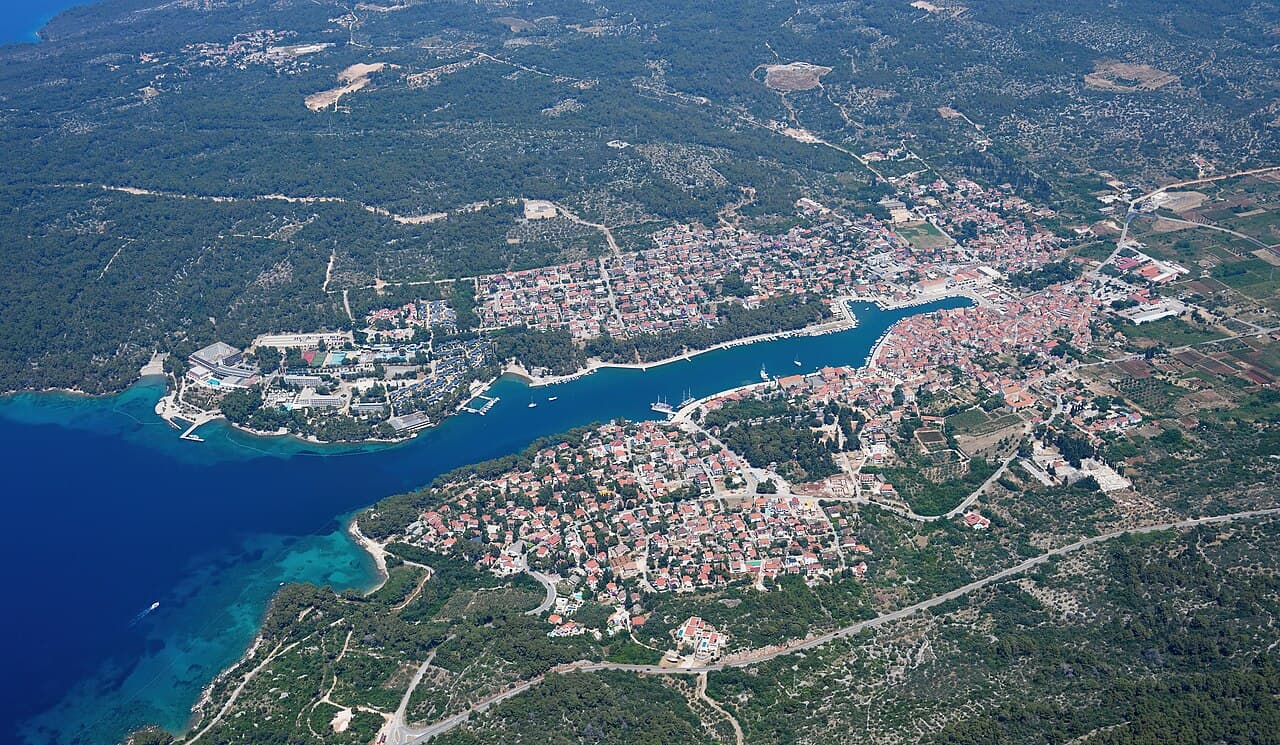
01Myth 1: "Stari Grad has a dog beach"
Stari Grad does not have a widely listed, officially designated plaža za pse. The town beaches, including Banj, are used by families and are not set up for dogs. Some sources describe parts of Banj as tolerating dogs. Treat that as unconfirmed and check signs on the day.
The nearest named dog beach on Hvar is Zaraće, a pebble bay on the south side of the island. It has a section reserved for dogs, is free to enter, and is about 6 km from Hvar Town. From Stari Grad, plan a drive across the island. Zaraće is also basic, so bring your own shade and water. Closer to Stari Grad, rocky platforms and pebble coves outside the town centre suit dogs better than crowded town beaches.
Better approach: Use Stari Grad as a base and treat a dog beach as a day trip. Official dog beaches elsewhere in Dalmatia, such as those in Split, are easy to combine with the ferry journey.
02Myth 2: "Dogs are only allowed on official dog beaches, and not in town"
Croatian dog rules are set by each town or municipality, so they vary. In general, a beach without a "no dogs" sign is usable, and an official dog beach simply adds amenities. Beach clubs, hotel beaches and the central swimming areas are the usual exceptions. Leash use is the default in public spaces. Carry a muzzle, because restricted breeds and some transport operators require one.
In the old town, dogs on a leash are normal on the waterfront and in the stone lanes. Restaurant terraces are the safe choice. Indoor dining is usually at the owner's discretion and often refused for hygiene reasons. Always ask before sitting down.
Hvar has no national park. The nearest are on other islands or on the mainland, such as Mljet and Krka. Dogs are usually restricted or leash-only there, so check each park's rules before planning a day trip. The UNESCO-listed Stari Grad Plain is open farmland. Leashed walking on the field paths is the best dog activity in the area.
Insider perspective: Most travelers overestimate the beach and underestimate the plain. Stari Grad's flat farm tracks and harbour promenade suit a dog on a long daily walk better than any single beach.
03Myth 3: "Ferries and catamarans are a hassle with a dog"
The route to Stari Grad is the easy one. Jadrolinija's car ferry (line 635) from Split takes about 2 hours. In the 2026 high season (29 May–27 Sep) an adult ticket costs €8.40 and a standard car €47.60, so a car plus driver is about €56 one way. Dogs travel free on Jadrolinija's larger ferries and stay on the open deck. Book the car space online in summer, because spaces on busy departures run out.
Catamarans are tighter. Jadrolinija's catamarans require a designated carrier on deck, a fee and a reservation. Krilo requires dogs to be muzzled and leashed. Catamarans carry foot passengers only, with no car space.
Better approach: Take the car ferry. Without a car, a catamaran is possible, but confirm the route, the pet rules and the carrier booking first.
04Myth 4: "Summer is the best time to bring a dog"
July and August bring afternoon temperatures above 30°C. Stone lanes, stairs and unshaded beaches are hard on paws and on breeds with short noses. Walk before 9:00 and after 19:00, and never leave a dog in a parked car.
The best months are May, June, September and October. The sea is warm enough to swim, the crowds are smaller, and a dog is easier to place at restaurants and accommodation. Ticks and sandflies are present in Dalmatia, so ask a vet about tick and leishmaniasis prevention before you go. Check your dog after each field walk.
Accommodation: Pet fees on Hvar usually run about €10–25 per night, and some hosts waive them or cap them per stay. Apartments with a ground-floor terrace or garden are easier than hotels. Confirm the fee and any size limit in writing before booking.
Vet basics: Croatia requires microchipping for all dogs. Stari Grad has limited veterinary services, and 24/7 emergency care is on the mainland, in Split. Save a Split clinic's number and ask your own vet for a pre-trip check.
05Myth 5: "Any pet passport covers Croatia"
The order matters. The dog needs an ISO microchip first, then a rabies vaccination, then at least 21 days of waiting before entry. A rabies shot dated before the chip is treated as invalid. The EU pet passport records all of this. A Croatian passport costs about €10.06 plus VAT at an authorised vet.
From 22 April 2026 the EU rules moved to Regulation 2026/131. For travellers little changed, and existing passports stay valid. From outside the EU, with a UK or US dog for example, an animal health certificate is used instead of the passport. Croatia does not require tapeworm treatment, but other countries on your route may.
06What to settle before booking Stari Grad with a dog
Check the vaccination dates first, then the ferry. Choose an apartment with outdoor space, and plan travel for late spring or early autumn. Book one dog beach day trip to Zaraće rather than expecting a beach in town.
Verdict: Stari Grad is moderately dog-friendly, about 7 out of 10. It is excellent for walking, calm to live in, and easy to reach by free dog ferry travel. It loses points for having no well-known official dog beach in town, limited indoor restaurant access and limited emergency vet care on the island. For a dog owner who wants quiet walks over a beach scene, it is one of the better bases on Hvar.

