01Cres vs Krk at a Glance
Cres and Krk are the two largest islands in the Adriatic, each about 405 km². The similarity ends there. Krk has roughly 19,000 residents, a bridge to the mainland, an airport and a chain of resort towns. Cres has under 3,000 residents, one main town, one long spine road and large stretches of empty karst, sheep pasture and oak forest.
The choice comes down to convenience versus space. Krk is easier to reach and easier to holiday on with children. Cres is harder to reach, cheaper in many corners and far quieter.
02Getting There: Bridge vs Ferry
Krk: drive over the bridge
Krk connects to the mainland by the Krk Bridge, a road link near Kraljevica that is free to cross for drivers. From Rijeka the drive to Krk town is about 35 minutes. Rijeka Airport is located on Krk itself, near Omišalj, so flying in means the island is reached without any ferry or traffic from the mainland. Zagreb to Krk town takes about 2 hours 15 minutes by car.
The bridge means no timetable and no queue for a boat. It also means July and August traffic jams on the approach roads, especially on Saturdays.
Cres: take the ferry from Brestova
Cres has no mainland bridge. The standard route is the Jadrolinija line 334 from Brestova (Istria side, about 55 km from Rijeka) to Porozina on the north tip of Cres. The crossing takes 20 minutes. A foot passenger ticket costs €4.40, and a standard car up to 5 m is roughly €20–25 one way. Departures run from early morning to late evening, with about 11 sailings each way a day in the main season.
In July and August, cars arriving at Brestova on Saturday and Sunday can wait one to three hours. Arrive before 09:00 or after 19:00 on peak days. The ferry cannot be pre-booked for cars on this line, so first come, first served applies.
After landing at Porozina, Cres town is some 30 km south. The road south is the only main road and it twists. Allow about 40 minutes to Cres town.
Krk to Cres: the combined option
The Valbiska (Krk) to Merag (Cres) ferry takes about 30 minutes. This makes a two-island trip workable: stay on Krk first, then cross to Cres. Cres connects to Lošinj by the small swing bridge at Osor, so a third island is possible by road.
Public transport
Krk has regular buses from Rijeka to Krk town, Malinska, Baška and Vrbnik. Cres has far fewer, with Rijeka–Cres–Mali Lošinj lines that rely on the ferry. Travelling on Cres without a car is possible but limiting. Rent a car on either island if the plan includes more than one resort.
03Beaches: Cres vs Krk
Krk beaches
Krk has more beach and more infrastructure. Baška's Vela Plaža is a 1.8 km pebble beach under a mountain wall, and it is the best-known beach in Kvarner. Other options include Malinska, Njivice, Punat, Stara Baška and the sheltered bays around Krk town. Many are pebble with shallow, gentle entry, which suits children. Sunbeds, showers, cafes and water sports are standard.
Baška is overrated in August. The beach is excellent in June and September, but in peak season it turns into a crowded strip that the quieter coves on Cres beat easily.
Cres beaches
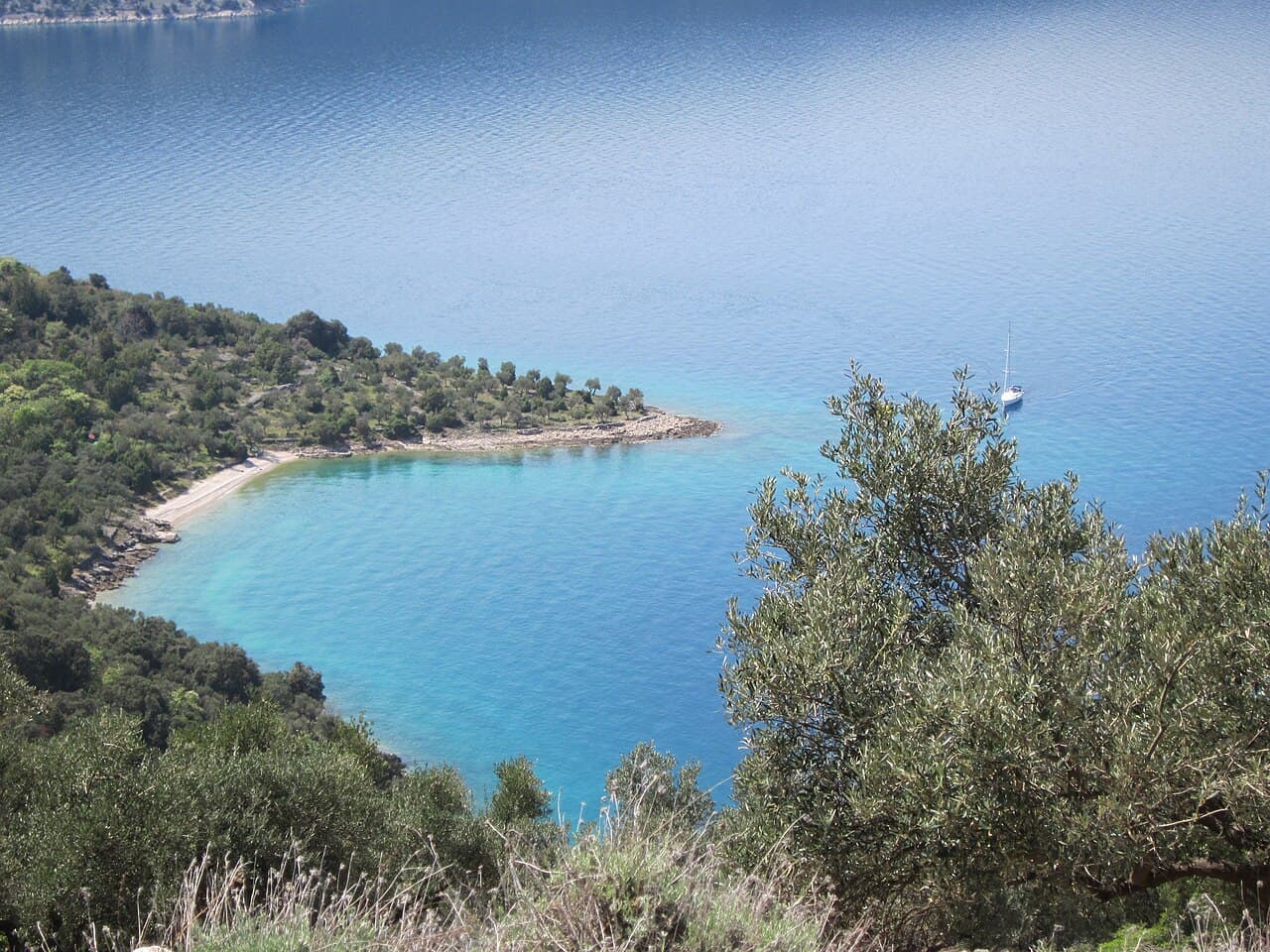
Cres beaches are smaller, rockier and less equipped. Near Cres town, Kovačine and the Melin coast have pine shade and a mix of pebble and flat rock platforms. Beli has a small pebble beach and is the base for the griffon vulture sanctuary. Valun on the west coast is a tiny harbour with pebble. The best-known wild beach is Plava Plaža below Lubenice, a pebble cove reached by a steep path. It has no facilities at all, so bring water and shoes.
Cres has clear, deep water and almost no sand. Rock platforms and ladders are common, so water shoes are useful. Families with toddlers will find fewer easy-entry beaches.
04Crowds and Atmosphere
Krk takes the bulk of Kvarner visitors. Baška, Malinska and Krk town fill up from the start of July to the end of August, and Krk town's old centre is busy with day-trippers by 11:00. Vrbnik, on a cliff above the sea in the east, is quieter and well known for its Žlahtina white wine.
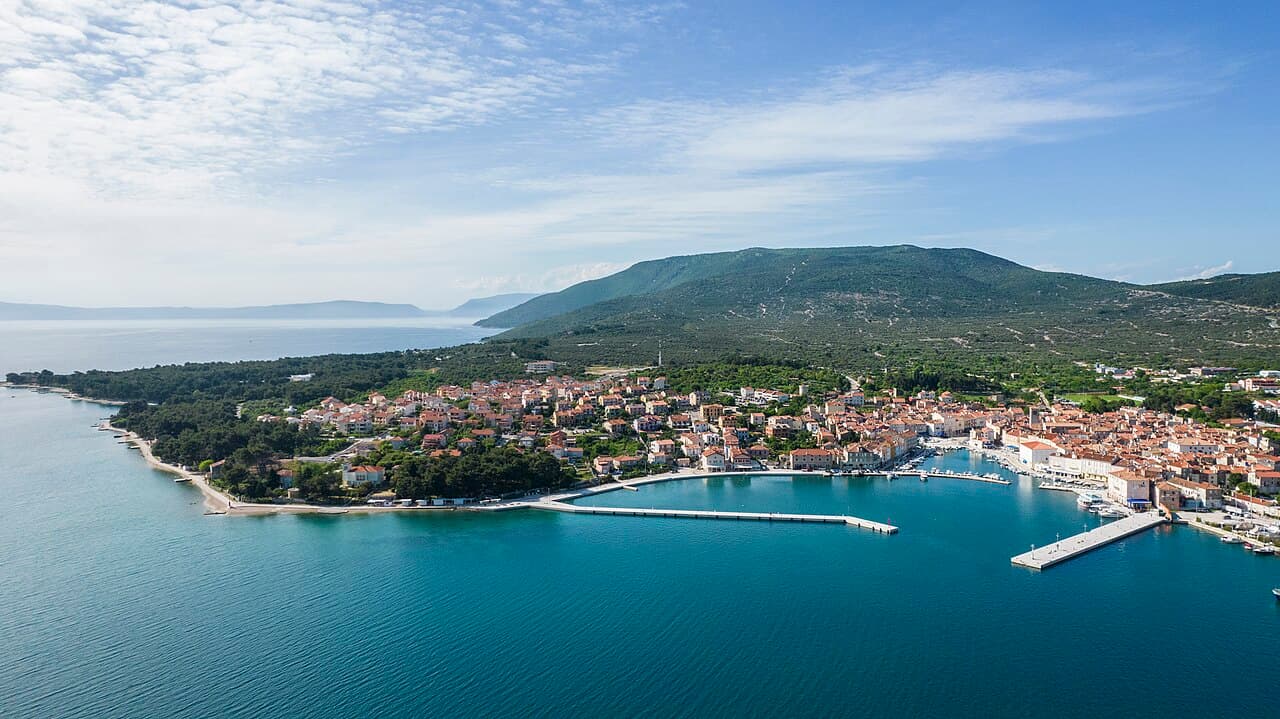
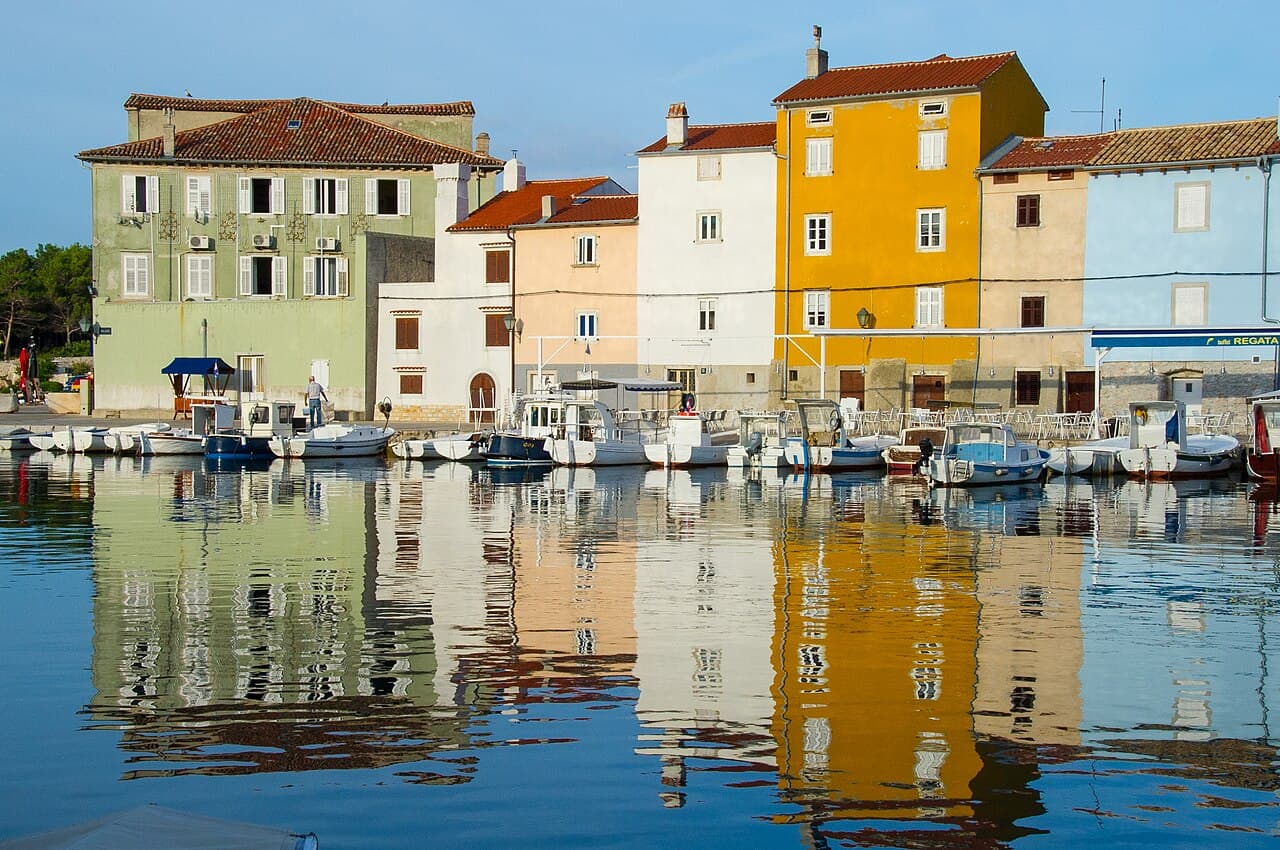
Cres stays calmer. Cres town has a small Venetian harbour with cafes, but it feels residential by 22:00. Lubenice, a hilltop village at 378 m, has a handful of residents and a gallery. Inland Cres has thin traffic and plenty of space for hiking and cycling. Beli has a lookout over the vulture cliffs.
Cres is a poor choice for nightlife. Krk has bars and live music in Baška, Malinska and Krk town through summer, but nothing wild.
05Price Level
Both islands follow Croatian coastal pricing. Krk is typically 10–20% higher in resort towns such as Baška and Malinska, mainly for accommodation. Cres has fewer hotels and relies on private apartments, which keeps rates modest outside the busiest weeks.
- Apartment for two, July–August: Cres €80–120 per night, Krk €90–140 per night
- Apartment for two, May–June or September: Cres €55–85, Krk €60–95
- Coffee: about €1.80–2.50 on both islands
- Fish plate for two at a harbour restaurant: €45–70
- Sunbed pair on organised beaches: €10–15 per day on Krk, €8–12 on Cres where offered
- Car parking in peak towns: €1–2 per hour in Krk town and Baška; mostly lower on Cres
The ferry adds real cost on Cres: a car return is roughly €40–50. On a 3-night stay that cancels out any apartment saving. On 7 nights or more, Cres usually works out cheaper overall.
Cres is known for lamb and local olive oil, and eating inland often costs less than eating on the harbour.
06Who Each Island Suits
Cres suits
- Hikers, cyclists and nature watchers: the Tramuntana trails, Beli vultures, Lubenice
- Sailors and kayakers: calm bays and a long coastline with few boats
- Couples and adults who want silence
- Travellers staying a week or longer who accept a ferry
Krk suits
- Families with young children: gentle beaches and organised facilities
- Short-stay visitors who want no ferry timing
- Fly-in travellers using Rijeka Airport
- Groups wanting restaurants, bars and activities within walking distance
07Local Tips
- Arrive at Brestova before 09:00 on summer weekends to avoid long car queues.
- Foot passengers do not queue the same way. Cyclists board easily and often skip waits.
- On Cres, fill the tank before leaving Cres town; stations are few in the north and south.
- The bora wind can interrupt ferries from Brestova, usually in winter. Check the Jadrolinija site before travelling out of season.
- On Krk, visit Baška at 08:00 or after 17:00 in July and August to use the beach before or after the crowds.
- Cres roads are narrow. Choose a smaller car if renting.
08Verdict: Choose Cres or Krk?
Choose Cres if you want quiet, wild coves, hiking, cycling and lamb dinners; you stay at least five to seven nights; you are fine with a 20-minute ferry and a possible summer queue; and you have no small children who need soft, shallow entry.
Choose Krk if you travel with young children; you want a bridge, an airport on the island and no ferry timetable; you want beaches with full facilities, more restaurants and nightlife; or your stay is a short three or four nights.
The simplest plan for undecided visitors is to split the week: three nights on Krk, then the Valbiska–Merag ferry to Cres for the rest.