01Labin Itinerary at a Glance
Labin (Italian: Albona) is a hilltop town on the east coast of Istria. The old town sits on a hill about 320 m above the sea, and the beach resort of Rabac lies roughly 3 km below. The town is 43 km from Pula and 60 km from Rijeka on the main Rijeka–Pula road. It has a little over 10,000 residents and is far less crowded than the western Istrian towns.
Two days is the right length. Day one covers the old town and museum. Day two covers Rabac and the coast. A third day is only needed for the art and industrial sights nearby.
02One Day in Labin: The Old Town Route
Morning: Sv. Flor Gate and Prostrana Square
Start at the Porta Sanfior (Sv. Flor), the main town gate built in 1589. The coat of arms of Labin and the Venetian lion are carved above it, marking the period of Venetian rule. A cannon from Austrian times stands on the bastion beside it.
Walk into the old town to the main square, where a loggia dating from 1550 stands. Labin's loggias were once gathering places for locals, trade and legal hearings.
Look at the Church of the Birth of the Blessed Virgin Mary. It was built in 1336 on the foundations of an 11th-century church. A Venetian lion holding a sphere in its mouth was added to the facade in 1604. The church's bell tower is the one that resembles a miner's lamp, a nod to the town's coal history.
Late Morning: Labin National Museum
The museum is in the Battiala-Lazzarini palace, a Baroque building with a red facade (Ulica 1. maja 6). It was founded in 1960. The highlight is the replica coal mine in the cellars, built between 1961 and 1964 with help from the Raša coal mines. Visitors walk through tunnels in a helmet. Panels are in Croatian, English, Italian and German.
The museum also covers Roman finds, the 1921 Labin Republic (a miners' uprising), and the teacher and activist Giuseppina Martinuzzi (1844–1924). It also looks after a sacred art collection and the memorial room for Matthias Flacius Illyricus, the Labin-born Protestant reformer who worked with Martin Luther.
2026 admission was €4 for adults outside the summer season and €5 from 22 June to 22 September. Children aged 7–18, students and over-65s paid €3–4. Families paid €10–15. Children under 7 enter free. An audioguide costs €2. Published opening hours vary by source and season, so confirm before going, especially from October to April, when visits may need to be booked in advance.
Lunch
For Istrian pasta and stews, the usual choice is Velo Kafe on the central square. Restaurant Kvarner in the old town offers a view across Kvarner bay. Pizzeria Rumore, next to Kvarner, makes Neapolitan-style pizza. Expect main courses at roughly €12–20, but check current menus.
Afternoon: Fortica and Art Studios
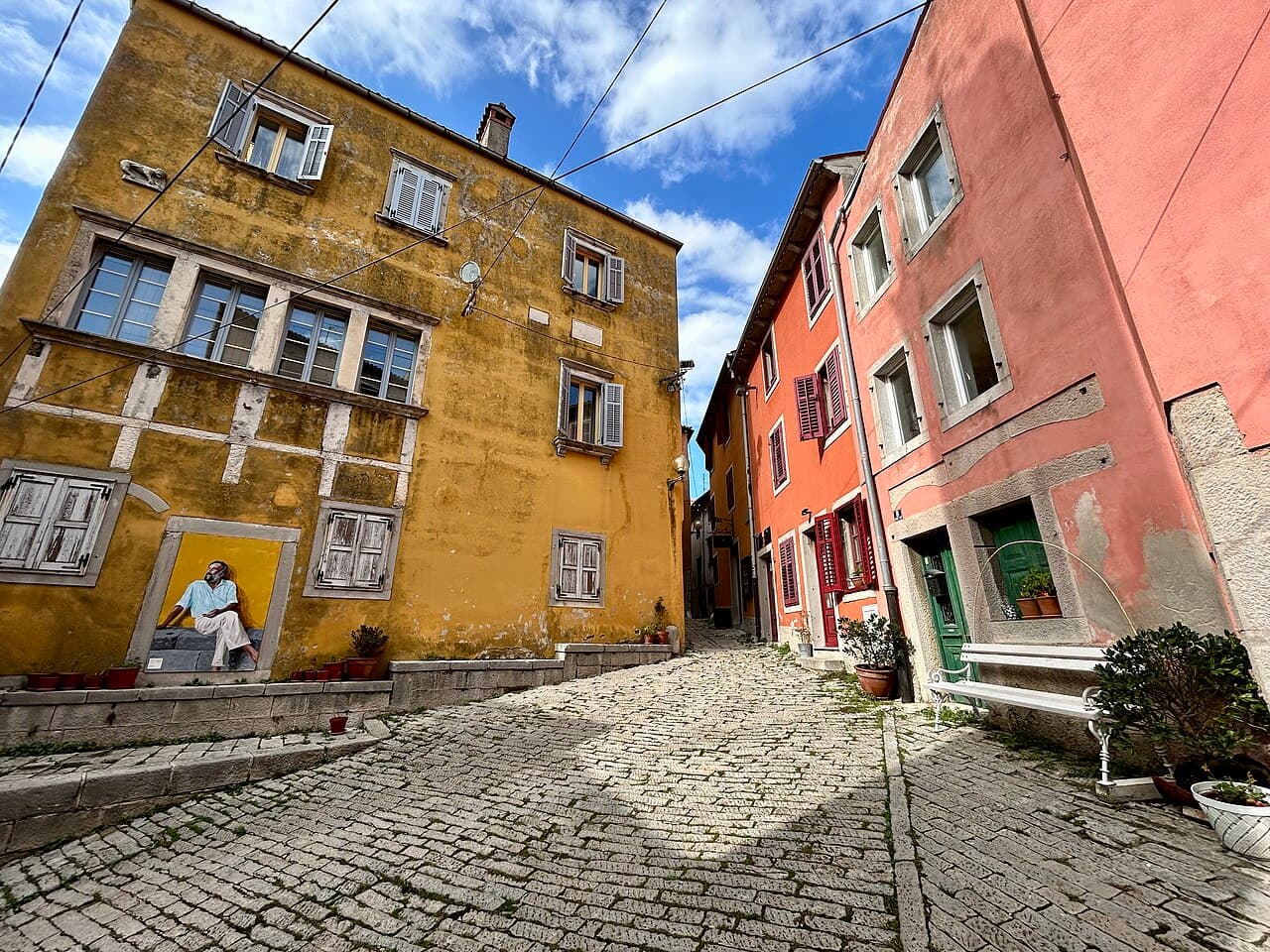
Walk to the top of the hill to Fortica. The viewpoint looks over Rabac, the sea and the island of Cres. Allow 20–30 minutes. On the way down, look at the small art galleries and studios in the lanes. Six murals called "The windows of Labin's legends" are spread through the old town and depict local figures including Martinuzzi and Flacius.
Evening
The old town has many cafés with outdoor seating, which fill with younger locals in the evening. In summer, Labin Art Republic runs from July to August with concerts, theatre and gallery events. Free guided night tours of the town have run on Thursdays in season. Check the tourist board for the current schedule.
03Day Two: Rabac and the Coast
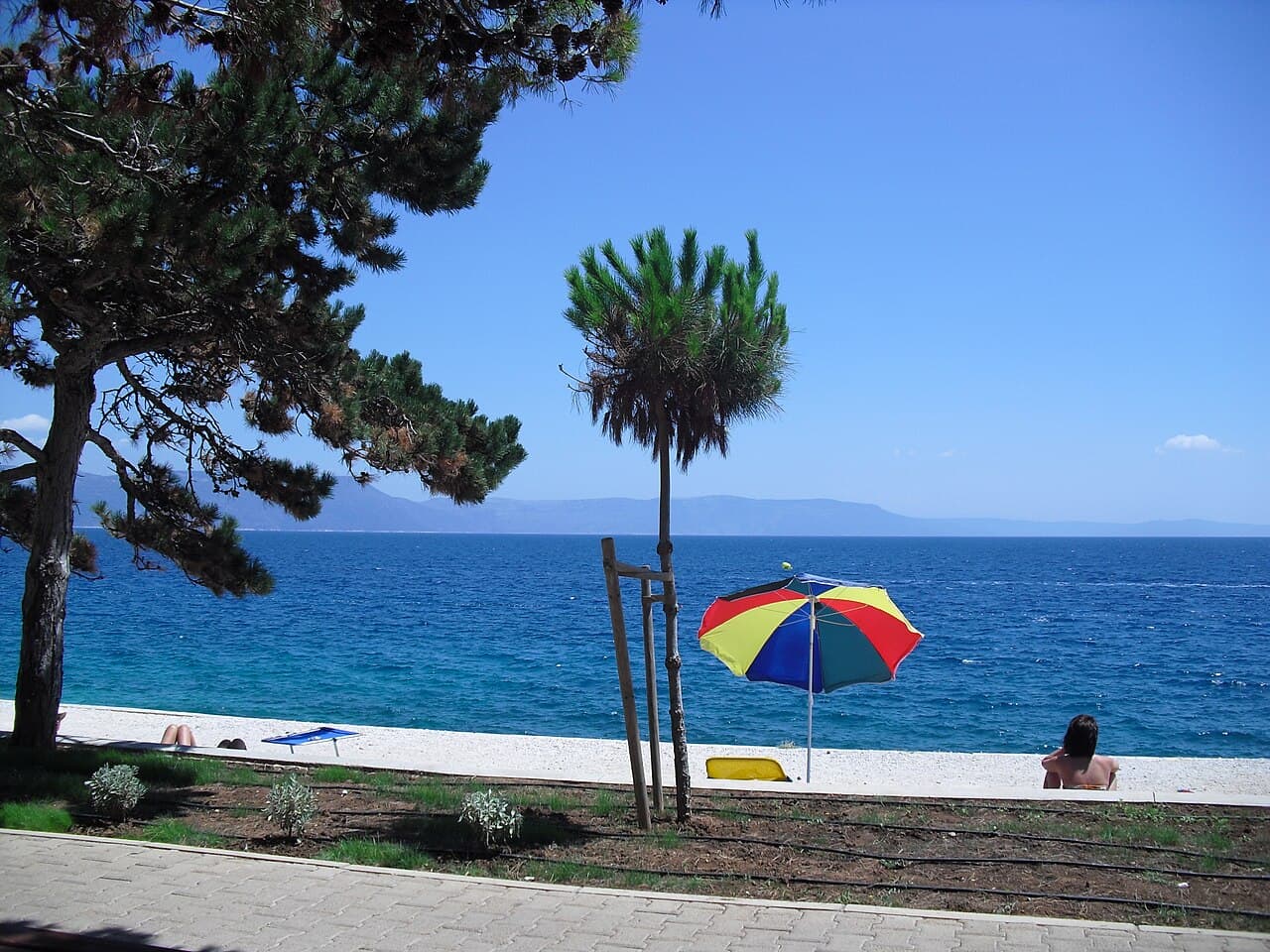
Rabac is a former fishing village turned resort about 3 km from Labin. The promenade runs along the bay with restaurants and bars. Several of its pebble beaches hold Blue Flag status. Girandella beach hosts the Rabac Summer Festival, an electronic music event held in May.
The winding road from Labin to Rabac is walkable downhill in about 40–50 minutes, but the return climb is steep. Use a taxi or drive for the return trip. In summer, parking in Rabac fills by late morning, so arrive before 10:00.
Boat excursions run from Rabac to the island of Cres and along the coast. Water sports such as paddleboarding are rented along the waterfront. For quieter swimming, head north from the main resort along the coastal paths toward smaller, emptier coves.
An honest opinion: Rabac's central beach is the least interesting part of the area. It is crowded and built up. The better swim is on the quieter coves reached by walking along the coast path away from the centre.
04Day Three: Dubrova, Koromačno and the Mining Landscape
The Dubrova sculpture park has more than 70 stone sculptures from the Mediterranean Sculpture Symposium. Entry is free and a visit takes about an hour.
Koromačno, a small village southeast of Labin, has a cement works rising beside very clear water. It is an odd place to swim, but a popular one with locals.
The Lamparna multimedia centre of the Labin Art Express association is housed in old coal mine buildings. The association, founded in 1991, works to turn the abandoned mine tunnels into an underground city. Check its programme before going, as access depends on events.
On 22 September, the Miners' Republic event marks the 1921 uprising with mine tours and period food and drink.
05How to Get to Labin and Get Around
A car is the most practical option. Labin is 43 km from Pula and 60 km from Rijeka. Parking is available outside the old town, near the entrance. The old town itself is small and pedestrian, and a full walk takes about 1–2 hours without museum time. Rabac and Dubrova are easiest by car.
06Where to Stay
Most visitors stay in Rabac. In Labin itself, Hotel Peteani sits on the road up to the old town in a renovated building. Hotel Loggia and Terra Residence are in the old town. Staying in the old town gives the quietest evenings and a short walk to the museum and Fortica.
07Best Time to Visit
June to September gives beach weather and the most events. May and late September have fewer crowds, and the museum has extended hours in July and August. Winter is quiet, with limited opening hours.
08Local Tips
- Visit the museum in the morning in summer so the mine tunnels are cooler and quieter.
- Do Fortica at sunset in summer for the best light over the Kvarner bay.
- Wear flat, grippy shoes. The old town stones are polished and slippery when wet.
- Combine Labin with nearby medieval hill towns such as Pićan, Gračišće and Boljun if you have a car.
- Bring cash for small galleries and cafés, though cards are widely accepted.