01Lovran vs Opatija: The Short Comparison
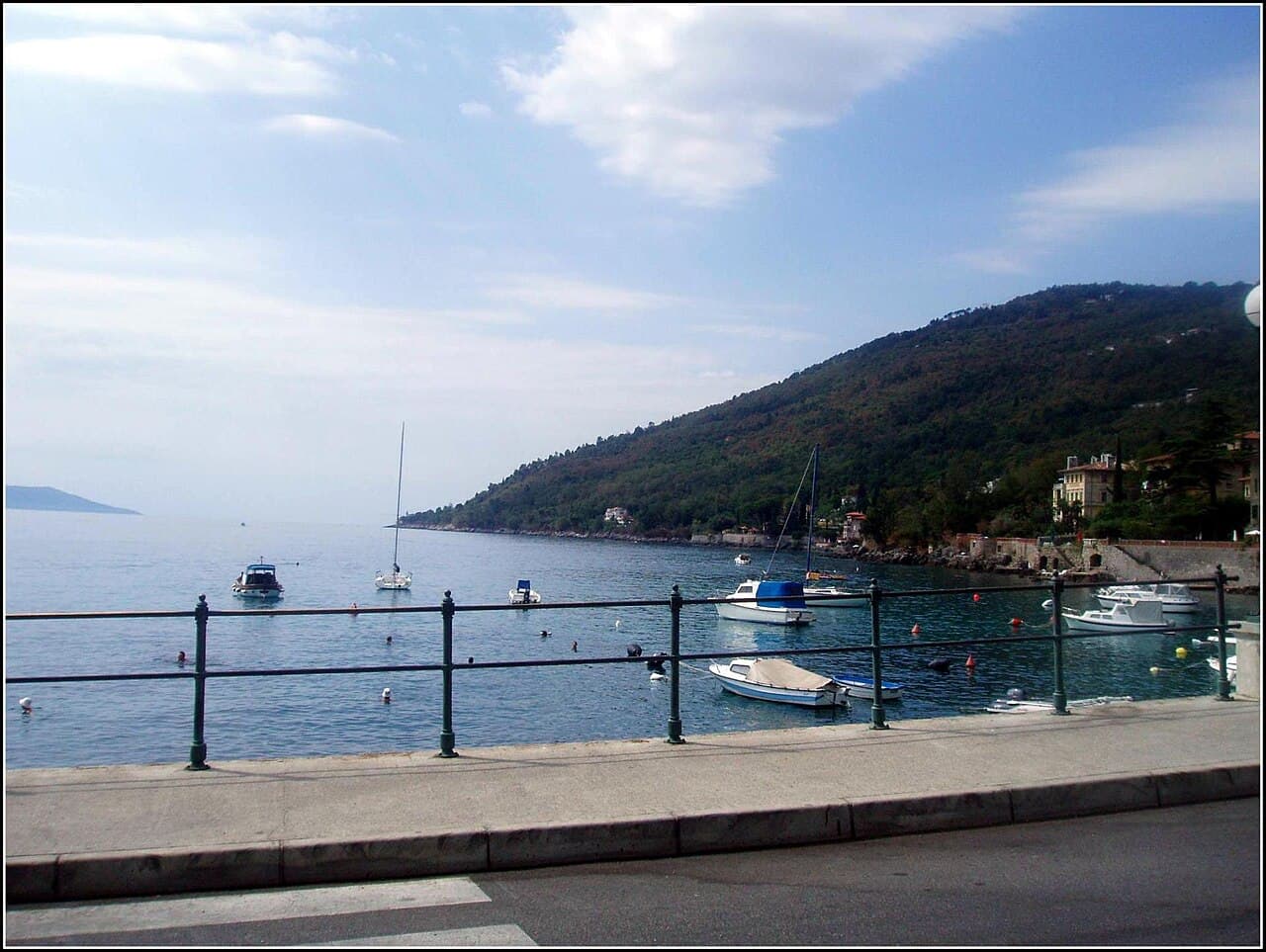
Lovran and Opatija sit about 8 km apart on the eastern coast of Istria, in the Kvarner Bay, below Mount Učka. Both are linked by the Lungomare, a seaside path of roughly 12 km running from Volosko through Opatija to Lovran. The two towns offer the same sea and the same climate, but a different pace. Opatija is the larger, more polished resort. Lovran is smaller, older and quieter.
02Seafront: Lungomare, Promenades and Views
Lovran seafront
Lovran's waterfront is short and relaxed. The Lungomare passes below the old town, with small harbours, rocky platforms and shaded sections. The old centre, with its narrow lanes, the Church of St George and the medieval tower, sits just above the coast. Everything central is reachable on foot in under 10 minutes. The town is also known for its chestnuts, celebrated at the Marunada festival each October.
Opatija seafront
Opatija's waterfront is longer and more formal. Large 19th-century villas, the Angiolina park, the Maiden with the Seagull statue and the Slatina promenade line the shore. Hotels from the Austro-Hungarian era face the sea, and the Lungomare here is busier, with more cafes, stands and walkers at all hours. For architecture and a grand-resort feel, Opatija wins clearly.
03Beaches: What to Expect
Both towns have pebble, concrete and rock beaches rather than sand. Neither is a beach-first destination, and anyone wanting long sandy stretches should look elsewhere in Croatia.
- Lovran
- Main town beaches are small pebble bays near the centre. Medveja, about 2.5 km south, is the most popular, with pebbles, clear water. It is calmer and better for small children than most of Opatija's bathing spots.
- Opatija
- Slatina is the central beach, with a mix of pebble and concrete platforms and good facilities. Many hotels have their own sea access. Water entry is often via ladders or platforms, so it suits strong swimmers more than toddlers.
Bring water shoes. Pebbles are sharp in places, and sea urchins are common on rocky entries in both towns.
04Atmosphere: Quiet Old Town vs Grand Resort
Lovran feels like a small coastal town with a resort edge. Evenings are calm, with dinner, a stroll and gelato. Opatija has more events, concerts, a casino, bars and a lively evening promenade. It has been a tourist resort since the 1800s, and the infrastructure shows.
The Opatija hype around being the "Croatian Riviera" is fair for its villas, but the Lungomare is just as good in Lovran with a fraction of the crowds. Skip paying Opatija prices if scenery and a walk are the goal.
05Price Level in 2027
Lovran is generally 10–25% cheaper than Opatija for comparable quality. Typical high-season figures:
- Double room in a mid-range hotel or apartment: Lovran €90–160, Opatija €110–200 a night.
- Restaurant main course: Lovran €13–22, Opatija €16–28.
- Espresso: about €2 in Lovran, €2.5 in Opatija.
- Beach sunbed: roughly €10–15 a day in both.
Prices rise in July and August and fall sharply in May, June and September. Opatija's five-star hotels and spa options push the top end well above Lovran's.
06Who Each Town Suits
Families
Lovran is easier with young children: smaller distances, calm coves, less traffic and Medveja nearby. Opatija suits families with older kids or teenagers, thanks to more activities, boat trips, water sports and entertainment. Both have playgrounds along the coast.
Seniors
The Lungomare is mostly flat and has benches, making it comfortable for walking in both towns. Lovran is quieter and cheaper. Opatija has more spa, wellness and medical-tourism options, and more year-round hotel offers, including in the shoulder seasons. Lovran's old town has steps and cobbles that can be tiring.
Couples
Couples who want calm, sunset walks and small restaurants usually prefer Lovran. Those who want fine dining, cocktails, concerts and a more social setting will enjoy Opatija. The two are close enough for an evening out by bus or taxi.
07Getting There and Around
The nearest airport is Rijeka (about 50 km) and Pula (about 100 km). Trieste, Italy, is about 130 km away. Bus line 32 connects Lovran and Opatija in roughly 15–20 minutes. Both towns have paid parking, and parking in Opatija is tighter in July and August. The Lungomare can also be walked between towns in about 1.5–2 hours.
08Local Tips
- Walk the Lungomare in the morning from Lovran to Medveja to avoid heat and crowds.
- Visit in October for Marunada, the chestnut festival in Lovran, but book accommodation well ahead.
- Choose a base in Lovran and take day trips to Opatija rather than the reverse. The price gap and calm evenings favour this.
- Mount Učka Nature Park is about 30–40 minutes by car and offers hiking and views over the Kvarner Bay and islands.
- Consider the shoulder seasons: sea temperatures are comfortable from June to mid-September.
09Verdict: Choose Lovran If… Choose Opatija If…
Choose Lovran if you want a quieter base, lower prices, a medieval old town, calm swimming spots for small children, and a slow pace in the evenings.
Choose Opatija if you want grand architecture, a wider choice of restaurants and bars, concerts and events, wellness hotels and better public transport links.
For a first visit, the best compromise is staying in Lovran and visiting Opatija for an evening. That gives Lovran's calm and lower costs, with Opatija's lively side only 8 km away.