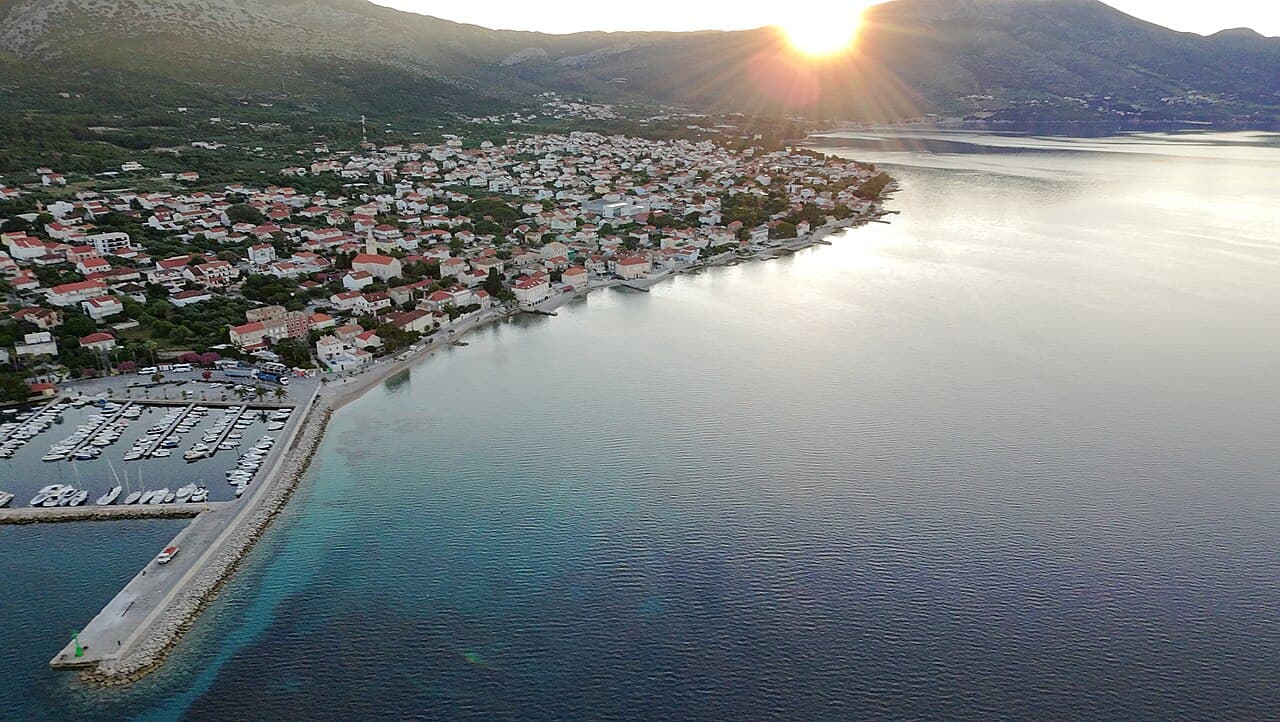
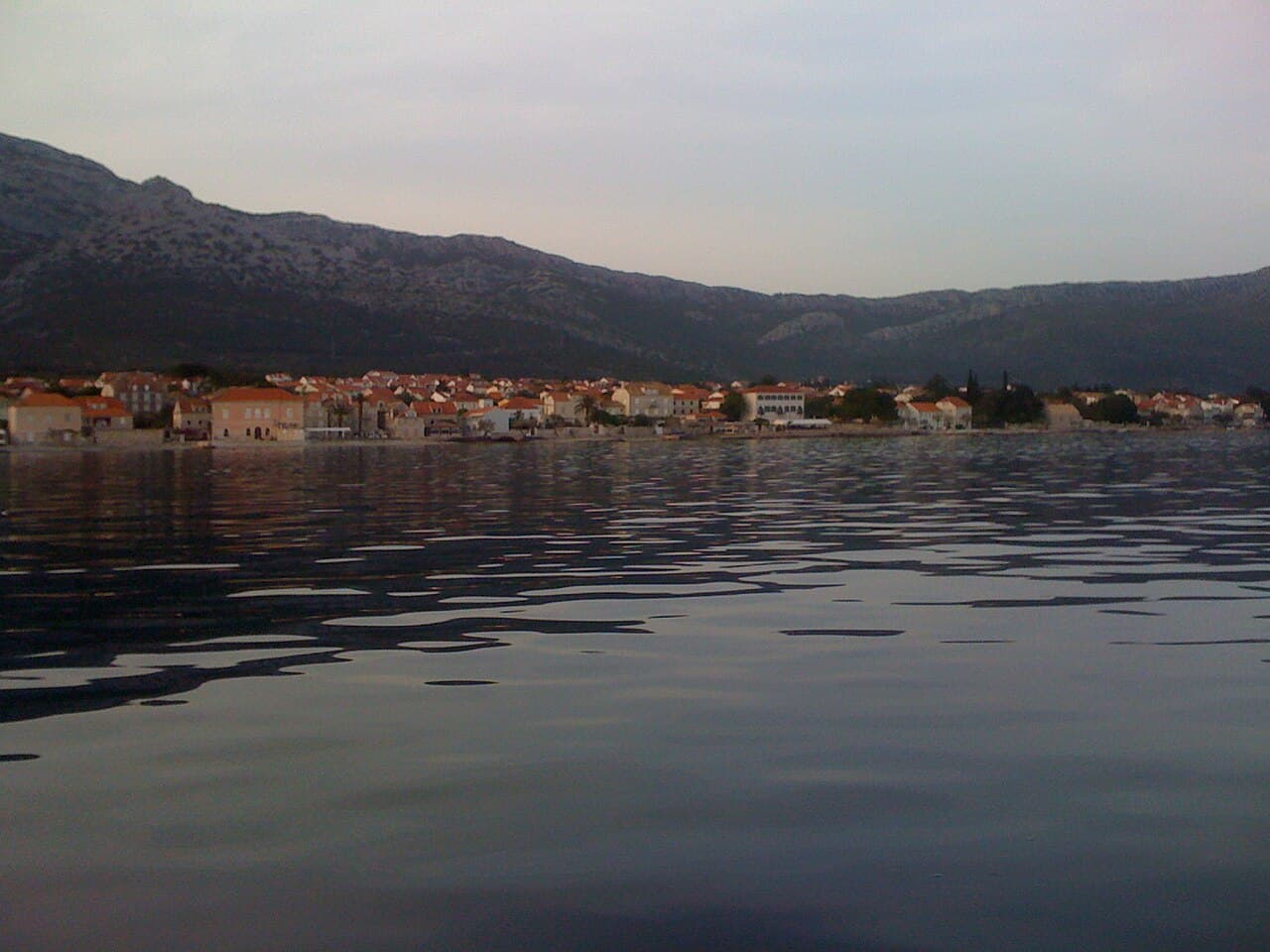
Orebić is located on the southwestern coast of the Pelješac Peninsula in southern Croatia. Known for its maritime history and proximity to Korčula island, it is a practical destination for families traveling with toddlers and young children. The town offers a combination of flat walking paths, accessible supermarkets, and beaches with shallow entries, minimizing the daily logistical hurdles that often accompany family travel.
01Getting to Orebić with Young Children
The most efficient route for international travelers is flying into Dubrovnik Airport (DBV) and driving to Orebić. The distance is 130 kilometers. With the opening of the Pelješac Bridge, the drive takes approximately 2 hours and 15 minutes, bypassing the border crossings through Bosnia and Herzegovina.
Renting a car at Dubrovnik Airport is straightforward, but booking a toddler car seat (Group 1 or 2) in advance is mandatory. Rental companies typically charge an additional €10 to €15 per day for a child seat. Ensure the rental agency confirms the seat reservation, as inventory frequently runs out in July and August.
An alternative route is driving from Split Airport (SPU), which is 200 kilometers away. This drive takes just under three hours using the A1 highway and the Pelješac Bridge. While a ferry operates between the mainland town of Ploče and the Pelješac town of Trpanj, families with toddlers should avoid this option during peak summer. Waiting in the vehicle staging area under the midday sun for an hour or more causes unnecessary discomfort, and driving across the bridge is consistently faster and cooler.
02Navigating the Terrain with a Stroller
Orebić is divided geographically by its main road, D414. The area between this road and the sea is largely flat and highly suitable for strollers. The defining feature for families is the Šetalište Kneza Domagoja, a paved seaside promenade extending for 1.5 kilometers. This path allows parents to push strollers from the eastern end of town (near Trstenica Beach) all the way to the western ferry terminal without encountering stairs or steep inclines.
Conversely, accommodations located above the D414 main road sit on the lower slopes of Mount Sveti Ilija. Pushing a stroller loaded with beach gear up these steep, narrow streets in 32°C (90°F) heat is physically demanding. When booking apartments, use map applications to ensure the property is situated south of the main road.
03Toddler-Approved Beaches
The primary draw for families in Orebić is Trstenica Beach, located on the eastern edge of the town. Unlike the majority of Croatian beaches, which are made of sharp limestone rocks, Trstenica features a sandy seabed and a very shallow decline. Toddlers can walk out five to ten meters while the water remains below their knees, providing a safe environment for splashing.
However, the marketing materials for this area require a reality check. While Trstenica is heavily marketed as a sandy paradise for kids, the eastern end gets crowded and noisy by 10:30 AM, and the shallow sand often turns into a murky paste from high foot traffic; families with toddlers are much better off claiming a spot on the western pebbled section where mature pine trees actually provide dense, reliable morning shade.
Sun loungers and umbrellas are available for rent at Trstenica, typically costing €15 to €20 for a set (two chairs and one umbrella) per day.
For a quieter alternative, the beach in front of the Aminess Grand Azur Hotel (western Orebić) consists of smooth, round pebbles. It is less crowded than Trstenica and offers excellent water clarity. Toddlers will need water shoes (available at local beach kiosks for €8 to €12) to walk comfortably on the pebbles.
Avoid taking toddlers to Viganj, a village 7 kilometers west of Orebić. Viganj is famous for windsurfing due to strong, constant afternoon winds (the Maestral), which create choppy water and blow sand into young children's faces.
04Essential Baby and Toddler Supplies
Packing heavily is unnecessary, as Orebić has the retail infrastructure to support young families. The town contains three primary supermarkets: Konzum, Tommy Maximarket, and Studenac.
- Diapers and Wipes
- Konzum and Tommy carry Pampers (Active Baby and Pants), as well as the regional brand Violeta, which is highly rated by local parents. A standard pack of Pampers costs between €18 and €22 depending on the size.
- Baby Food
- Hipp jars and pouches are widely available. A standard 190g jar of vegetable or meat puree costs €1.80 to €2.50.
- Milk
- Fresh pasteurized milk (svježe mlijeko) is found in the refrigerated section, while UHT long-life milk (trajno mlijeko) is sold on standard shelves. Both are full-fat (3.2%) and suitable for toddlers transitioning from formula.
- Formula
- Basic Aptamil and Hipp formulas are sold in supermarkets. For specialized formulas (anti-reflux, dairy-free), visit the local pharmacy (Ljekarna) located on the main road.
05Accommodation Strategies
Families must choose between hotels and self-catering apartments.
The Aminess Grand Azur Hotel is a prominent family-focused option. It features a designated children's pool with a depth of 0.4 meters, an indoor playroom, and direct access to the promenade. A family room during the peak season of July averages €210 to €250 per night.
Renting an apartment provides a kitchen, which is highly beneficial for preparing early toddler breakfasts or handling picky eaters. An apartment near the beach typically costs €90 to €150 per night. When booking an apartment, explicitly confirm the presence of an air conditioning unit in the bedroom, as some older properties only feature a single unit in the living room.
06Dining Out with Young Children
Croatian dining culture is exceptionally welcoming to children. Waitstaff generally accommodate strollers at the table, and toddlers are expected to be present in restaurants.
Approximately 80% of sit-down restaurants (konobas) in Orebić provide high chairs, though they may only have one or two available. It is advisable to dine early, around 6:00 PM or 6:30 PM, to secure a high chair before the primary dinner rush begins at 8:00 PM.
Toddler-friendly food is easy to source. Most restaurants will gladly prepare half-portions of plain pasta with olive oil or butter, even if it is not explicitly listed on the menu. Traditional dishes that appeal to young palates include:
- Njoki (Gnocchi)
- Often served with a mild beef sauce (pašticada) or just cheese.
- Pohana piletina
- Breaded chicken breast, usually served with french fries.
- Grilled white fish
- A healthy option, though parents must carefully inspect for bones.
Prices for standard pasta or pizza dishes range from €10 to €15, while meat or fish mains cost €18 to €25.
For quick meals, local bakeries (Pekara) sell slanac (a soft, salty breadstick) and buhtla (a soft roll filled with chocolate or jam) for €1 to €2. These are excellent, inexpensive snacks to keep in the stroller.
07Short Excursions Suitable for Attention Spans
Full-day boat tours and long bus rides are rarely successful with toddlers. Orebić offers several micro-excursions that fit between nap times.
Ferry to Korčula Town The passenger ferry from Orebić to Korčula is ideal for young children. Operated by Jadrolinija and GV Line, the boats depart from the main pier in Orebić and take exactly 15 minutes to cross the channel. The short duration ensures children do not become restless or seasick.
The ticket costs €4 per adult each way, and children under three years old travel for free. Strollers can be rolled directly onto the lower deck. Once in Korčula, families can walk the perimeter of the historic old town, which is flat and paved, stopping for gelato.
Maritime Museum (Pomorski Muzej) Located on the waterfront, this small museum contains models of old sailing ships and nautical equipment. It takes only 20 minutes to walk through, making it an easy, air-conditioned diversion on a hot afternoon.
08Healthcare and Emergencies
Orebić has a local health clinic (Dom Zdravlja) located on the main road (Ban Jelačić street). This clinic handles minor injuries, ear infections, and basic pediatric consultations.
For serious emergencies, the nearest major hospital is in Dubrovnik (130 kilometers away). Parents should pack a basic medical kit including child-safe paracetamol or ibuprofen, thermometer, and hydrocortisone cream.
Mosquitoes are present during the summer months. Local supermarkets sell electric plug-in repellents (brands like Raid or Bros) for about €6, which are highly effective for keeping bedrooms clear of insects during the night. Sunscreen is expensive in Croatia; a standard bottle of SPF 50 for kids costs upwards of €18 at local pharmacies, so bringing this from home is a sound financial decision.
09Weather and Seasonal Timing
July and August are the peak summer months, with daytime highs consistently reaching 32°C to 35°C (90°F to 95°F). The sea temperature peaks at a comfortable 25°C to 27°C (77°F to 81°F). During this period, families with toddlers must adhere strictly to a schedule: visit the beach from 8:00 AM to 11:00 AM, retreat indoors for lunch and naps during the intense afternoon heat, and return outdoors after 5:00 PM.
For families not bound by school schedules, September is the optimal month. The sea retains its summer warmth, daytime temperatures drop to a manageable 26°C (79°F), and accommodation prices decrease by 20% to 30%. June offers similar air temperatures, though the sea is noticeably cooler (around 22°C/72°F), which may deter toddlers from extended swimming.