01Is Osijek a good city for seniors?
Yes. Osijek is the largest city in Slavonia and sits on flat river terrain, so there are no steep hills to climb. The centre, the Drava promenade and the parks are all easy to cover on foot. Prices are lower than on the Adriatic coast, and the pace is calm outside of festival weekends.
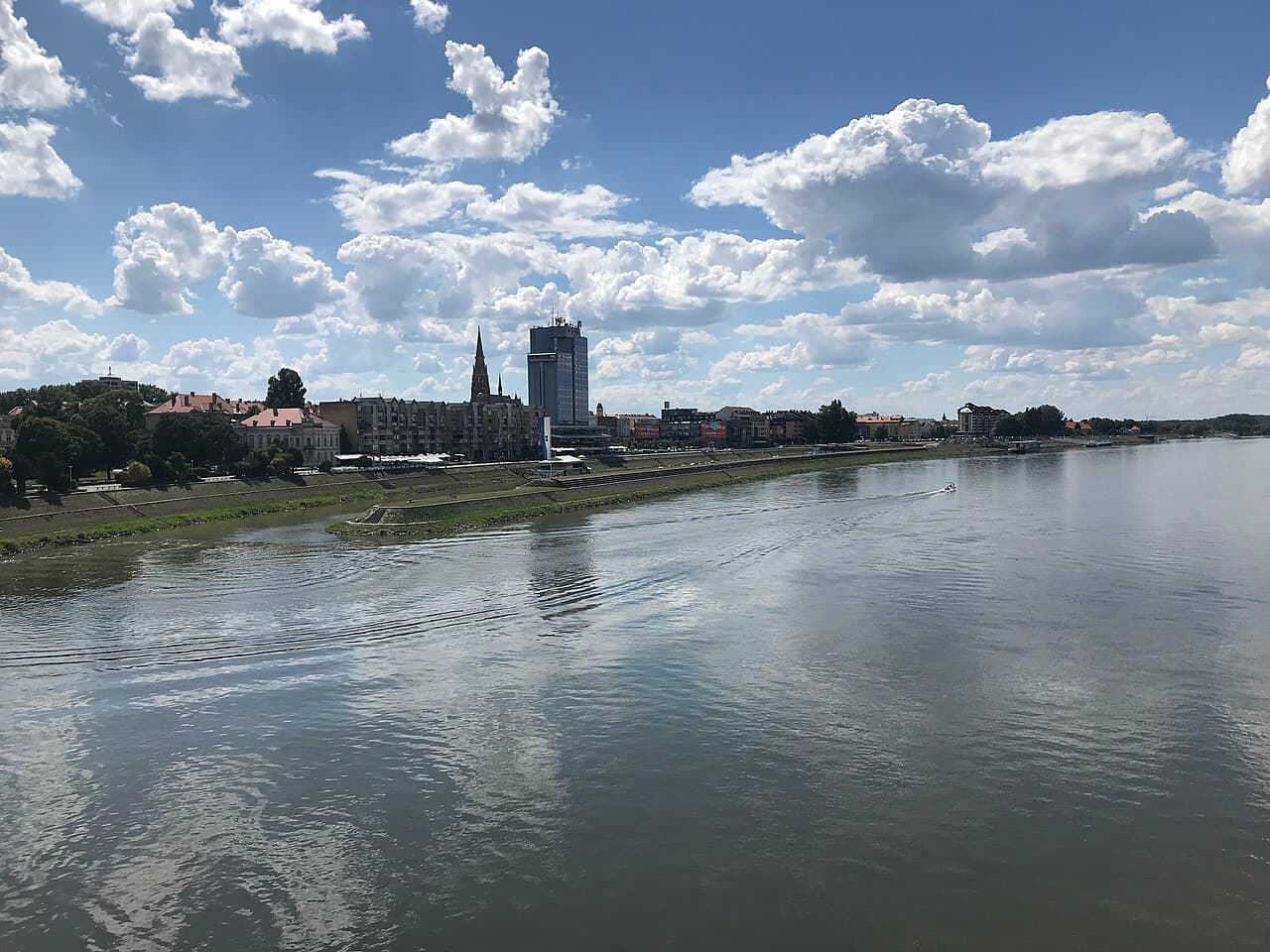
The city stretches for many kilometres along the Drava. Visitors stay in the compact central area and use trams for longer hops.
02Getting around Osijek with limited mobility
Trams
Osijek has two tram lines, and it is one of only two Croatian cities with a tram system, the other being Zagreb. The city has been receiving new low-floor trams, the KONČAR TMK 2500. Each is 20.8 m long and holds 135 passengers, with 44 seats. A second batch of 10 is being procured, which will bring the fleet to 20 new trams.
Not every departure uses a low-floor vehicle yet, so look at the tram's entrance before boarding. If step-free access is essential, let a tram pass and wait for a low-floor one. Trams run frequently on the main lines, and waiting a few minutes is usually enough.
Tickets
A single ticket bought from the driver costs €1.46 and is valid for 60 minutes. A daily card covers unlimited tram and bus rides on the day of purchase. Tickets are also sold at newsstands and at GPP shops, including the tram depot (Remiza) and the one under the main square. Ask at a GPP shop whether a senior discount applies to visitors; reduced fares are generally tied to local residency.
Taxis and parking
Short taxi rides inside the centre usually cost €4 to €8. For drivers, accessible parking is available near Tvrđa, and several parking areas along the left bank of the Drava face the old town across the river.
03Tvrđa: what to expect
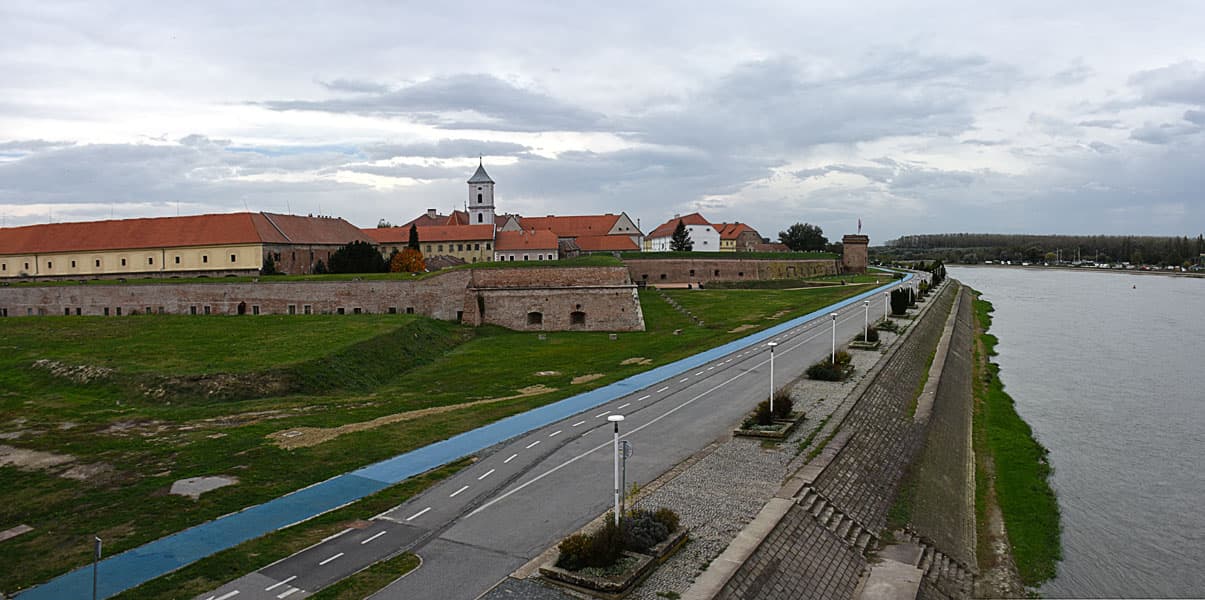
Tvrđa is the 18th-century fortress district and the main sight in Osijek. An EU-funded renovation has made the old town far easier for wheelchairs and walkers than it was before. The Holy Trinity Square at its centre is the best place to start. Some stretches still mix cobblestones with smoother pavement, so rollators and wheelchairs need some care on uneven stones.
Tip: Walk the smooth pavement along the edges of the square first, then cross the cobbles only where needed. Visit in the morning, when it is cooler and quieter.
The pedestrian bridge over the Drava links Tvrđa to the riverbank and is open around the clock. It has smooth surfaces and is wheelchair accessible. The route from the main square to Tvrđa is about 1.5 km and takes 20 to 25 minutes at a relaxed pace, with benches along the way.
04Step-free and low-effort sights
- Drava promenade: Wide, flat and shaded in parts. It is the best option for a daily walk and for riders of mobility scooters.
- Main square (Trg Ante Starčevića) and Europska avenija: Level pavements and tram stops close together. Europska avenija is lined with 19th-century Secession buildings that can be viewed from the street without stairs.
- Co-Cathedral of St Peter and Paul: The neo-Gothic landmark has been made accessible, although some entrances have involved steps. Confirm the current entrance with the parish office before a wheelchair visit.
- Kopački Rit Nature Park: A large wetland about 12 km from the city, with boardwalks that are mostly flat. Wood becomes slippery after rain. Book a guided boat tour or transport in advance and ask whether accessible vehicles are available, since not all are.
05Buildings and everyday accessibility
New buildings in Osijek are designed with accessibility in mind. Sloped kerbs, tactile paving for visually impaired visitors and raised symbols in lifts are standard. Many older pharmacies, banks and shops have added ramps or lifting platforms. The new emergency and outpatient hospital building was built with accessibility as a priority.
06Best time to visit
April to June and September to mid-October bring temperatures of roughly 15 to 25 °C. Summer reaches 30 °C or more and humidity along the river can be tiring. Winter is cold and paving can be icy. Many seniors prefer the early-autumn period, when the grape harvest brings local events and the light is soft.
07Practical tips for seniors
- Stay centrally. Choose a hotel or apartment in the centre or Tvrđa. Ask for a ground-floor room or a lift, since many older Slavonian buildings have none.
- Plan around the midday heat. Walk in the morning, eat a late lunch and rest, then go out again after 17:00.
- Eat Slavonian food in small portions. Fiš paprikaš (river-fish stew) and kulen sausage are regional staples. Portions are large, and many restaurants will serve half portions on request.
- Carry a copy of your medication list. Pharmacies (ljekarna) are common in the centre, and the main hospital is the University Hospital Centre Osijek. EU visitors should carry their European Health Insurance Card.
- Opinion: The best way to see Osijek is slowly, with one major activity per day. A morning in Tvrđa followed by a riverside walk is enough for most visitors.
08Getting to Osijek
Osijek has train and bus links with Zagreb, and the journey takes roughly three to four hours. Zagreb is the main international gateway. Check each operator's assistance service for boarding help at stations, and request assistance a day ahead.