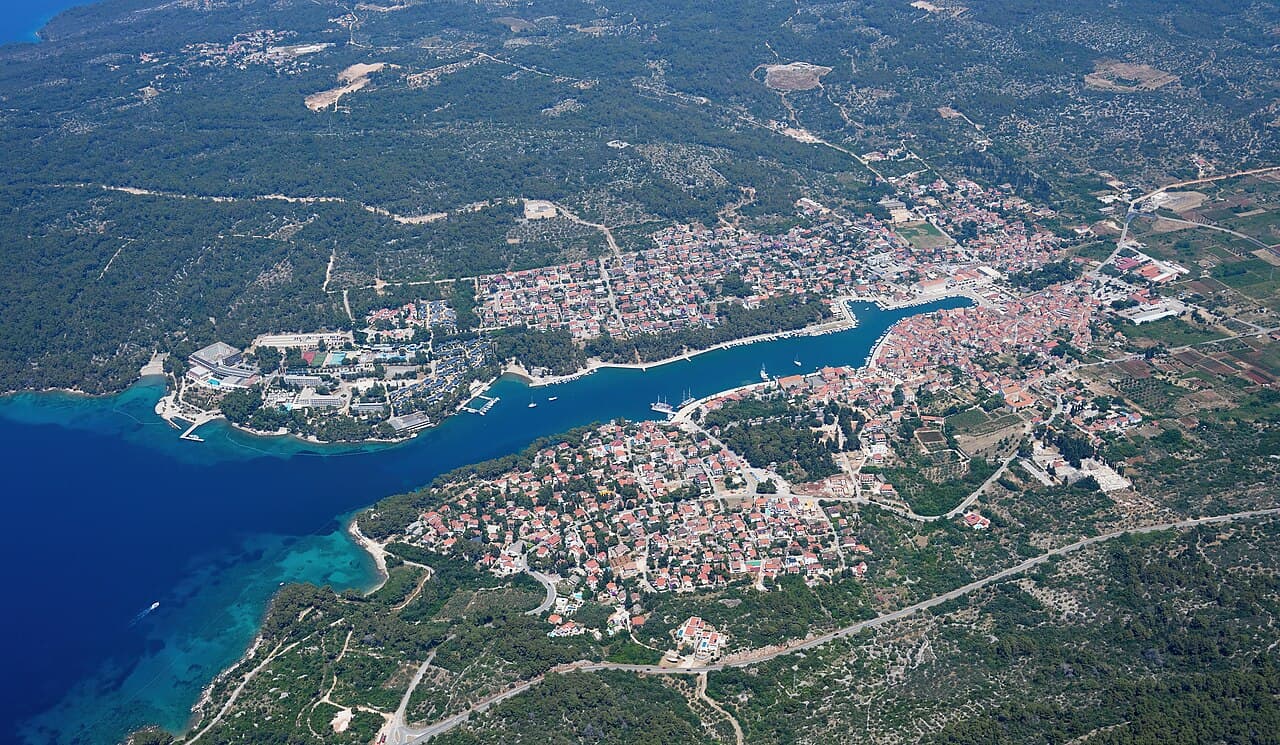
01How Busy Is Stari Grad Each Month?
Stari Grad is quieter than Hvar Town, about 18 km away, but it still follows the island's strong seasonal pattern. The town is the arrival point for the Split car ferry. Ferry frequency is therefore a good guide to demand. In winter the Jadrolinija line 635 runs about four or five crossings a day. Outside the peak it runs six a day. In July and August it runs up to seven or eight. A night sailing at 01:30 from Split operates only from about 20 June to 24 August.
January to March: Almost Empty
The old town and the Stari Grad Plain are almost empty. Many restaurants, rental apartments and boat operators close. Visitors are mostly locals and a few independent travellers. Choose this period only if you want solitude and accept limited dining and fewer ferries. The first ferry from Stari Grad leaves at 05:30, and the later ones run on a reduced timetable.
April and May: Quiet but Open
April is still thin on visitors, though shops and cafés reopen over the month. May is the first month in which most of the town is operating, and crowds stay light outside holiday weekends. Ferry fares are in the lower tier until 28 May. After that the higher fare period begins and runs to 27 September.
June: Crowds Build
Early June is manageable. From about the third week, the night ferry starts, school holidays begin in many European countries, and day-trippers from Hvar Town and Split appear. Midday in the harbour and along the waterfront (the Riva) becomes noticeably busier.
July and August: Peak Season
These two months are the most crowded. Ferry queues at the port, 2 km from the old town, are longest on Saturdays and Sundays. Drivers with vehicles are advised to arrive at least 45 minutes before departure, and about 60 minutes or longer in peak summer. Accommodation is hardest to find and most expensive. The week around 15 August (Assumption Day) is the busiest of the year. Skip Stari Grad in mid-August unless the dates cannot be changed. The town's quiet character is hardest to find then.
September: Falling Fast
The first half of September stays moderately busy, and the second half is much calmer. The sea stays comfortable for swimming, and the higher ferry fare period lasts to 27 September. Late September is one of the best times to avoid crowds without losing services.
October to December: Quiet Again
Fares return to the lower tier from 28 September. The ferry timetable thins, and restaurants close one by one through October. By November, only a handful of konobas stay open. Advent is small and local in scale.
02Best Times to Avoid the Crowds
- Best balance
- 15 May–15 June and 15 September–5 October. Most services are running and the town is not packed.
- Cheapest and quietest
- November–March, with limited services.
- Avoid
- 10–20 August and the weekends of July.
03Local Tips for Beating the Crowds
- Travel mid-week. Ferry queues are shortest from Tuesday to Thursday.
- Take early or late ferries. The 05:30 departure from Stari Grad is the emptiest, and the 20:00 and 23:00 sailings in summer avoid the midday rush.
- Walk the Stari Grad Plain early. The UNESCO-listed ancient Greek field system is easiest to enjoy before 10:00, when cyclists and walkers are few.
- Explore the old town in the morning. Day-trippers and tour groups arrive after 11:00.
- Book the car ferry ahead in summer. A standard car and passengers cost roughly €65–70 one way in the higher fare period. Reserve a space in advance.
- Do not base yourself in Hvar Town to see Stari Grad. The Hvar Town crowds are much bigger. A short bus or taxi ride gives access to quieter Stari Grad.
04Planning Around Crowds
Stari Grad has a real off-season, and that is its advantage over Hvar Town. For quiet without closures, the shoulder months are the best choice. A winter visit makes sense only if you are happy with closed venues and an early-evening town.