01Does Ston Have a Dog Beach?
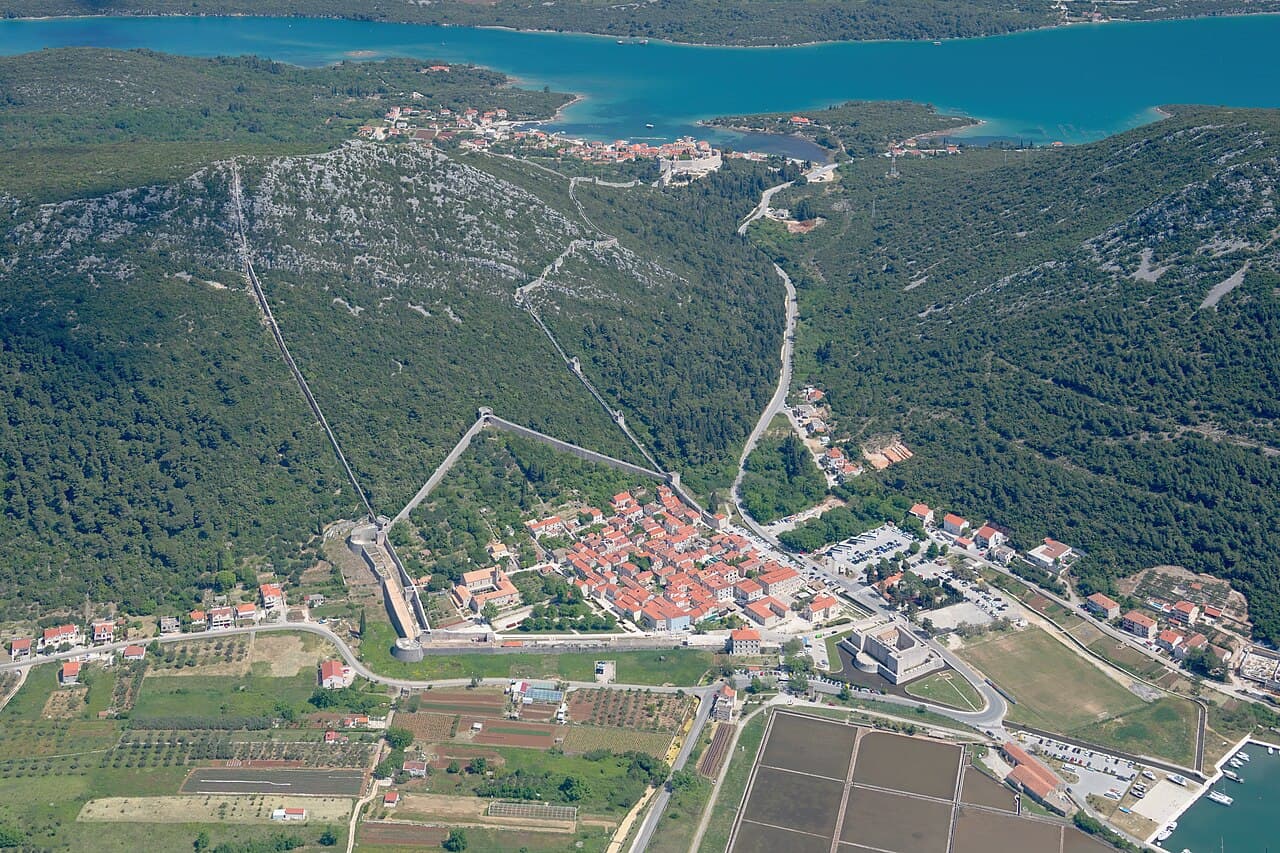
Ston has no official dog beach (plaža za pse). The town sits on a salt-pan and oyster-bay shoreline, not a resort coast. Most of the water edge is working waterfront: oyster beds, salt pans and protected zones. Swimming with a dog here means choosing a quiet, signed spot well away from shellfish farms.
The closest designated dog beaches are around Dubrovnik, about 60 km away. Mandrač is a compact pebble beach with calm, clear water, enclosed by a stone wall. On the Pelješac side, Mokalo beach near Orebić is a community-listed option for dogs.
Opinion: Ston is a good base for a dog if the holiday is walks, wine and day trips. It is a poor base if the main plan is daily dog swimming. Anyone who wants that should stay near Orebić or Dubrovnik instead.
02Are Dogs Allowed on Other Beaches in Croatia?
In peak season, dogs are generally banned from official public beaches unless a sign marks the beach as dog-friendly. Beach and old-town rules are set by each municipality. Check the sign at the entrance, because fines are issued. Pebble coves outside concession areas are where locals swim dogs, usually early in the morning or late in the evening.
Three habits keep things simple:
- Keep the dog on a leash on the way to the water.
- Pick up all waste. It is mandatory.
- Avoid fenced oyster and mussel areas around Mali Ston.
03Dogs in Ston Old Town and on the Walls
Dogs must be leashed in all public spaces in Croatia. Muzzles are required only for restricted breeds. Ston's streets are small and flat, and a dog can walk them in about 20 minutes.
The Walls of Ston are a 5.5 km rampart walk between Ston and Mali Ston, over stone and steps with almost no shade. The route is listed as pet-friendly, but summer sun makes it unsuitable for most dogs. Do the walls before 9:00 in spring or autumn, carry 1 L of water per dog, and check with the ticket desk before entering. A gentler alternative is the lower wall approaches and the edge of the salt pans.
04Dogs in Restaurants
The general rule across Dalmatia is that a leashed, calm dog is welcome on a terrace (terasa). Indoor seating is usually off-limits. Mali Ston is known for oysters, and its waterfront restaurants have outdoor tables. Ask before sitting, and choose a shaded table. Bring a mat, because stone terraces get hot by midday.
05National Parks, Ferries and Catamarans
Park rules differ by park, so confirm at the ticket office. From Ston, Mljet is the most relevant island. The ferry leaves from Prapratno, about 5 km away.
Ferries. Pets travel free with Jadrolinija. Dogs must be leashed and muzzled and stay on the outdoor deck. Catamarans also allow small pets in the lounge if they are in a carrier of up to 45x35x25 cm and 8 kg. Dog space on international lines is limited. Some regional operators and day-tour boats refuse dogs in summer, so the scheduled Jadrolinija ferry is the safer choice. Bring the passport, because staff may ask for the health booklet.
06What Accommodation Charges for a Dog
Many apartments and guesthouses in Ston and Mali Ston accept dogs, often up to two per room, and a good share charge nothing. Others add a cleaning or pet fee, typically around €5–15 per night. Hotels are less predictable. Confirm the weight limit, the fee, and whether dogs may be on beds in writing before booking. Apartments with a garden or terrace and parking suit a dog better than a first-floor unit with no outdoor space.
Stay in Ston itself or Mali Ston for walls access. For sea access, Broce and Hodilje are listed with pets allowed and beach access.
07Summer Heat and Best Months
July and August bring strong heat on exposed stone, salt flats and asphalt. Pavement and wall stone can burn paws by late morning. The best months are April to June and September to October. Water is warm enough for dogs from late May to early October, crowds are thinner, and the walls are comfortable to walk. In summer, restrict walks to before 9:00 and after 19:00, and never leave a dog in a parked car.
08Vet Basics
There is no 24/7 emergency clinic in Ston. The nearest round-the-clock care is in the Dubrovnik area, about 60 km away. Save a clinic's number before arrival, and carry a tick remover, since Dalmatian scrub carries ticks. Dogs are required to be microchipped in Croatia. Rabies is the only vaccine the EU entry rules require, and Croatia does not require tapeworm treatment for dogs.
09EU Pet Passport Rules for Driving In
- Microchip
- ISO 11784/11785, implanted before or on the same day as the rabies vaccination.
- Rabies vaccine
- wait at least 21 days after a first vaccination before travel. A booster inside the validity period needs no new wait.
- Passport
- an EU pet passport issued by an authorised vet. In Croatia the vet sets the fee.
- Rule change
- new EU pet-travel rules apply from 22 April 2026. Traveller rules are almost unchanged, and existing passports stay valid.
- Non-EU drivers
- passports issued to Great Britain residents are no longer accepted for EU entry. Use an Animal Health Certificate instead.
- Via Bosnia
- the Neum corridor crosses Bosnia and Herzegovina on the way from the north. Carry the passport and check border requirements for pets before the trip.
- Quarantine
- none for dogs with correct documents.
Pit bull-type dogs without a pedigree are refused entry. Pedigree bull breeds need FCI papers.
10Verdict: How Dog-Friendly Is Ston?
Rating: 3.5 out of 5. Ston is dog-friendly for accommodation, terrace dining, short leashed walks and ferry connections. It is not dog-friendly for beaches, because there is no official dog beach and the shoreline is working oyster and salt-pan land. Summer heat is the second limit. Go in spring or autumn, rent an apartment with outdoor space, and use Dubrovnik or Orebić for dog swimming days.


