01Are dogs allowed on beaches in Supetar?
Supetar has no single fenced "plaža za pse" with a sign and facilities. Instead, a town council decision on public order bans dogs from sea beaches across the municipality and then lists the exceptions. The main designated dog stretches are:
- Zastup beach, from the middle of the western section to the western end
- The coastal strip from the eastern end of Bušje to the eastern end of Malešnica beach
- The shore from the bridge below the cemetery at Banj beach, over the headland, to the entrance of the next bay
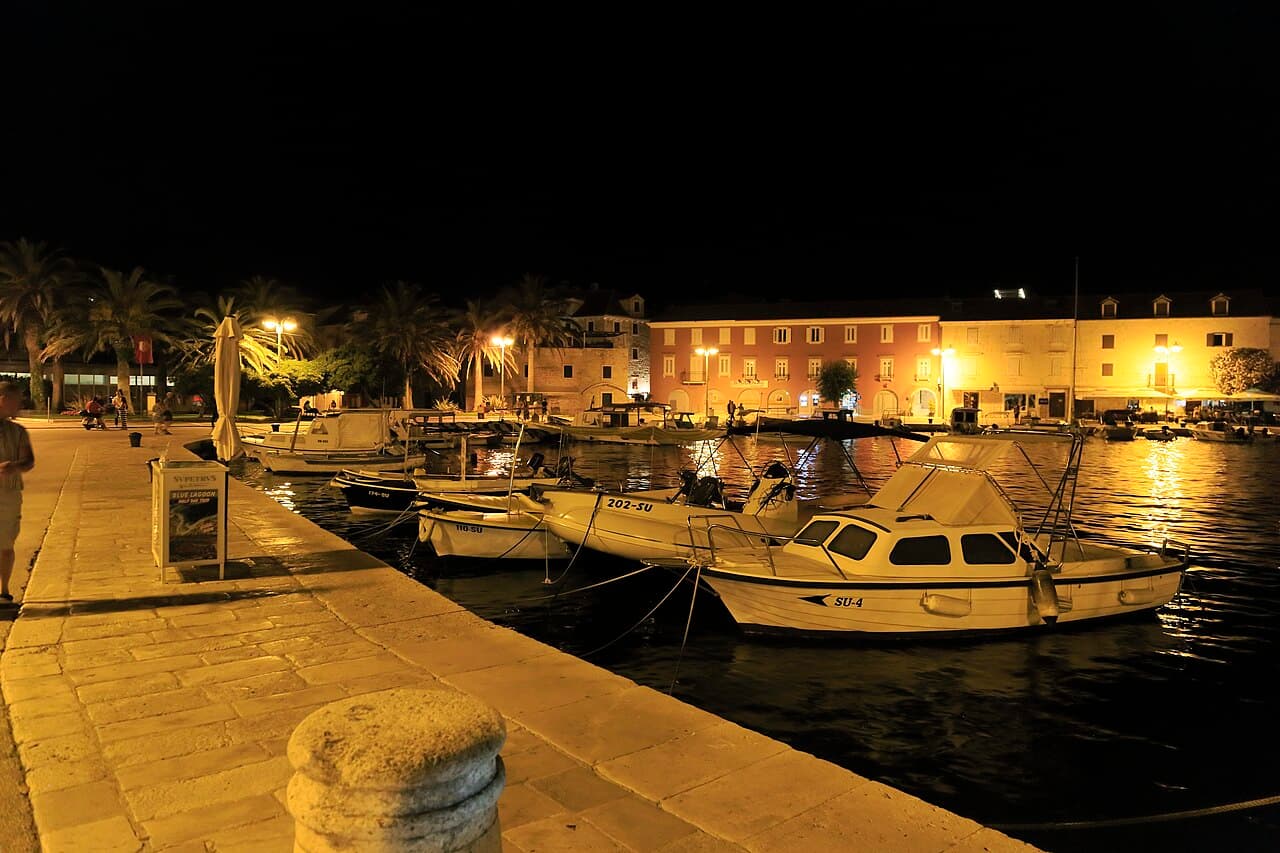
The Banj headland (St. Nicholas peninsula, between Banj and Tri mosta) is the most practical choice. It is rocky and exposed, so bring water shoes for the dog, a bowl and a shade umbrella. The town beach next to the ferry terminal, a 300 m stretch of grey sand and pebbles, is off limits to dogs in the main summer season.
This arrangement works on paper, but the reality is that Brač has no good dog beach in the sense of sand, shade and a gentle entry. The designated stretches are rough rock and pebble, and the town centre beaches that most visitors want are closed to dogs. Anyone expecting a Mediterranean dog-paradise will be disappointed.
Other beaches: most urban beaches on Brač, including Zlatni rat in Bol, do not allow dogs. Small, unsigned coves along the north coast between Sutivan, Supetar and Postira are used by local dog owners. Keep the dog leashed near other swimmers and take waste with you.
02Dogs in Supetar old town and restaurants
Dogs can walk the waterfront promenade and the old-town lanes on a leash. Shade is limited, and stone paving gets hot at midday, so walk before 9:00 or after 19:00. Restaurants and konobas generally accept dogs on outdoor terraces, which is where most dining in Supetar happens anyway. Indoor dining rooms usually refuse them, and food shops, bakeries and the market are no-go areas. Ask before sitting down, as policy is set by each owner and there is no blanket rule.
03National parks and nature
Brač has no national park. The nearest ones are Krka and Paklenica, which restrict dogs or require a leash, and Brijuni and Mljet, which have their own rules, so check before booking day trips from Split. On Brač itself, forest trails, olive groves and the road toward Vidova gora are open to leashed dogs. Summer fire risk is high, so no open flames and stay on tracks.
04Ferries and catamarans from Split to Supetar
The Jadrolinija car ferry (line 631) is the easiest option for dogs. Crossing time is about 50 minutes. In 2026, adult fares ran €4.40–€6.50 depending on season, and a standard car cost €18.20–€26.10.
Jadrolinija carries pets free of charge. Dogs must wear a muzzle (except assistance dogs) and be kept on a leash. Larger pets over 8 kg must stay on the open deck. Small pets can use indoor salons only in a carrier up to 45 x 35 x 25 cm with a waterproof bottom.
The fast Kapetan Luka–Krilo catamaran takes pets only if they are included in the booking, with onboard kennels available. Fares start around €10 one way. Some booking platforms list pets as not permitted on this route, so confirm with the operator before travelling. Taking the car ferry with a car is simpler for a large dog.
05Accommodation fees for dogs
Hotels on Brač generally do not accept pets, though some hotel-run apartment complexes do. Private apartments and campsites are the main option, and Camping Kito in Supetar accepts dogs. Typical pet fees in Dalmatian apartments run about €5–€15 per night, or €30–€60 per stay as a cleaning charge. Some hosts include dogs free. Always confirm the fee, the size limit and whether dogs may be left alone in writing before paying a deposit.
06Summer heat and best months
July and August regularly pass 30°C in Dalmatia, and pavement and rock surfaces get much hotter. The best months with a dog are May, June, September and early October, when the sea is warm enough for swimming and daytime temperatures are manageable. Avoid long walks between 11:00 and 17:00 in summer, carry water, and never leave a dog in a parked car or on ferry car decks without ventilation.
07Vet basics
Supetar has a veterinary clinic, Veterinarska Ambulanta Supetar, for routine problems. Serious emergencies and out-of-hours care are usually handled in Split, a ferry crossing away. Ferries run frequently in summer but less so at night, so pack basic supplies:
- Tick and flea protection (ticks are common in scrubland)
- Sandfly and mosquito protection
- Any regular medication in sufficient quantity
- Vaccination records
Tap water is safe for dogs. Sea water in small amounts is fine, but stop heavy sea drinking.
08EU pet passport rules for driving in
A dog entering Croatia from another EU country needs three things: an ISO microchip, a rabies vaccination given after the chip and at least 21 days before travel, and an EU pet passport issued by an authorised vet. The microchip must be implanted before or on the same date as the rabies vaccine, or the vaccine is invalid. Since 22 April 2026, passports issued in Great Britain are no longer accepted for EU entry, so UK visitors need an Animal Health Certificate. Croatia limits travellers to five pets per person. Carry the documents at the border and on the ferry, and make sure the rabies booster stays valid for the whole stay.
09Verdict: how dog-friendly is Supetar?
Supetar is dog-friendly enough, but not dog-focused. Positives: several designated dog bathing zones, terrace dining, free ferry transport and easy walking. Negatives: the town beach is closed to dogs, designated stretches are rocky, hotels rarely accept pets and midsummer heat is hard on dogs. Rating: 3 out of 5 for a short stay in May, June or September with a private apartment, and 2 out of 5 for July and August.


