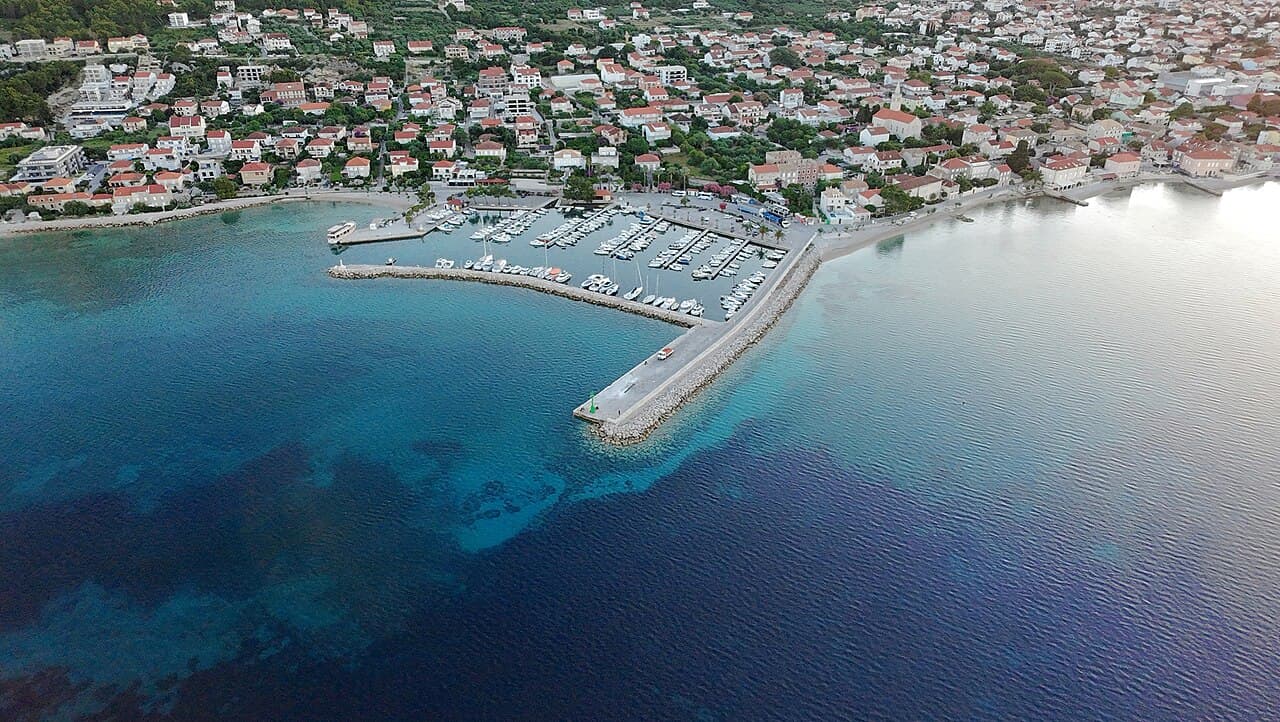
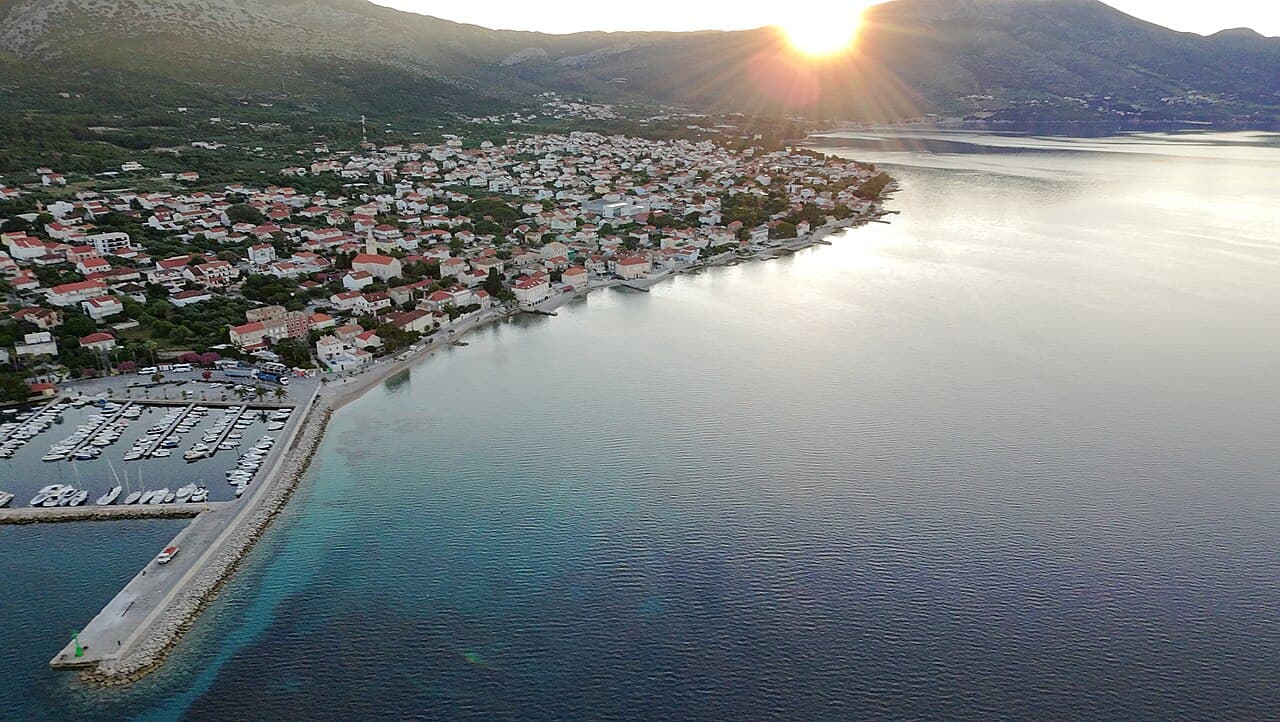
01When Is the Best Time to Visit Orebić?
The best balance of weather, crowds and price falls in two windows: late May to June and September to early October. Both offer swimmable sea, long days and open restaurants and boat services, without the peak-season price premium of July and August. Of the two, September is the stronger pick: the sea has stored a summer of heat, accommodation rates drop, and the Plavac Mali grape harvest begins on the slopes above the town.
This guide gives the overall verdict. Detailed month-by-month weather and crowd breakdowns are covered in separate articles.
02The Verdict by Season
Late May to June: Best for Walkers, Couples and Early Swimmers
Sea temperatures around 23°C and air temperatures near 25°C make swimming comfortable. Days are long, the beach clubs and water-sports operators are open, and Orebić has room to breathe. Hiking on Mount Sveti Ilija (961 m), the peak above town, is realistic before the midsummer heat sets in.
One practical detail: the Jadrolinija ferry fares to Korčula switch to peak pricing on 29 May. A foot passenger pays €2.50 before that date and €4.40 after it. A small car costs €10.40 before and €16.20 after. The saving is small for walkers but noticeable for drivers.
July and August: Best Only for Fixed School Holidays
The sea reaches about 25°C and air temperatures average about 29°C, often higher. It is the most reliable beach weather, and festivals run in Orebić, Trpanj and Ston. It is also the busiest and most expensive period, and good apartments and waterfront rooms need booking months ahead.
Families tied to school calendars have no choice, and Orebić still works well in summer because it is a long pebble-beach town rather than a single crowded old town. Everyone else is paying extra for heat and traffic.
September to Early October: The Strongest Overall Value
Sea temperatures stay in the low-to-mid 20s into October, and air temperatures sit around 20–25°C. Accommodation rates drop from their August highs, and ferry fares fall back to the low rate after 27 September. Late September into early October coincides with the Plavac Mali harvest, so winery visits on the Pelješac peninsula are at their most lively. The Dingač vineyards sit a short drive from town.
April to Mid-May: Good for Hiking, Poor for Swimming
Temperatures of 15–25°C suit hiking and cycling, and prices are low. The sea is still cool, and some seasonal restaurants and rental operators have not yet opened. Choose this window for walking and wine, not for a beach holiday.
November to March: Quiet and Limited
Orebić is calm and local life dominates. Temperatures can fall below 10°C, and many seasonal businesses close. The year-round Jadrolinija car ferry to Korčula keeps running, and the Ston walls stay open in winter, daily 9:00–15:00 from November to March. Early December brings the main Plavac Mali celebrations on the peninsula, a good reason for a short off-season trip.
03Price Differences Across the Year
The clearest price signal is the ferry tariff, which has a fixed peak period from 29 May to 27 September. Accommodation follows a similar pattern, with the steepest premium in July and August. Shifting a trip from mid-August to mid-September is the single most effective way to cut costs without losing swimming weather.
A foot passenger on the Orebić–Dominče (Korčula) ferry pays €2.50 off-season and €4.40 in peak season. Children aged 3–12 pay €1.20 in both periods. The crossing takes about 20 minutes. A separate passenger-only boat (G&V Line Iadera) makes the 15-minute run to Korčula town, with tickets at €2.50 in the low season and €3.50 in the high season.
04Insider Tips for Timing Your Visit
- Skip peak-season Dubrovnik day trips. The drive is about 1.5 hours via the Pelješac Bridge, which opened in 2022. In July and August, cruise-ship crowds fill the old town from late morning. Go early, or save Dubrovnik for May or September.
- Pay the passenger fare, not the car fare, for Korčula. A small car costs €16.20 each way in peak season. Parking is limited in Korčula town, and the foot ferry or passenger boat is usually the better choice. Leaving the car in Orebić is usually worth it.
- Book summer rooms early, shoulder-season rooms late. July and August need months of lead time. For June and September, a few weeks usually suffices.
- Plan beach days for the morning. Wind on the Pelješac channel makes it a recognised windsurfing and kitesurfing area, with Viganj, just west of Orebić, as the base. Mornings are calmer for swimming and paddleboarding.
- Check winery opening times in autumn. Harvest-season visits are best arranged in advance.
05Which Season Fits Which Traveler
- Beach-focused couples and adults
- September.
- Families on school holidays
- July and August, booked early.
- Hikers and cyclists
- April–May or late September–October.
- Wine travelers
- late September–early October, or the first weekend of December.
- Budget travelers
- early June, late September, or October.
The overall recommendation is September. It combines the warmest sea of the year, manageable crowds and lower prices, and it is the one month where little has to be traded away.